Operation Hurricane
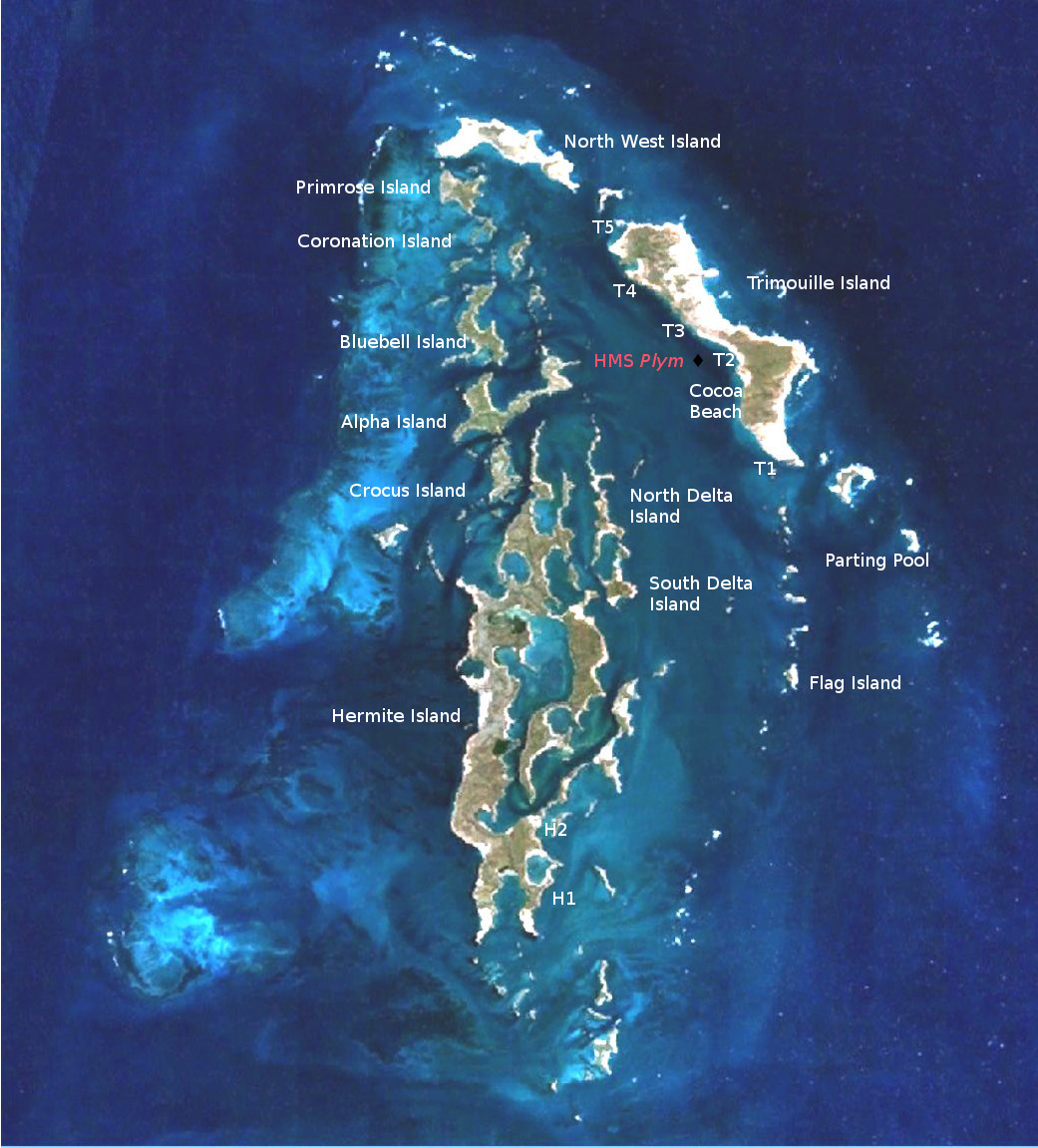
The bomb was hidden inside HMS Plym, a 1,370-tonne frigate anchored in the shallow waters of Main Bay off Trimouille Island. When it detonated on 3 October 1952, the blast vaporised the ship entirely -- not a fragment was ever recovered -- and gouged a crater six metres deep into the seabed. A mushroom cloud climbed into the sky above the Montebello Islands, 130 kilometres off the coast of Western Australia, and Britain became the third nation on Earth to possess nuclear weapons. The test was called Operation Hurricane, and nothing about its path from wartime laboratory to tropical lagoon was straightforward.
From Tube Alloys to Cold War Necessity
Britain's nuclear ambitions began during the Second World War with a project codenamed Tube Alloys. In 1943, the Quebec Agreement merged that effort with the American Manhattan Project, and British scientists -- including William Penney, James Chadwick, and Rudolf Peierls -- made significant contributions to the development of the bomb. But after the war, the United States passed the 1946 Atomic Energy Act, which abruptly cut off nuclear cooperation with its allies. Britain found itself locked out of the technology its own scientists had helped create. In January 1947, a cabinet sub-committee met in secret and decided that Britain must build its own bomb. The reasoning was blunt: without nuclear weapons, Britain could not remain a great power. The resulting programme, called High Explosive Research, was placed under Lord Portal with Penney -- who had witnessed both the Trinity test and the bombing of Nagasaki -- in charge of weapon design.
Finding a Place to Split the Atom
Building the bomb was one challenge; finding somewhere to test it was another. Britain lacked the vast uninhabited spaces available to the Americans and Soviets. The preferred option was the US Pacific Proving Grounds in the Marshall Islands, but the Americans refused the request in 1950. Canadian sites were assessed -- Churchill, Manitoba, looked promising -- but shallow waters made it impractical for the planned ship-borne test. The Admiralty suggested the Montebello Islands, an uninhabited archipelago of limestone and scrub lying roughly 80 kilometres off the Western Australian coast near Onslow. Prime Minister Clement Attlee asked Australian Prime Minister Robert Menzies for permission, and Australia formally agreed in May 1951. The choice was partly pragmatic and partly strategic: Penney wanted to measure what an atomic bomb detonated inside a ship would do to a harbour, complementing American data from the 1946 Operation Crossroads underwater test. The scenario was grimly plausible -- a nuclear weapon smuggled into a port city aboard a merchant vessel.
The Day the Plym Vanished
A small fleet assembled under Rear Admiral A. D. Torlesse, centred on the aircraft carrier HMS Campania, which served as the headquarters ship. The bomb -- a plutonium implosion device closely based on the Fat Man design -- was loaded aboard HMS Plym and the frigate was anchored in Main Bay, 350 metres offshore. On the morning of 3 October, the device was detonated remotely. The yield was approximately 25 kilotons, comparable to the bombs dropped on Hiroshima and Nagasaki. HMS Plym ceased to exist. The explosion carved a saucer-shaped crater in the seabed and sent a column of water, mud, and radioactive debris surging upward. Radioactive contamination spread across Trimouille Island, and the mushroom cloud drifted northeast over the open ocean. Winston Churchill, who had announced the test in the House of Commons months earlier, received word that Britain had joined the nuclear club. The strategic implications were enormous, but for the Montebello Islands the consequences were purely physical: the blast zone remained contaminated, and the scars it left on the landscape persist to this day.
The Fallout That Lingers
Operation Hurricane was not the last nuclear test at the Montebello Islands. Four years later, Operation Mosaic brought two more detonations to the archipelago. The combined legacy of British nuclear testing in Australia -- across the Montebellos, Emu Field, and Maralinga -- became one of the most contentious chapters in Australian-British relations. A Royal Commission in 1985 investigated the tests and their effects on service personnel, Aboriginal communities, and the environment. Trimouille Island still carries elevated radiation levels in some areas. For the servicemen who witnessed the blast, many without adequate protective equipment, the health consequences proved devastating. Decades of campaigning by veterans' groups eventually brought some official recognition of their exposure. The Montebello Islands themselves are now a conservation reserve, and the turquoise waters that once concealed a nuclear weapon are today visited by recreational sailors and fishers -- though signs warn visitors away from the most contaminated zones. The crater where HMS Plym once floated has long since filled with sand and water, but the story of what happened there on an October morning in 1952 has not.
From the Air
The Montebello Islands lie at approximately 20.41S, 115.57E, about 130 km northwest of Onslow, Western Australia. The archipelago appears as a scattering of low, flat islands surrounded by shallow turquoise waters and reef systems. Trimouille Island, where the detonation occurred, is in the southern portion of the group. Main Bay is on Trimouille's western shore. Nearest airports: Learmonth (ICAO: YPLM) and Onslow (ICAO: YOSN). Best viewed from 3,000-8,000 ft. The islands are now a conservation reserve -- no airstrip exists on the islands themselves.