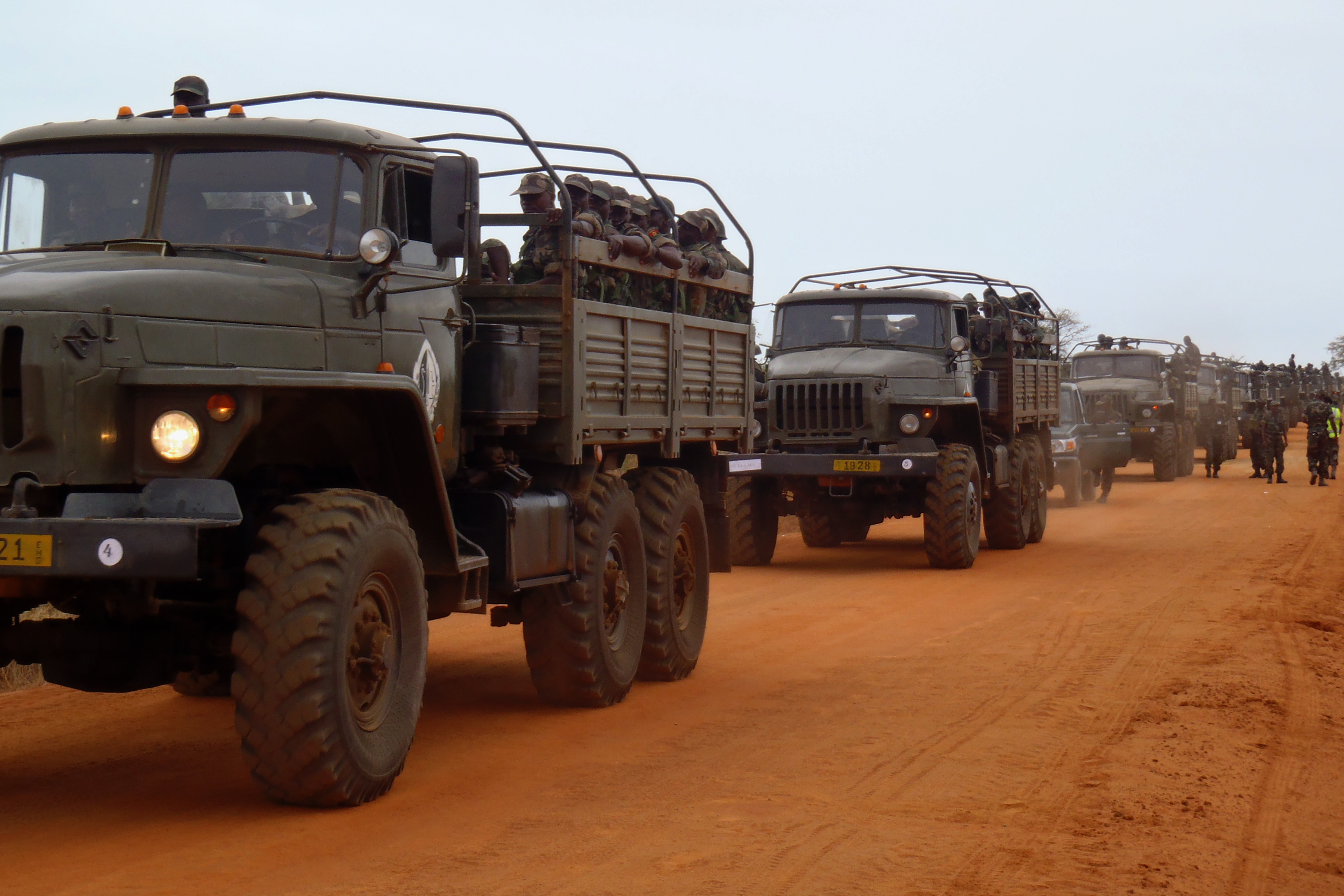
Operation Kitona
On August 3, 1998 -- the day after the rebellion began in Goma -- Rwandan commandos seized Goma International Airport in eastern Congo and hijacked four civilian airliners -- two Boeing 727s and two Boeing 707s -- sitting on the tarmac. The following day, pilots were ordered at gunpoint to fly over 1,900 kilometers west across the breadth of the Congo to Kitona Air Base, a remote installation just 320 kilometers from Kinshasa. The 727s landed first. Their airstairs dropped while the planes were still taxiing, and commandos spilled onto the runway. Within thirty minutes, the base was theirs. It was the opening move of what would become the Second Congo War, the deadliest conflict since World War II, and one of the most audacious airborne operations in modern military history.
The Patron Turned Threat
A year earlier, Rwanda and Uganda had helped install Laurent-Desire Kabila as president of the newly renamed Democratic Republic of the Congo, toppling the long-ruling Mobutu Sese Seko in the First Congo War. Kabila owed his throne to his eastern neighbors. He appointed Rwandan James Kabarebe as his army's chief of staff and filled key government posts with Rwandan officials. But Rwandan soldiers in the eastern Congo brutalized civilians, smuggled natural resources, and confiscated land. By late 1997, Congolese resentment was mounting. Kabila, sensing that Rwandan influence had become a threat to his own power, acted decisively in mid-1998. On July 13, he dismissed all Rwandans from government. On July 27, he ordered every remaining Rwandan and Ugandan soldier to leave the country, replacing them with local militias and -- alarmingly for Kigali -- surviving Hutu perpetrators of the 1994 genocide. Rwandan Defense Minister Paul Kagame had seen this rupture coming for months. Planning for a second military intervention had begun in April.
Kabarebe's Gamble
The plan was James Kabarebe's, and it was breathtaking in its ambition. Rather than fight westward across a thousand miles of jungle from Rwanda's border, Kabarebe proposed leapfrogging the entire country by air. Kitona Air Base in western Congo's Bas-Congo province sat near the Atlantic coast, close to Congo's only seaports and the Inga Dams that supplied electricity to Kinshasa. Seize these assets and the capital would be strangled. Kabarebe was confident that local dissidents -- interned Banyamulenge Tutsis, disgruntled former soldiers -- would rally to his side once the invasion began. By August 5, the hijacked airliners had shuttled back and forth enough times to deliver more than 3,000 Rwandan and Ugandan troops to Kitona. Kabarebe bribed and persuaded local Congolese units to defect, adding over 2,000 fighters, along with tanks and anti-aircraft guns, to his invasion force.
A Coastline Falls
The offensive swept through western Congo with alarming speed. By August 5, the oil infrastructure at Moanda and the port of Banana had been captured. Widespread atrocities -- rape and looting -- followed in areas the Rwandans occupied. Boma fell on August 7, a hundred kilometers inland. Matadi, Congo's most important seaport, was taken on August 10. Three days later, Kabarebe's forces secured the Inga Dams and immediately shut down the turbines, plunging Kinshasa into darkness. The Congolese capital, a city of millions, lost all electrical power in a single stroke. For the population caught in the path of this campaign, the consequences were devastating -- civilians endured violence, displacement, and deprivation as two foreign armies fought across their communities.
The Allies Kabila Found
Kabarebe's intelligence had identified one critical assumption: that Angola, whose army was the most powerful in the region, would not intervene on Kabila's behalf. The assumption was wrong. While many Angolan military officers harbored no love for Kabila, President Jose Eduardo dos Santos chose to stand by him. On August 22, a force of 2,500 Angolan troops entered the Congo and retook Kitona the next morning. Zimbabwe also sent forces to defend Kinshasa. By August 27, Kabarebe threw his remaining tanks and anti-aircraft guns at the airfield in a last attempt to regain control. Zimbabwean Air Force planes flew continuous sorties from one side of the runway, bombing Rwandan positions on the other, with turnaround times at the peak of fighting reduced to under five minutes. Both Rwandan assaults failed, and Kabarebe lost all his remaining heavy weapons.
Audacity and Its Price
The operation collapsed. Kabarebe's forces withdrew into the Angolan jungle and were eventually evacuated by air back to Rwanda in late 1998. The goal of toppling Kabila had failed. Yet the war that Operation Kitona ignited was only beginning -- the Second Congo War would rage until 2003 and draw in nine African nations, earning it the grim title of "Africa's World War." Millions of Congolese civilians died from violence, disease, and starvation in the years that followed. Kabarebe himself returned to Rwanda as a national hero for his leadership during the offensive. Military colleges around the world now study the operation -- not primarily for its tactical boldness, but for the catastrophic intelligence failure at its heart: the assumption that Angola would stand aside. It is a case study in how a brilliantly executed operation can still fail when its strategic premises are wrong.
From the Air
Kitona Air Base is located at 5.92S, 12.45E in the Kongo Central province of the DRC, near the Atlantic coast. The airfield sits on relatively flat terrain approximately 320 km west-southwest of Kinshasa. Nearby landmarks include the port of Banana at the mouth of the Congo River and the Inga Dams upstream. Nearest airports: Kitona Air Base itself (military, FZAI), and Boma Airport. The Congo River estuary is visible to the northwest from altitude, with the Angolan border close to the south.