Operation Leader
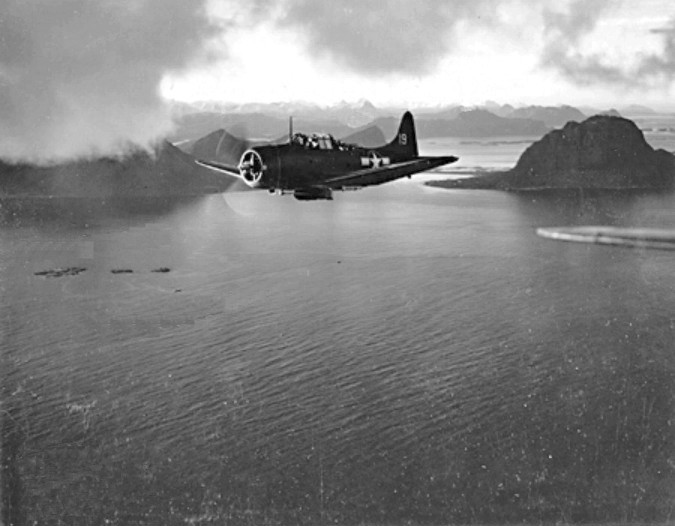
The Germans did not expect an aircraft carrier. For two years, no Allied carrier-borne aircraft had attacked targets in Norway, and the German occupation forces in the Bodø area had grown complacent about the threat from the sea. On the morning of October 4, 1943, that complacency was shattered when waves of American dive bombers and torpedo planes appeared over the Norwegian coast. The aircraft came from the USS Ranger, the only US Navy carrier operating with the British Home Fleet -- and the raid they were about to execute would be the sole offensive American naval air operation in northern European waters during the entire war.
An American Carrier in the North
The Ranger arrived in northern waters in September 1943, replacing two American battleships that had been withdrawn to the Pacific. She was not a front-line fleet carrier by 1943 standards -- her last combat had been supporting the Operation Torch landings in Morocco nearly a year earlier, and she had spent the intervening months ferrying aircraft and training aircrews off the American east coast. But her air wing was substantial: 27 Grumman F4F Wildcat fighters, 27 Douglas SBD Dauntless dive bombers, and 18 Grumman TBF Avenger torpedo bombers, organized into three squadrons under Rear Admiral Olaf M. Hustvedt's command. The carrier joined a task force that included the heavy cruisers Augusta and Tuscaloosa along with five destroyers. Her primary mission was to help the Home Fleet counter the German naval threat in Norway, centered on the battleships Tirpitz and Scharnhorst. But the planners saw an opportunity for something more aggressive than patrol.
Intelligence from the Shore
The target selection for Operation Leader was not a guess. British codebreakers had been reading German radio signals, and Norwegian Secret Intelligence Service agents operating along the coast provided detailed reports on shipping movements and concentrations. Two Norwegian airmen flew with the strike force to advise on local geography -- an essential precaution given that the pilots had never seen this coastline before. The intelligence indicated a concentration of German and Norwegian merchant vessels in the waters around Bodø, ships that were part of the convoy system moving iron ore south from the port of Narvik. Iron ore was critical to the German war machine, and disrupting its flow was a strategic priority that went well beyond the value of individual ships. The agents who provided this intelligence belonged to networks code-named 'Pisces' and 'Crux,' and their work placed them in enormous personal danger -- danger that would increase dramatically once the attack revealed that the Allies had eyes on this stretch of coast.
Four Minutes Over Bodø
The Ranger's aircraft struck on the morning of October 4, finding the shipping exactly where intelligence had indicated. The results were decisive if not overwhelming: five ships destroyed, perhaps seven more damaged. Two German aircraft that scrambled to search for the Allied fleet were shot down. The Americans lost three aircraft in combat, and a fourth crashed while landing back on the carrier. The human cost fell on both sides -- American airmen died in the cold Norwegian Sea, while crews aboard the struck vessels faced fire and sinking in the narrow coastal waters. But the strategic impact extended far beyond the immediate toll. The British Ministry of Economic Warfare later estimated that Operation Leader was the main factor behind a 58 percent drop in iron ore shipments from Narvik during October 1943. The disruption to the convoy system -- ships delayed, routes rerouted, escorts diverted -- caused more damage to the German war effort than the ships themselves.
The Aftermath on Shore
The Germans reacted swiftly on land. Recognizing that the raid required advance intelligence, they searched the Bodø area for radio transmitters, arresting several local Norwegians and narrowly missing the agents of the Pisces network. The two Pisces operatives were evacuated to Britain by Catalina flying boat on November 24, 1943. The Crux agents held on longer, evacuating from the island of Renga by a No. 330 Squadron RAF Catalina on June 6, 1944 -- D-Day itself. Remarkably, the transmitter on Renga kept sending reports for the rest of the war, operated by a local volunteer trained by the departing agents. The Ranger, meanwhile, remained with the Home Fleet until late November before sailing for Boston. She never saw combat again, spending the remainder of the war training aircrews and transporting aircraft.
Wreckage and Remembrance
The sea off Bodø held its secrets for decades. In 1987, local Norwegians helped locate the wreck of the Avenger torpedo bomber shot down during the raid, lying off Fagervika. The Royal Norwegian Navy partially salvaged it, recovering the remains of two of the airmen killed in the operation. A memorial was erected at Fagervika on the site of a former German coastal artillery position, dedicated on October 4, 1987, in the presence of American dignitaries and relatives of the fallen. One of three propeller blades recovered from the Avenger wreck is incorporated into the memorial; the other two are displayed at the National Naval Aviation Museum in Pensacola, Florida, and at the Norwegian Home Guard base in Søvik near Sandnessjøen. In 1990, one of the two downed Dauntless dive bombers was found and partially salvaged in 1993, its engine now displayed at the Norwegian Aviation Museum in Bodø. The fiftieth anniversary was marked with a commemorative postal stamp and a sculpture at Bodø Airport -- quiet gestures for the only American naval air battle ever fought in these waters.
From the Air
Located at 67.28°N, 14.38°E, centered on the waters around Bodø, Nordland county, Norway. The raid targeted German shipping in the coastal waters and fjords near the city. Key landmarks: Bodø Airport (ENBO) sits on the peninsula; the memorial at Fagervika is along the coast south of Bodø. The wreck sites of the downed aircraft lie in the waters offshore. From altitude, the narrow coastal channels and island-studded waters where the shipping concentrated are clearly visible. The Lofoten Islands lie across Vestfjorden to the west. Narvik, the strategic iron ore port, is approximately 170 km to the northeast along the coast.