Operation Protea
On the morning of August 23, 1981, five English Electric Canberra bombers lifted off and turned north toward Angola. Behind them came waves of Mirage F-1s and Mirage IIIs. On the ground, up to 5,000 South African Defence Force soldiers were already moving into Cunene Province, the southernmost region of Angola and the corridor through which SWAPO guerrillas funneled weapons, recruits, and supplies toward the Namibian border. The operation they were launching, codenamed Protea after South Africa's national flower, would become the SADF's largest military action since World War II. Its targets were two Angolan towns, Xangongo and Ongiva, that SWAPO had turned into command centers for its campaign to liberate Namibia from South African rule.
The Logic of the Border War
By 1981, the South African Border War had been grinding on for fifteen years. South Africa controlled Namibia, then called South West Africa, under a mandate the United Nations had revoked in 1966 but that Pretoria refused to relinquish. SWAPO, the South West Africa People's Organisation, waged a guerrilla campaign from bases in southern Angola, crossing the border to strike at South African military installations and then retreating north. The towns of Xangongo and Ongiva were critical to this strategy. Xangongo, situated along SWAPO's "north-western front," served as a command center directing operations in the Kaokoland and western Ovamboland. Ongiva, less than fifty kilometers from the Namibian border, functioned as a logistics hub supporting operations in central and eastern Ovamboland and the Kavangoland. South Africa had already struck SWAPO camps inside Angola during Operation Reindeer in 1978. Protea was intended to reinforce the message that southern Angola offered no safe haven.
Canberras Over Cunene
The air assault began at 11:54 on August 23. Five Canberra bombers from 12 Squadron dropped their payloads on Xangongo, followed by three successive waves of fighter-bombers: eight Mirage F-1AZs from 1 Squadron, six Mirage F-1CZs from 3 Squadron, and four Mirage IIICZs from 2 Squadron. The bombing was intended to suppress defenses ahead of the ground advance. What the South Africans found when they entered Xangongo told a story of hasty departure at the top and stubborn resistance below. FAPLA officers, SWAPO commanders, and their Soviet advisors had fled the town. But the rank-and-file soldiers, both FAPLA and SWAPO, held their positions and fought. Two and a half hours of ground combat followed, the South Africans advancing through bunkers and trenches under anti-aircraft fire repurposed for ground defense. By the time the SADF secured the airfield at Xangongo, the cost was ten South African soldiers dead and sixty-four wounded. On the other side, 831 FAPLA and SWAPO fighters were killed and twenty-five captured.
Three Thousand Tons of War
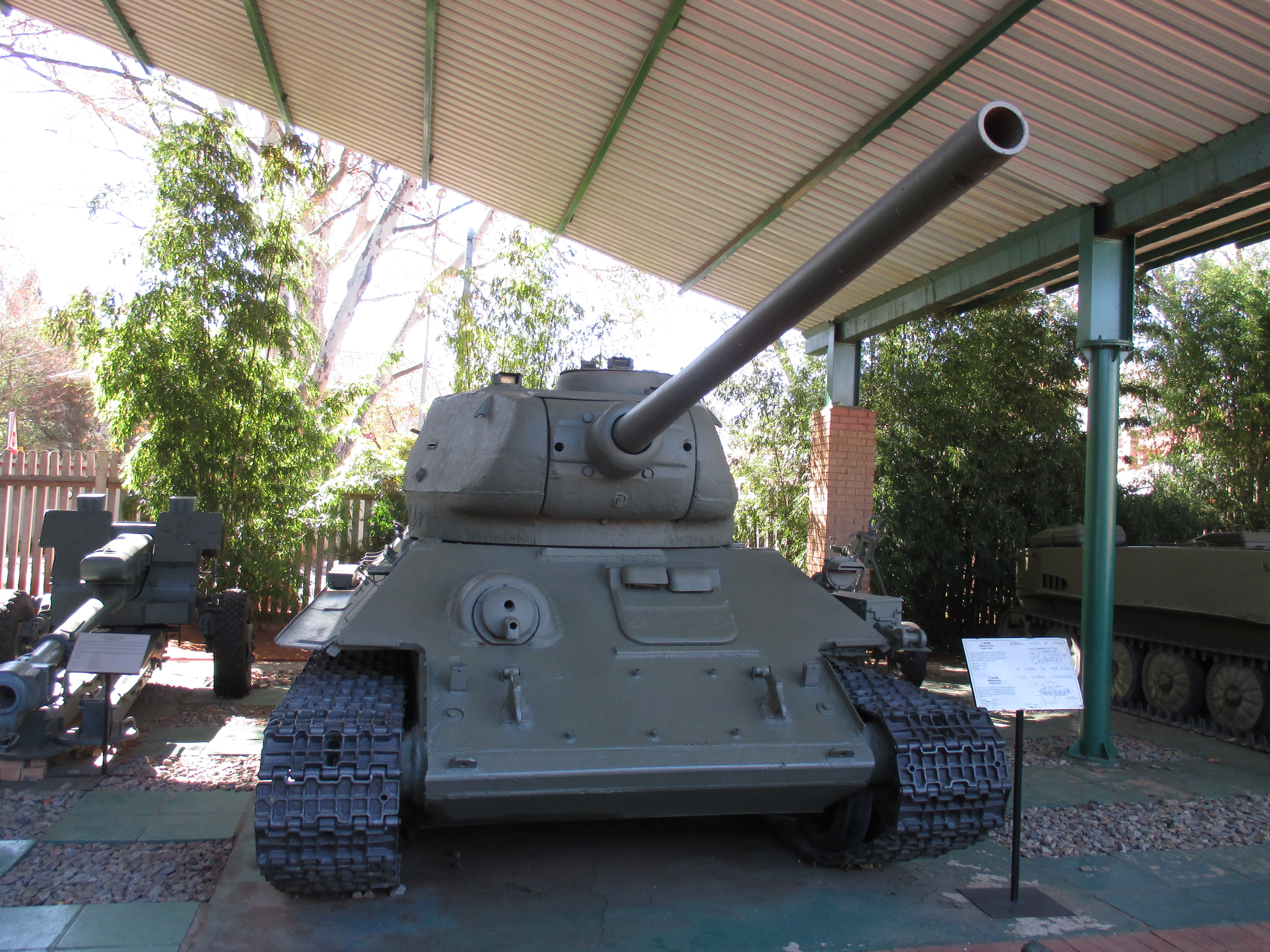
The scale of what the South Africans captured at Xangongo and Ongiva revealed how deeply SWAPO and its FAPLA allies had invested in the region. The equipment haul was staggering: between six and nine Soviet-made T-34 tanks, three to four PT-76 amphibious tanks, four BRDM-2 armored vehicles, two BM-21 multiple rocket launchers, dozens of ZIS-3 artillery pieces, anti-aircraft guns of various calibers, nearly a hundred SA-7 shoulder-fired missiles, 240 trucks, 1,800 small arms, 250 tons of ammunition, and close to half a million liters of fuel. The total weight of captured material was estimated between 3,000 and 4,000 tons. This was not a guerrilla supply cache hidden in the bush. It was the infrastructure of a conventional military buildup, evidence that the Border War had evolved far beyond its origins as a counterinsurgency campaign into something closer to a proxy war between Cold War powers.
The Occupation and Its Aftermath
Operation Protea officially ran from August 23 to September 4, 1981, but its effects extended far beyond those twelve days. The SADF occupied positions in Cunene Province, establishing a presence that would persist in various forms for years. The operation did not end the war. SWAPO rebuilt and adapted, and South Africa followed Protea almost immediately with Operation Daisy, another cross-border strike. The cycle of raid and retaliation continued for the rest of the decade, devastating the communities of southern Angola who found themselves caught between the combatants. For the people of Xangongo and Ongiva, the operation meant the destruction of their towns' infrastructure and the disruption of whatever civilian life had survived the broader civil war. The Border War would continue until 1990, when Namibia finally gained independence. By then, the towns of Cunene Province had endured nearly two decades of being fought over by forces whose quarrel, at its root, was about who would control a country that lay across the border to the south.
From the Air
The Operation Protea area of operations is centered near Xangongo (16.75S, 14.97E) and Ongiva (17.07S, 15.69E) in Cunene Province, southern Angola, close to the Namibian border. From altitude, the terrain is semi-arid savanna with scattered settlements along road networks. The Cunene River is the major geographical feature in the region. The nearest significant airfield is at Ongiva. Namibia's Ondangwa Airport (FYOA) lies approximately 100 km to the south across the border. Expect dry, clear conditions during the winter months (May-September) and convective weather during the wet season.