Operation Savannah (Angola)
The columns moved fast -- faster than anyone expected. In late October 1975, South African armored vehicles crossed into Angola from Namibia and began racing north toward Luanda, capturing cities and scattering MPLA garrisons as they went. Within two weeks, combat unit Foxbat had covered 800 kilometers. Benguela and Lobito, the terminus of Angola's most important railroad, fell on 6 and 7 November. The operation was supposed to be deniable. South African soldiers removed their insignia, drove unmarked vehicles, and operated under radio silence. But an 800-kilometer armored advance through a country on the brink of independence was not the kind of thing that stayed secret for long.
Three Armies and No Government
Portugal's Carnation Revolution in April 1974 had ended decades of colonial rule, but it left Angola with no clear successor. Three liberation movements -- the MPLA, FNLA, and UNITA -- had fought the Portuguese for years and now turned on each other. The January 1975 Alvor Agreement attempted to forge a transitional government, but the ceasefire disintegrated almost immediately. By mid-1975, the FNLA controlled the north, UNITA held the central south, and the MPLA occupied Luanda and most provincial capitals. Each faction had foreign backers. The Soviet Union and Cuba supplied the MPLA with weapons, advisers, and eventually combat troops. The United States funneled CIA money and arms to the FNLA and UNITA. Zaire's President Mobutu committed troops to support the FNLA. And South Africa, anxious to prevent a Soviet-aligned government from taking power on Namibia's northern border, decided to intervene directly.
The Advance That Outran Its Orders
Operation Savannah launched in late October 1975 with South African Defense Force columns driving north from the Namibian border. Combat group Zulu pushed up the coast, while Foxbat advanced through the interior. The speed was remarkable. Towns fell in succession as MPLA forces, unprepared for armored warfare, retreated or dissolved. Captured territory was handed to UNITA. By early November, Zulu had taken Benguela and Lobito, key ports on Angola's Atlantic coast. But the advance created its own problems. Supply lines stretched thin across hundreds of kilometers of African bush. The UN arms embargo meant South African equipment was aging -- their artillery pieces, in particular, were no match for the Soviet BM-21 rocket launchers that Cuban forces were beginning to deploy. And the diplomatic cover story was unraveling. When South African Canberra bombers supported the FNLA's disastrous assault at Quifangondo on 10 November, the fiction of non-involvement became untenable.
Quifangondo and the Cuban Wall
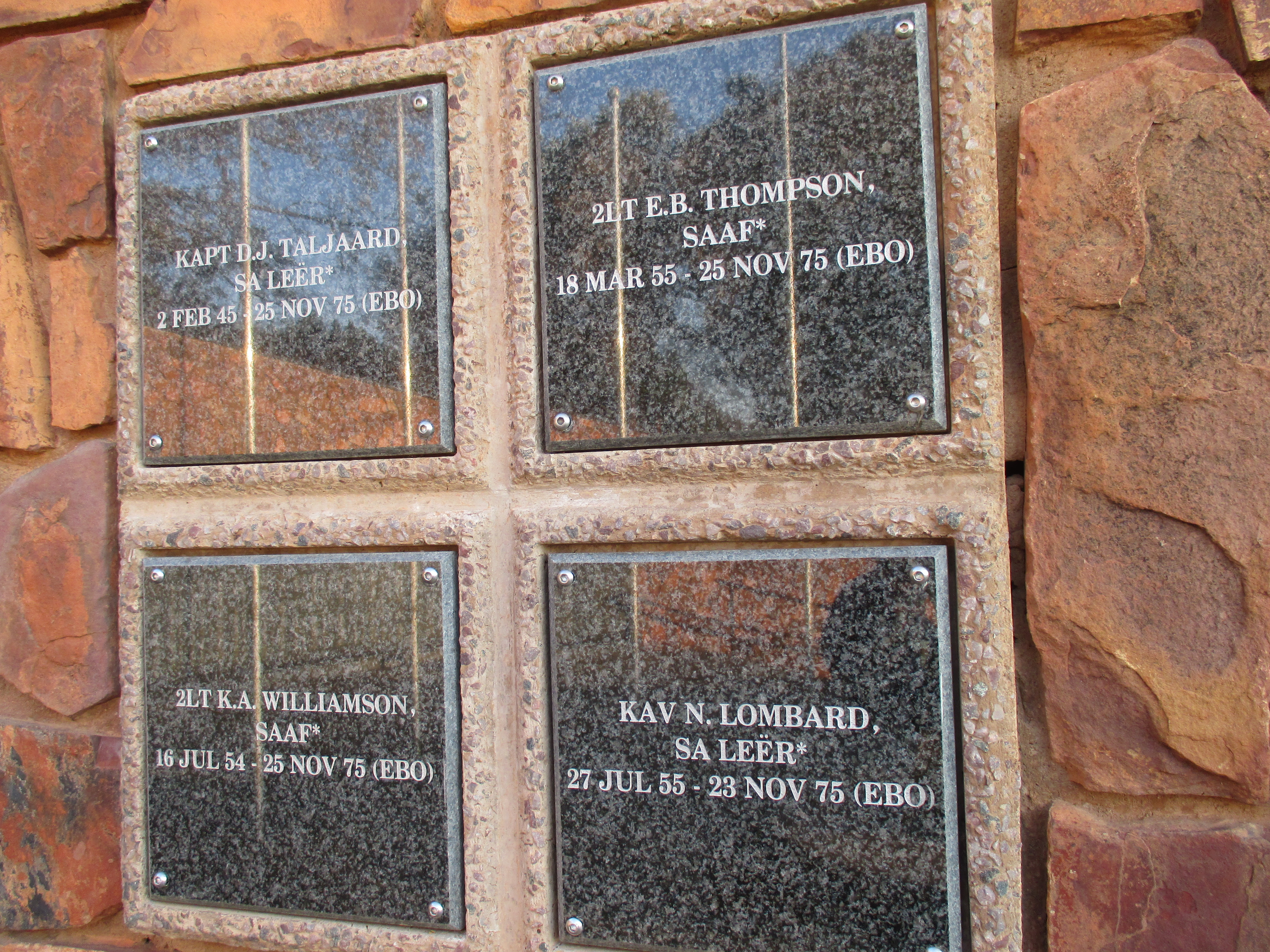
The turning point came not in the south but in the north. On 10 November, the FNLA attacked the MPLA-held village of Quifangondo with South African artillery support. The assault was a catastrophe -- FAPLA and Cuban defenders routed the attackers with rocket barrages on the exposed highway. That same week, the first significant Cuban reinforcements began arriving in Angola by sea and air. Havana, initially committed to a small advisory mission, escalated rapidly once the South African invasion became apparent. Cuban troops reached Porto Amboim, just north of the South African advance, and destroyed three bridges over the Queve River, stopping Zulu's northward push. At Ebo on 25 November, Cuban artillery destroyed seven to eight South African armored cars at a river crossing, killing fifty enemy soldiers while suffering no casualties. A South African Air Force spotter plane was shot down over Ebo the following day. The momentum had shifted decisively.
Retreat and Reckoning
By January 1976, South Africa faced a reality it had not anticipated. Cuban troop numbers were growing -- eventually reaching tens of thousands -- while American support was evaporating. The US Congress had passed the Clark Amendment in December 1975, cutting off CIA funding for Angolan operations. South Africa's allies in the FNLA had collapsed entirely after Quifangondo, and UNITA could not hold territory without direct military support. The South African Navy had to extract stranded gunners from Ambrizete, north of Luanda, using inflatable boats and a Wasp helicopter in a hasty operation that underscored how badly things had gone wrong. South African forces withdrew to the Namibian border by late March 1976. The operation that was meant to install a friendly government in Luanda had instead solidified MPLA rule, drawn Cuba into a massive military commitment that would last until 1991, and deepened South Africa's international isolation. Operation Savannah had achieved the opposite of every one of its objectives.
The Long Shadow
Operation Savannah did not end the war -- it began one. The South African Border War would continue for another thirteen years, fought across the scrublands of southern Angola and northern Namibia. Cuba maintained a military presence in Angola until 1991, making it one of the longest foreign military deployments of the Cold War. The MPLA, validated by its battlefield victories and sustained by Soviet and Cuban support, governed Angola as a one-party state for decades. For South Africa's apartheid government, the intervention exposed a painful contradiction: a regime fighting for its own survival at home could not sustain foreign wars indefinitely, especially when the international community refused to look the other way. The veterans of Operation Savannah returned to a country that officially denied the operation had ever happened. Many waited decades for acknowledgment of what they had experienced in the Angolan bush.
From the Air
The geographic scope of Operation Savannah stretches from the Namibian border (approximately 17S) to north of Luanda (approximately 7S), following Angola's Atlantic coastline and interior routes. The article coordinates at 7.22S, 12.86E place it in northern Angola near the mouth of the Congo River. Key visible landmarks from altitude include the port cities of Benguela and Lobito on the coast, and the flat terrain along the Queve River where the advance was halted. Nearest major airport: Quatro de Fevereiro International Airport, Luanda (FNLU).