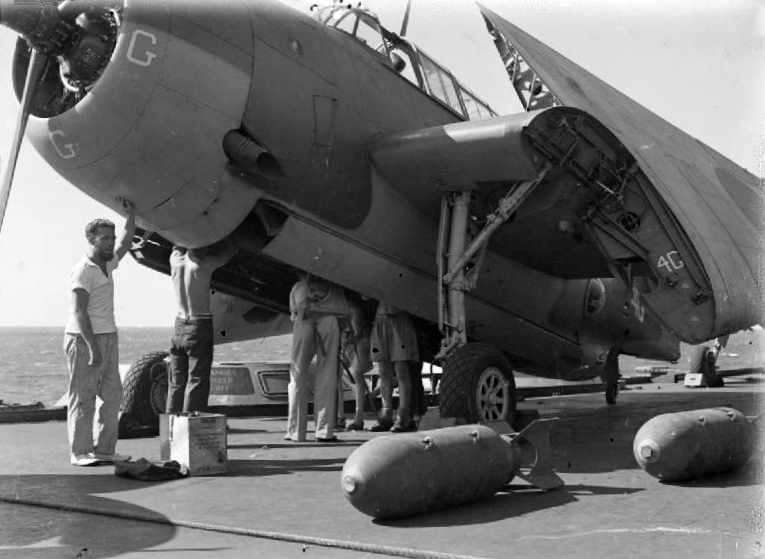
The Raid That Taught the Royal Navy
Admiral Somerville would later wish he had ordered a second strike. On the afternoon of 17 May 1944, photographs dropped onto the deck of HMS Queen Elizabeth revealed what his staff had failed to ask returning pilots: Japanese submarines still sat in Surabaya's harbor, untouched. The morning raid had caught the enemy by surprise, set the Wonokromo oil refinery ablaze, and punched holes in the port's dock facilities. But the reconnaissance images told a story of missed opportunity -- targets that a follow-up attack could have destroyed, left intact because no one had debriefed the strike leader before the fleet turned south. Operation Transom, the last joint Anglo-American carrier raid in the Indian Ocean, would be remembered less for what it destroyed than for what it taught.
A Carrier on Borrowed Time
The raid on Surabaya was born from logistics, not grand strategy. USS Saratoga, the American carrier that had been temporarily loaned to the British-led Eastern Fleet, was heading home for a refit. Admiral Ernest King, chief of the US Navy, suggested to Lord Louis Mountbatten that the ship strike one more blow on her way back to the Pacific. The target was Surabaya -- Java's most important port, home to the only aviation fuel refinery on the island, and a base for Japanese anti-submarine operations in the Java Sea. King had a secondary motive: the raid on 17 May might divert Japanese attention from the Allied landing at Wakde Island off New Guinea, scheduled for the same day. Mountbatten agreed. What began as a suggestion to fill an empty transit became a major combined operation involving six navies.
Halfway Around the World to Refuel
The Eastern Fleet's path to Surabaya revealed a fundamental weakness that would haunt the Royal Navy for the rest of the war: it could not replenish its ships at sea. Somerville's fleet had to sail from Ceylon to Exmouth Gulf in Western Australia just to top off fuel tanks before the final approach. The voyage kept warships at least 600 miles from Japanese airfields to avoid detection, and the carriers' air wings rehearsed the attack three times during the transit. At Exmouth Gulf, Australian Spitfire squadrons flew cover while the fleet refueled, and Somerville conferred with American commanders about the latest intelligence. The operation's enormous footprint -- tankers, water distilling ships, escort cruisers, maritime patrol aircraft spread across the Indian Ocean -- underscored how far the Royal Navy was from matching American self-sufficiency at sea.
Dawn Over the Java Sea
By 6:30 on the morning of 17 May, the Eastern Fleet had reached its launch position south of Java without detection. The strike force split into two groups. Force A -- nine Avengers and twelve Dauntless dive bombers escorted by Corsairs -- would hit the Braat Engineering Works and the Wonokromo oil refinery. Force B -- twenty-one Avengers and six Dauntlesses with Corsair and Hellcat escorts -- would attack port facilities and shipping. Commander Joseph C. Clifton of Saratoga's air group led the combined force. Two British Avengers crashed on takeoff, their crews rescued from the water. The rest formed up and headed north. At 8:30, both forces struck simultaneously from opposite directions, catching the Japanese completely off guard. No enemy fighters rose to intercept. Anti-aircraft fire was sparse and poorly aimed. One American Avenger was shot down, its two crew members taken prisoner.
A Debate That Outlasted the War
Historians have argued over Operation Transom's results for decades. The official Royal Navy historian, Stephen Roskill, concluded in 1960 that Japanese records did not confirm heavy damage -- only a single small ship sunk, with the Allied pilots having reported too optimistically after watching shore fires burn. Australia's naval chief at the time, Admiral Guy Royle, told his government the same results could have been achieved by land-based bombers without risking an entire fleet. But other accounts painted a different picture. Stanley Woodburn Kirby's official British history credited the raid with setting fire to the oil refinery and destroying twelve Japanese aircraft on the ground. H.P. Willmott described severe damage to the refinery and the sinking of a minesweeper, a submarine chaser, and a naval freighter. The truth likely falls between these assessments, but what is not disputed is the civilian cost: unknown and uncounted, as with every air raid on wartime Surabaya.
Lessons Carried to the Pacific
Whatever damage Operation Transom inflicted on Surabaya, its most lasting impact was educational. Somerville watched how Saratoga's crew conducted flight operations and decided to adopt American procedures for his own carriers. His officers recognized the need to debrief strike leaders immediately upon landing -- a failure that had cost them the chance at a second strike. The Royal Navy also took away harder structural lessons: the need for photo reconnaissance aircraft that could fly from carrier decks, the imperative of planning multiple strikes against every target, and above all the necessity of building a fleet train capable of replenishing warships at sea. Within a year, these lessons would be applied as the British Pacific Fleet joined American forces in the campaigns against Okinawa and Japan itself, supported by a logistics train that Operation Transom's long detour through Exmouth Gulf had proven was essential.
From the Air
Located at 7.21S, 112.73E over Surabaya, East Java, Indonesia. The raid's primary targets were the Wonokromo oil refinery in the southern part of the city and the port facilities along the northern waterfront. Nearest major airport is Juanda International Airport (WARR), approximately 20 km south. The Eastern Fleet launched aircraft from approximately 180 miles south of Java. Exmouth Gulf in Western Australia (YLEO/Learmonth Airport nearby) served as the refueling point. Recommended viewing altitude: 5,000-10,000 feet to appreciate the port layout and industrial areas that were targets of the raid.