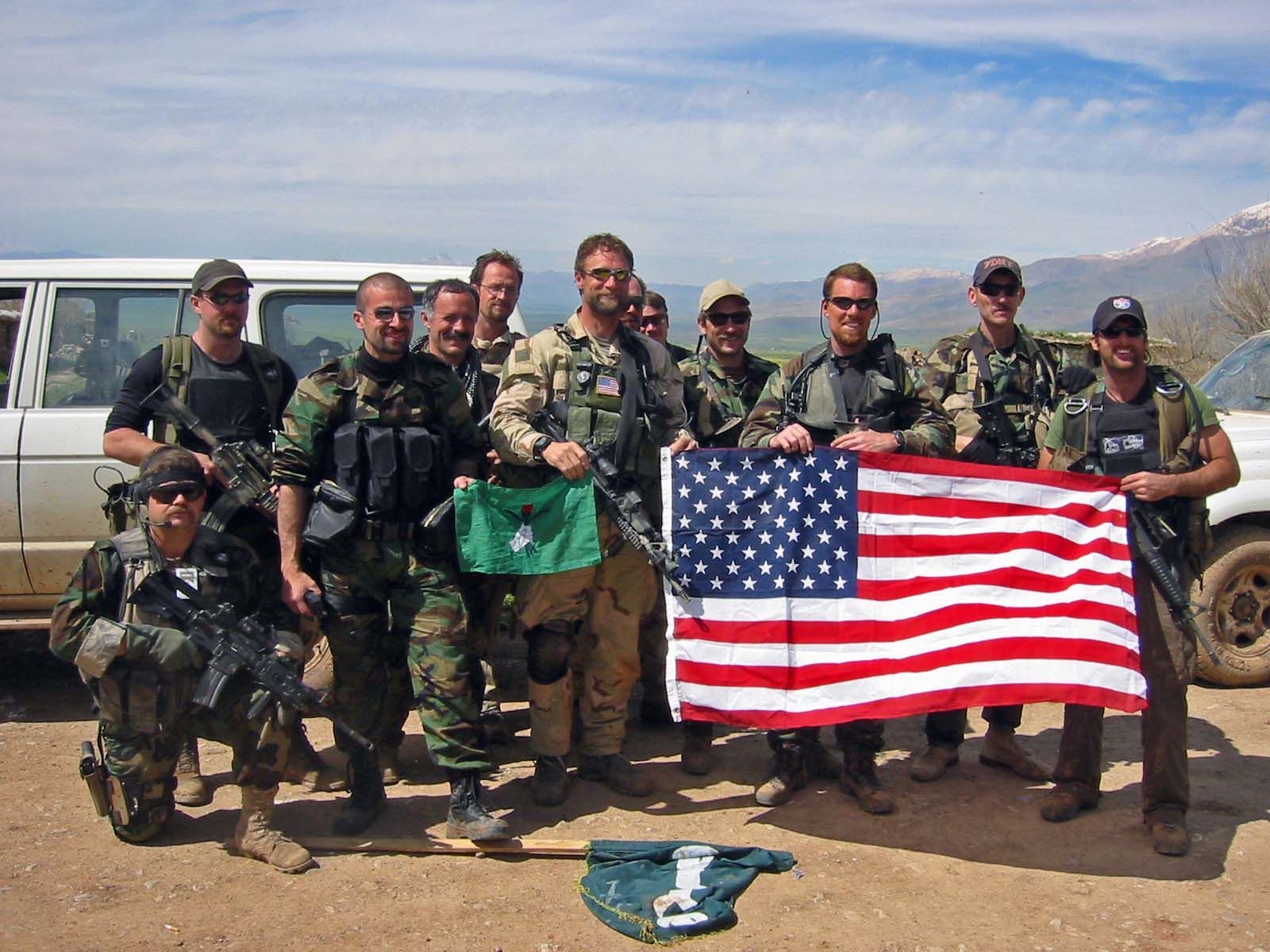
Operation Viking Hammer
The valley was so deep that radio signals could not escape it. Pinned down by machine-gun fire outside the town of Sargat in the mountains of Iraqi Kurdistan, American Special Forces soldiers and their Kurdish Peshmerga allies could not call for air support, could not reach friendly forces, could not do the one thing modern warfare most depends on: communicate. So they improvised. A Barrett M82 .50-caliber sniper rifle -- designed to destroy equipment, not typically used as a precision weapon in close combat -- began picking off Ansar al-Islam machine-gun crews one by one while the Peshmerga brought up artillery. It was March 28, 2003, and Operation Viking Hammer was earning its place in Special Forces history.
The Enemy in the Mountains
Ansar al-Islam appeared in Iraqi Kurdistan in December 2001, founded by Mullah Krekar and composed largely of Kurdish veterans of jihad returning from Afghanistan after the Soviet-Afghan War. The group imposed a strict application of Sharia law in the villages it controlled, establishing what it called the Islamic Emirate of Kurdistan. Its fighters held a series of mountaintop positions in the rugged terrain near the Iranian border -- positions that offered commanding views of the surrounding valleys but also left them exposed to aerial bombardment. The goal of Operation Viking Hammer was straightforward: destroy Ansar al-Islam and dismantle its self-declared emirate. The execution would prove far more complicated than the objective.
Sixty-Four Tomahawks
The operation began in the early hours of March 21, 2003, with a barrage of 64 Tomahawk cruise missiles targeting Ansar al-Islam camps and defensive positions. The original plan called for an immediate ground assault following the strikes, but most American forces were not yet in position. The delay gave surviving Ansar fighters time to regroup, but it also produced an unexpected dividend. The Kurdistan Islamic Group, led by Ali Bapir, had been allied with Ansar al-Islam. After losing approximately 100 fighters in the March 21 strikes and finding itself unable to advance, the group surrendered on March 27, the day before the ground attack. One allied force was eliminated without a shot being fired on the ground.
Four Lines of Advance
The ground assault on March 28 sent Peshmerga forces forward along four separate lines of advance, each accompanied by U.S. Special Forces and CIA paramilitary officers. The attack from the south met heavy resistance. Airstrikes broke the initial defense, and the joint force captured the town of Gulp hours ahead of schedule. But the majority of Ansar fighters fell back to Sargat, where the terrain favored them. For three hours, American and Peshmerga forces were pinned down by mortar and machine-gun fire in a valley where the steep walls blocked radio transmissions. The .50-caliber sniper fire and Kurdish artillery eventually drove the Ansar defenders from the town. Pursuing them into the hills brought more machine-gun fire and required additional airstrikes before darkness ended the day's combat.
Night Pressure, Border Flight
The fighting did not pause when the sun went down. Four AC-130 gunships -- heavily armed aircraft designed for close air support -- maintained pressure on retreating Ansar al-Islam militants throughout the night as they pulled back toward the Iranian border. The next day, American and Peshmerga forces pursued the remnants deeper into the mountains. Many Ansar fighters attempted to cross into Iran, where they were arrested by Iranian authorities. Some were returned across the border and subsequently captured by Kurdish forces. Kurdish sources, however, allege that Iran harbored a significant number of the fighters rather than repatriating all of them. The border that had defined the battlefield's eastern edge became its final ambiguity.
A Battle Fought on Foot
U.S. News and World Report described Viking Hammer as a battle that would go down in Special Forces history -- fought on foot, under sustained fire from an enemy lodged in the mountains, with minimal artillery and air support. Seven U.S. Army Special Forces soldiers received the Silver Star for their actions around Sargat. Fifty-two soldiers were awarded the Bronze Star with valor. Four members of the CIA's Special Activities Division paramilitary team received the Intelligence Star, the agency's decoration for extraordinary heroism in combat. The operation succeeded in dismantling Ansar al-Islam's territorial control in Iraqi Kurdistan, though the group would reconstitute in other forms in the years of insurgency that followed. In the mountains near Halabja, where the valleys swallow radio waves and the ridgelines belong to whoever climbs them first, Viking Hammer demonstrated what unconventional warfare looks like when technology fails and human endurance decides the outcome.
From the Air
The operation took place in the mountainous terrain near Halabja in the Kurdistan Region of Iraq, centered around 35.18N, 45.98E. The area features steep mountain valleys near the Iranian border, with elevations ranging from 700 to over 2,000 meters. Key locations include the towns of Gulp and Sargat in the Zagros foothills. Nearest airport is Sulaymaniyah International Airport (ORSU), approximately 70 km to the northwest. The rugged terrain and deep valleys that characterized the battle are visible from altitude.