Oral Roberts University
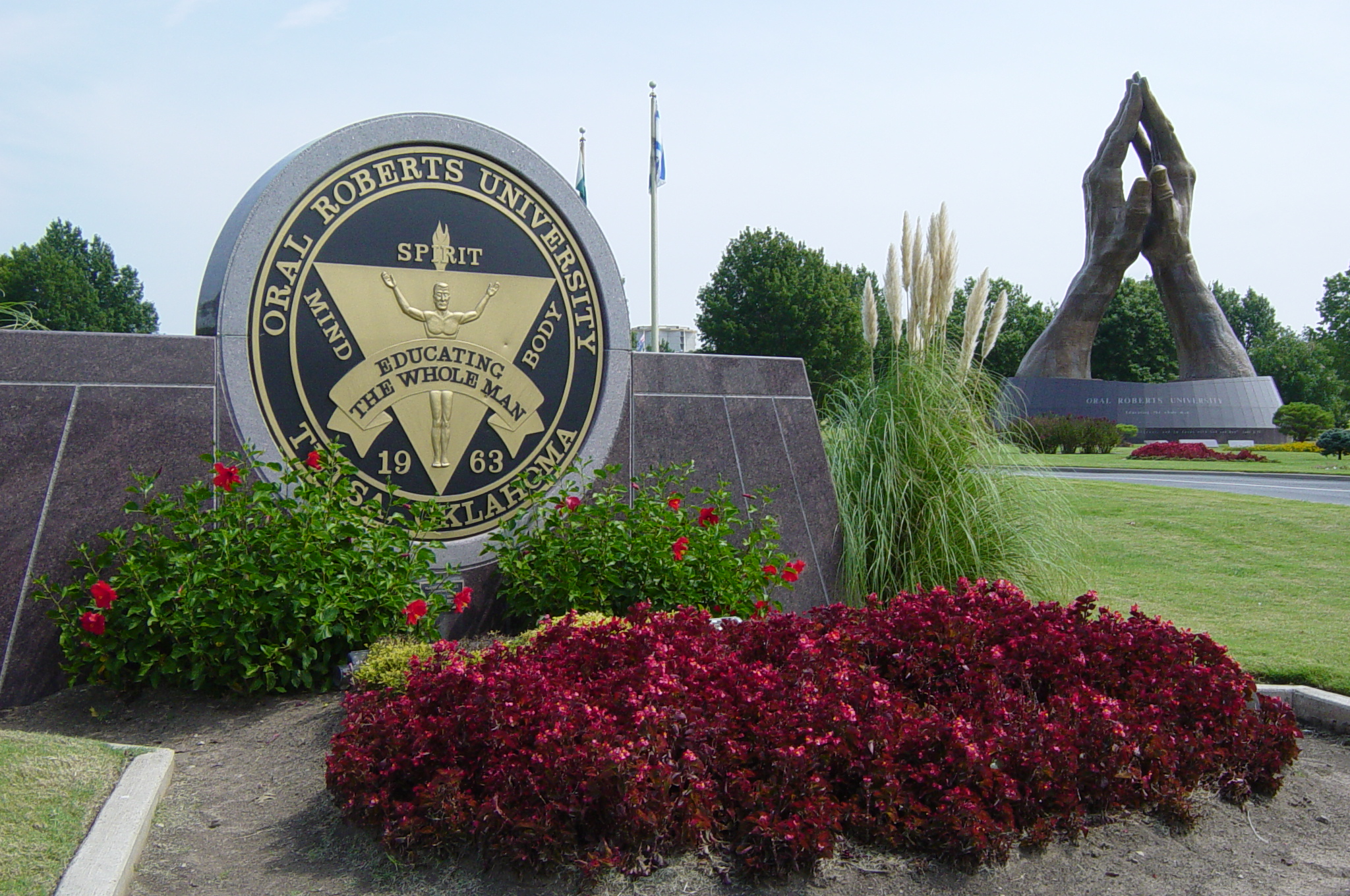
The campus has been compared to the set of The Jetsons. Gold-tinted windows. Pylon-like columns. A Buckminster Fuller-style geodesic dome in gold. A 200-foot Googie-style tower meant to evoke an abstract cross and Crown of Thorns. And at the entrance, a 60-foot, 30-ton bronze sculpture of two enormous praying hands. Oral Roberts University in south Tulsa is one of the most visually distinctive college campuses in America, a space-age vision of evangelical ambition realized by architect Frank Wallace, who described his buildings as 'sculptures' and traced his artistic sensibility to 'whittling since I was a kid.'
A Mandate from God
Charismatic Christian preacher Oral Roberts founded the university in 1963 with a commission he attributed directly to God: 'Raise up your students to hear My voice, to go where My light is dim, where My voice is heard small, and My healing power is not known, even to the uttermost bounds of the earth.' The Prayer Tower at the campus center caused immediate controversy. Some academic leaders warned that a building dedicated exclusively to prayer would prevent the school from receiving accreditation. Completed in 1967 at a cost of $2 million, it became a symbol of the university's insistence on placing faith at the literal center of education. ORU received accreditation from the Higher Learning Commission in 1971.
Rise, Crisis, and Rescue
The university built the City of Faith Medical and Research Center in 1981, an ambitious complex that included a 60-story clinic, a 30-story hospital, and a 20-story research center. Financial difficulties shuttered both the hospital and the medical school by 1989. The buildings, now called CityPlex Towers, serve as commercial office space, with some floors in the 20-story building never having been leased. A 2007 lawsuit by three former professors alleging misuse of funds by president Richard Roberts triggered his resignation and exposed over $50 million in debt. The Hobby Lobby-owning Green family stepped in with $62 million in 2008, eventually contributing over $110 million. By September 2009, the university announced it was debt-free.
March Madness Miracle
On March 19, 2021, the ORU Golden Eagles men's basketball team shocked the nation by defeating number-two seed Ohio State in the NCAA tournament as a 15th seed. They then beat seventh-seeded Florida to reach the Sweet Sixteen, becoming only the second 15th seed ever to advance that far, after Florida Gulf Coast in 2013. Player Max Abmas was named Summit League Player of the Year. The baseball program has its own tradition, reaching the College World Series in both 1978 and 2023, and winning 12 consecutive conference championships between 1998 and 2009. ORU's teams were originally called the Titans before becoming the Golden Eagles in 1993.
Sculptures on the Prairie
Frank Wallace designed most of the campus buildings, drawing on Tulsa's art deco heritage and the individualistic style of architect Bruce Goff. The main academic building, styled after King Solomon's Temple according to university publicity, covers 900,000 square feet with a lozenge-shaped footprint. Christ's Chapel, seating 3,500, was built in a drape-like form to echo Roberts's early tent revivals. The Mabee Center, an 11,000-seat arena, hosts basketball games and concerts. The Healing Hands sculpture, cast in Ciudad Juarez, Mexico, in 1980, was moved to the campus entrance in 1991. The avenue of flags at the entrance represents more than 60 nations whose students attend ORU. The campus enrolls approximately 5,000 students across over 70 undergraduate and 20 graduate programs, maintaining its founder's vision of reaching the 'uttermost bounds of the earth.'
From the Air
Located at 36.05°N, 95.95°W in south Tulsa. The campus is instantly recognizable from the air by the distinctive Prayer Tower, the gold geodesic dome of Howard Auditorium, and the massive Healing Hands sculpture at the entrance. CityPlex Towers (the former City of Faith) are visible just south of campus as three towers of 60, 30, and 20 stories. Nearest major airport: Tulsa International (KTUL), approximately 10 nm north. At 2,000-3,000 ft AGL, the futuristic architecture stands in sharp contrast to the surrounding suburban landscape.