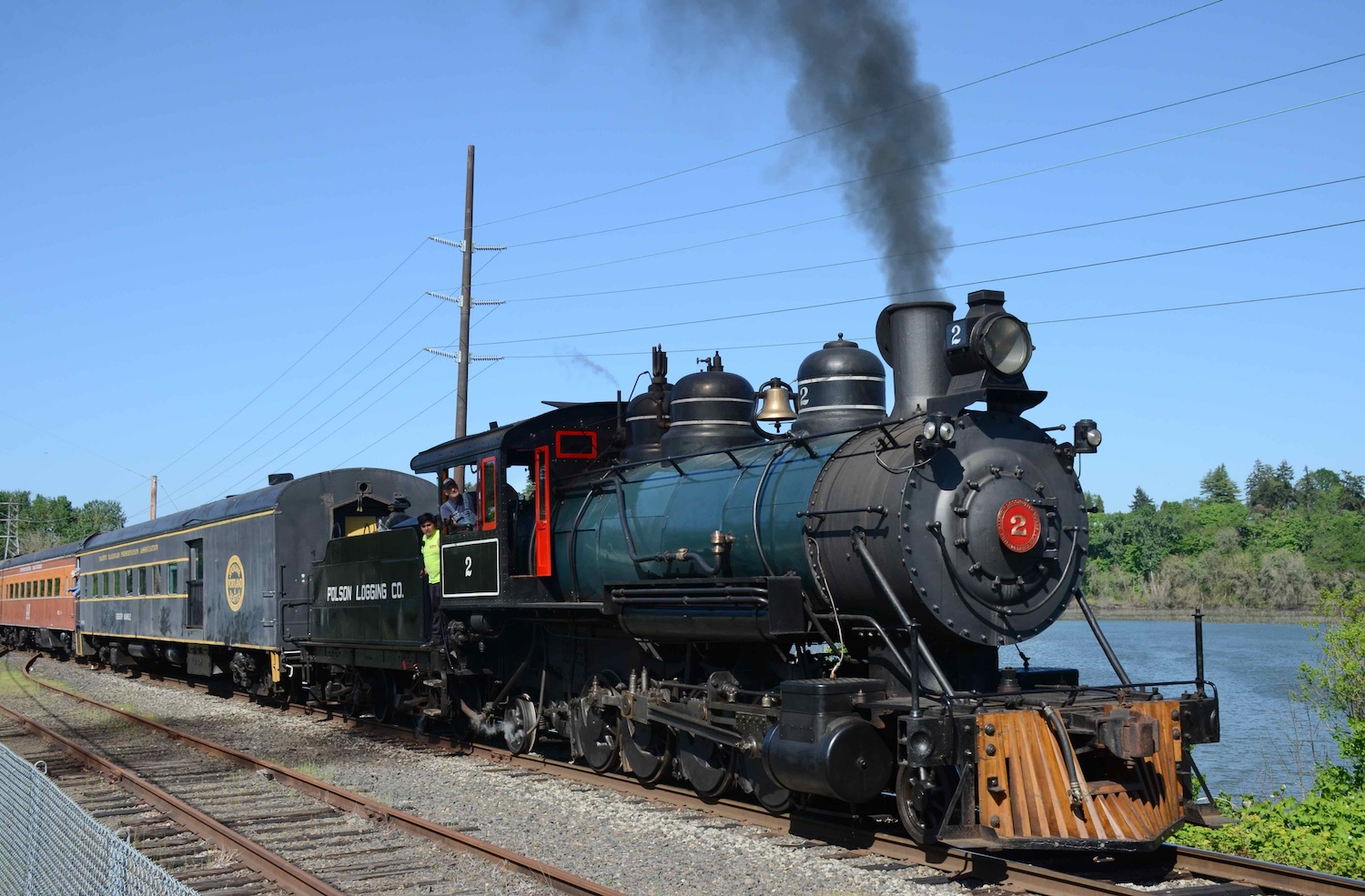
Oregon Coast Scenic Railroad
The whistle carries farther than you would expect, bouncing off the surface of Tillamook Bay and rolling into the coast range timber before fading. Somewhere between Garibaldi and Rockaway Beach, a steam locomotive older than most of the trees along the right-of-way pulls a string of vintage coaches past oyster beds and mudflats, the tracks running so close to the water that spray from a high tide can salt the windows. The Oregon Coast Scenic Railroad is a heritage operation, a nonprofit that runs excursion trains on 46 miles of former Southern Pacific track leased from the Port of Tillamook Bay Railroad. It exists in the particular American tradition of volunteers and enthusiasts keeping old machines alive through sheer stubbornness -- and in recent years, that stubbornness has been tested by storms, legal battles, fire, and a city that wants to tear up the tracks.
Tracks Along the Tideline
The standard run is the Oregon Coastal Excursion, a 90-minute round trip between Garibaldi and Rockaway Beach. Thirty minutes in each direction with a half-hour layover at the far end, time enough to walk the beach or grab a coffee before the return. The route hugs the eastern shore of Tillamook Bay, the tracks laid on a shelf carved between the water and the wooded hillside, offering views that drivers on Highway 101 never see -- herons in the shallows, crabbers hauling pots, the bay opening wide and silver on a clear morning. For those willing to stay later, the Moonlight Excursion extends the journey to Wheeler behind a steam locomotive, with sandwiches and drinks aboard -- adults only, given the bar service. Seasonal runs include the Candy Cane Express at Christmas, a Halloween train, and the Spring and Fall Splendor excursions that push deeper into the Nehalem River corridor, where the forest closes in and the world outside the windows turns to fern and moss.
The Great Coastal Gale
In December 2007, the Oregon coast took a beating that redrew the map of what the railroad could do. The Great Coastal Gale brought hurricane-force winds and more than seven inches of rain in less than 24 hours. In the Salmonberry River Valley, the storm demolished the line -- flooding washed out embankments, landslides buried track, and one large bridge collapsed entirely. The break severed the railroad's connection between the coastal tourist route and the inland town of Banks, isolating the OCSR's operating territory from the rest of the North American rail network. Freight operations past the break ceased permanently. The estimated cost to reconnect the line was $57.3 million in 2008 dollars, a figure that effectively closed the door on restoration. The scenic coastal sections survived largely intact, but the railroad became an island -- operationally self-contained, its vintage equipment marooned on a stretch of track that leads nowhere the wider rail system can reach.
Fights Over Fish and Track
Nature was not the only adversary. In 2014, the OCSR attempted to rebuild storm-damaged track in the Salmonberry River corridor and placed rock fill along the riverbank without obtaining state environmental permits. Oregon regulators objected, citing threats to native salmon and steelhead. The railroad countered that as a federally regulated railroad, it was exempt from state environmental law -- a bold legal position for a nonprofit tourist operation. The dispute went to court. In March 2015, a decision sided with the railroad, exempting it from the state regulations. Then in August 2025, the City of Rockaway Beach requested that the Port of Tillamook Bay remove the tracks entirely to extend a recreational trail, arguing that the railroad's proposed "rails with trail" compromise was too expensive. Two months later, in October 2025, a wood trestle near Tillamook caught fire and was rendered impassable, cutting the connection between the excursion route and the railroad's main restoration shop. The blaze remained under investigation.
Iron Horses, Stubborn People
What keeps the trains running is a collection of vintage equipment that reads like an inventory of Pacific Northwest logging and railroad history. The roster includes locomotives from the Curtiss Lumber Company, the McCloud River Railroad in California, and the Columbia River Belt Line -- a 2-4-4-2 articulated locomotive nicknamed "Skookum" that spent nearly sixty years on its side before being reassembled and set upright. Passengers can pay extra for a cab ride in the locomotive, standing beside the engineer as the boiler heat radiates through the steel plating. It is the kind of experience that no simulation can replicate: the physical weight of steam-powered machinery working hard, the smell of coal smoke and hot oil, the vibration of iron on iron. Whether the railroad survives its current threats -- the trail conversion, the fire damage, the simple economics of maintaining century-old infrastructure -- is an open question. But the OCSR has weathered worse. The line has been severed by storms, challenged in court, and isolated from the wider network, and the trains still run along Tillamook Bay, carrying passengers past the same oyster beds and herons that the Southern Pacific's crews saw a century ago.
From the Air
Located at 45.57°N, 123.94°W along the eastern shore of Tillamook Bay in Tillamook County, Oregon. From the air, the railroad's route is visible as a thin cleared corridor between the bay shore and the forested hillside, running north-south between the small towns of Garibaldi and Rockaway Beach. The tracks parallel Highway 101 but sit closer to the water. Tillamook Bay itself is a broad, shallow estuary easily identifiable from altitude. The town of Wheeler marks the northern extent of regular excursions. Nearest airport: Tillamook Airport (KTMK), approximately 5nm south on the bay's eastern shore. Portland-Hillsboro Airport (KHIO) is roughly 50nm east. Look for the bay, the fishing harbor at Garibaldi, and the long curve of Rockaway Beach to the north.