Orpheum Theatre (Memphis)
Even Yul Brynner got spooked. While rehearsing for The King and I at the Orpheum Theatre in 1982, the legendary actor reportedly encountered flickering lights, slamming doors, and other inexplicable disturbances. The source, according to decades of theater lore, was Mary -- the ghost of a 12-year-old girl with braided brown hair and a white dress, who has allegedly called the Orpheum home since the 1920s. Whether or not you believe in ghosts, the theater itself has had enough dramatic lives to justify a haunting: built in 1890 as the Grand Opera House, destroyed by fire in 1923, reborn in 1928 as a glittering vaudeville palace, converted to a movie house, nearly demolished, and ultimately saved to become the performing arts anchor of downtown Memphis.
From Grand Opera to Ashes
The Grand Opera House opened in 1890 on the corner of Main and Beale streets, billed as the classiest theater outside New York City. Vaudeville dominated the bill -- singers, musicians, magicians -- and the Grand thrived for nearly two decades. In 1907, it joined the Orpheum Circuit and took on the Orpheum name. Then in 1923, after a show featuring singer Blossom Seeley, fire broke out and burned the theater to the ground. Memphis lost not just a building but the center of its entertainment life.
Gold, Crystal, and a Wurlitzer
On November 19, 1928, the new Orpheum rose from the original site, designed by the celebrated Chicago firm of Rapp and Rapp. It was twice the size of its predecessor and cost $1.6 million. The interior dazzled: gold and silver leaf, marble, lush carpets, antique crystal chandeliers, and a three-manual, 13-rank Wurlitzer pipe organ with over 1,100 pipes hidden in chambers flanking the proscenium. The organ console sat on a screw-drive lift at the edge of the orchestra pit, rising dramatically into view when the organist played and disappearing when silent. It even had sound effects for accompanying silent films -- bird whistles, fire alarms, horse hooves. A stage fire in the 1950s scorched the console's mahogany finish; rather than refinishing it, someone painted it white and added gold trim, a decision that has puzzled preservationists ever since.
Decline and Rescue
As vaudeville faded, Michael Lightman's movie theater chain purchased the Orpheum in 1940 and renamed it the Malco. For decades it ran first-run films, but by 1976 intimate multiplex theaters were cutting into its business, and Lightman decided to sell. The building's future looked grim. The Memphis Development Foundation stepped in to save it, and the Orpheum became one of the first buildings in Memphis placed on the National Register of Historic Places. A $5 million restoration beginning in 1982 scrubbed away decades of neglect, restoring the 1928 opulence: the gilding was refreshed, new lighting installed, heating and ventilation modernized, and a hydraulic pit lift added. The theater reopened in January 1984 with seating for 2,491, including 28 new private suites. A second $8 million renovation in 1996-97 expanded the stage and backstage areas to accommodate the growing scale of touring Broadway productions.
Ghosts in the Balcony
For more than 50 years, strange incidents have convinced theater staff and performers that the Orpheum is haunted. The most famous resident spirit is Mary, described consistently by witnesses as a shy 12-year-old with braided brown hair in a white dress. Researchers from the University of Memphis conducted seances and Ouija board sessions and concluded that Mary died in 1921 in a falling accident downtown, unrelated to the theater. According to their account, she wandered into the Orpheum after her death, liked it, and stayed. A second spirit, called Eleanor, is said to inhabit the balcony foyer -- one investigator described a cold sensation there "like putting your hand in a tub full of raw liver." Tools found inside commodes, doors that slam of their own accord, and lights that flicker without cause are all part of the theater's working mythology.
Memphis's Living Room
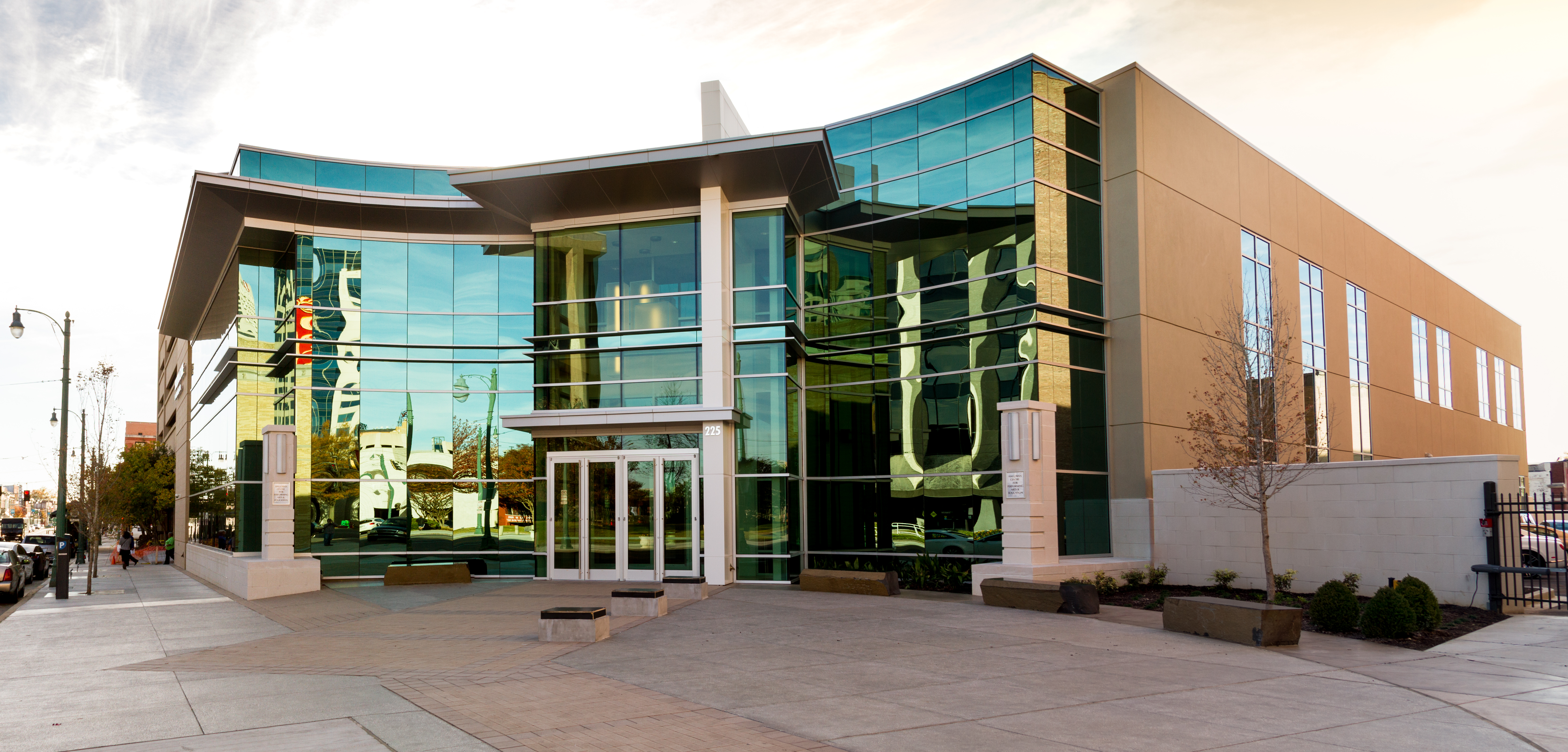
Since 1977, the Orpheum has served as the Mid-South home of touring Broadway productions, hosting shows like The Lion King, Wicked, Cats, and Les Miserables, alongside performances by Bob Dylan, Jerry Seinfeld, Tony Bennett, and Harry Connick Jr. In 2015, the adjacent Halloran Centre for Performing Arts and Education opened at 225 South Main, providing a 361-seat theater, rehearsal spaces, and 39,000 square feet for the Orpheum's growing community and education programs. The combined Orpheum Theatre Group now serves as both a world-class performing arts venue and a nonprofit educational institution, anchoring the continued revitalization of Beale Street and the South Main district. Mary, presumably, approves.
From the Air
The Orpheum Theatre is located at 35.140N, 90.055W at the corner of South Main and Beale streets in downtown Memphis. The vertical Orpheum sign and theater marquee are distinctive landmarks visible from low altitude. Nearby airports include Memphis International (KMEM) about 8 miles south. The theater sits at the heart of the Beale Street entertainment district. Best viewed at 2,000-3,000 feet AGL.