Orton Plantation
Frank Capra Jr. came looking for a movie location in 1983 and found something better -- a plantation so photogenic that it launched an entire film industry. When he chose Orton Plantation for scenes in Firestarter, then persuaded Dino De Laurentiis to open a studio in nearby Wilmington, he set off a chain reaction that would put this 250-year-old estate in 23 films and 34 television series. But Orton's real story began two and a half centuries earlier, when two Irish-descended brothers carved a rice empire out of the swampy banks of the Cape Fear River -- and the house they built outlasted wars, abandonment, and the fortunes of everyone who owned it.
The Moores of Cape Fear
Roger Moore arrived in southeastern North Carolina in 1725, joining his brother Colonel Maurice Moore on land they called Orton. Maurice was already a man of considerable influence -- father of a Continental Army general, grandfather of a Supreme Court justice, and patriarch of a family whose reach extended deep into colonial politics. He sold the Orton tract to Roger, and together the brothers founded Brunswick Town a mile to the south. Roger's first house lasted barely a year before local Native Americans destroyed it. Undeterred, he built the structure that stands today in 1735, a white brick dwelling that would anchor one of the region's leading rice plantations. That wealth, like all plantation wealth in the colonial South, was built on the forced labor of hundreds of enslaved people who worked the marshy rice fields along the river.
Columns, Cannons, and Abandonment
Orton changed hands repeatedly in the decades that followed. Benjamin Smith purchased the estate from the Moore family but lost it at auction. Physician Frederick Jones Hill bought it in 1826, and by 1861 it belonged to Thomas C. Miller. Then the Civil War arrived at Orton's doorstep. After the Confederate defeat at nearby Fort Fisher, Union soldiers seized the plantation and converted the house into a military hospital -- an act of pragmatic reuse that ironically saved it from the torch that consumed so many Southern estates. When the war ended, no one came back. Orton sat empty for 19 years, its white columns and Doric facades fading into the coastal vegetation. Four fluted Doric columns had been added in 1840 along with a full second story, transforming the original one-and-a-half-story house into a Classical and Greek Revival showpiece. Two wings followed in 1904. But for nearly two decades, no one was there to admire them.
The Chapel and the Garden Gate
Kenneth MacKenzie Murchison, a former Confederate officer, rescued Orton in 1884, restoring the house and making it his winter residence. When he died in 1904, his daughter Luola and her husband James Sprunt took over and began transforming the grounds. The couple expanded the house, and in 1910 they started developing the flower gardens that would become Orton's most beloved feature. In 1915 the Sprunts built a family chapel on the property. When Luola died of scarlet fever the following year, James renamed it Luola's Chapel in her memory. The gardens opened to the public by accident -- a family member's automobile injury prompted the Sprunts to charge visitors 25 cents to help with medical expenses. They raised a thousand dollars in a single week and never closed the gates again. For generations afterward, the old rice fields served as a wildlife sanctuary, birdwatchers wandered the grounds, and weddings filled the chapel.
A Family Returns
The Sprunt family held Orton for 126 years, donating land in 1954 to establish the Brunswick Town State Historic Site and publishing a book about the plantation's history in 1958. But in May 2010, the last Sprunt owners sold the estate for 45 million dollars to hedge fund manager Louis Moore Bacon -- a direct descendant of Roger Moore, the man who built the original house in 1725. Nearly three centuries after his ancestor cleared land along the Cape Fear, a Moore was once again lord of Orton. Bacon closed the plantation and gardens to the public, ending an era of open access that had lasted decades. The weddings stopped, the birdwatchers moved on, and the gates of one of North Carolina's oldest surviving structures swung shut. Behind them, Bacon reportedly began a comprehensive restoration of both house and grounds, returning the estate to something its original builder might recognize.
A Star Turn on Screen
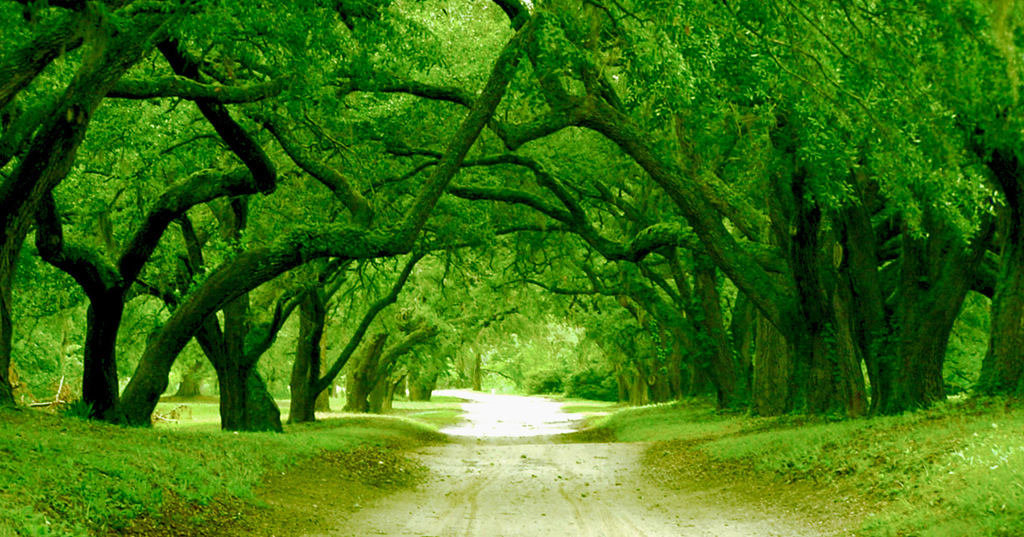
Orton's second career as a film set has been remarkably prolific. After Capra Jr.'s Firestarter shoot in 1983 and the founding of De Laurentiis Entertainment Group in Wilmington, production crews became regular visitors. The plantation's oak-lined driveway, columned facade, and river-facing gardens have stood in for Southern mansions in Lolita, Divine Secrets of the Ya-Ya Sisterhood, A Walk to Remember, and Hounddog. Television audiences know it from One Tree Hill, Dawson's Creek, Hart of Dixie, and Matlock. For decades, Orton offered filmmakers something rare -- an authentic antebellum estate still furnished with real history rather than set decoration. Whether the cameras will return now that the plantation is in private hands remains an open question, but the house itself endures, as it has since Roger Moore laid the first bricks beside the Cape Fear in 1735.
From the Air
Orton Plantation sits at 34.06N, 77.95W on the west bank of the Cape Fear River between Wilmington and Southport in Brunswick County, NC. From the air, look for a white columned mansion set among mature gardens along the riverbank, with former rice field wetlands extending toward the river. Best viewed at 1,500-2,500 feet AGL. The ruins of Brunswick Town are visible approximately one mile south. Nearest airports: Cape Fear Regional Jetport (KSUT) in Southport roughly 6 nm south, and Wilmington International (KILM) approximately 15 nm north.