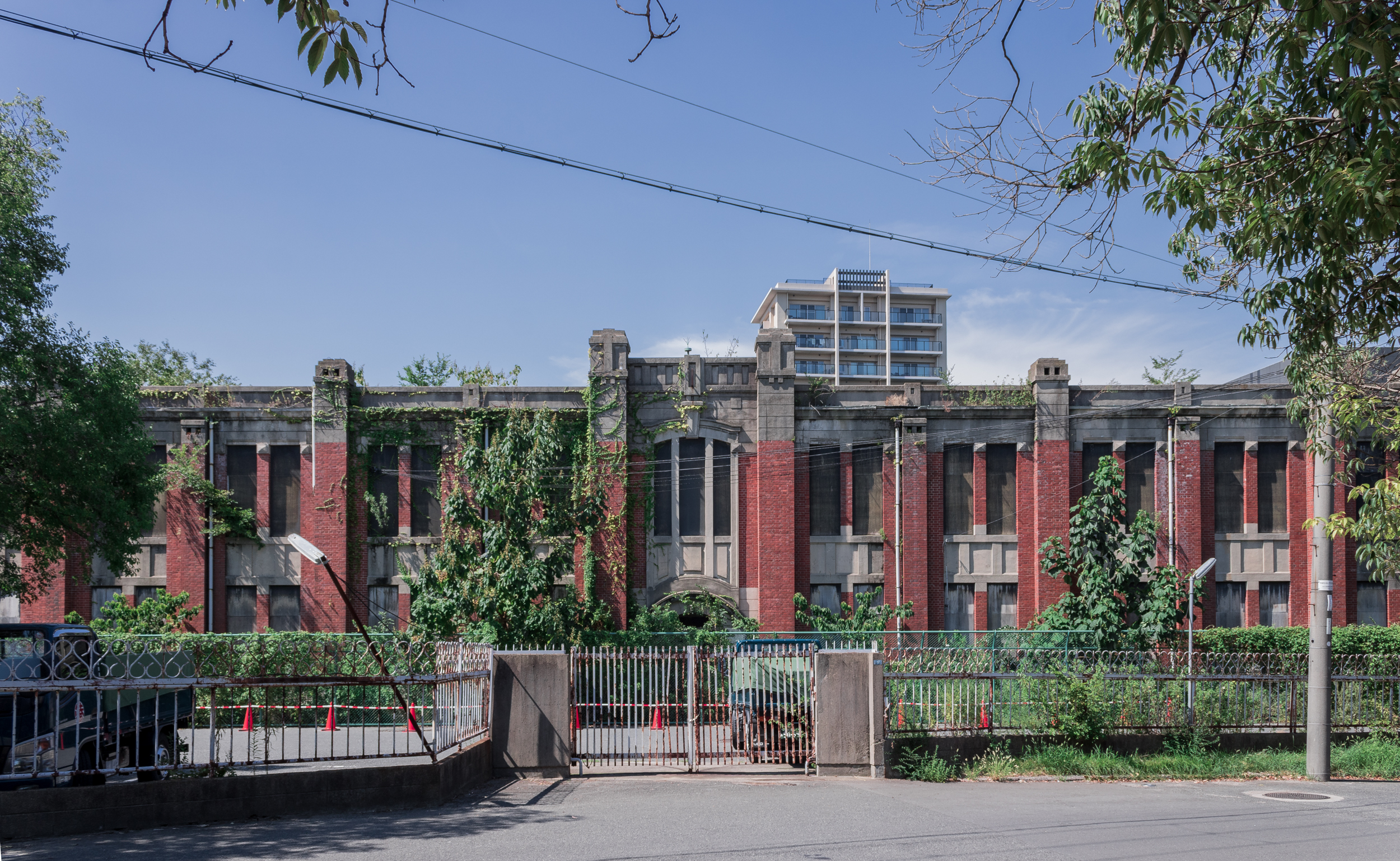
Osaka Arsenal: The Weapons Factory Inside a Castle
The man who envisioned it never saw a single rivet driven. In November 1869, the military reformer Omura Masujiro was assassinated by samurai who opposed his plans to modernize Japan's armed forces. But his proposal -- to build a modern weapons factory on the grounds of Osaka Castle, exploiting the city's central location and its transport links by land and water -- was accepted anyway. By February 1870, an office for weapons production was established, and workers moved into an empty rice warehouse in the castle's northeastern quarter. Machines and skilled labor arrived from the Nagasaki Iron Works. The Osaka Arsenal was born inside the walls of a fortress that had already seen three centuries of Japanese history.
A Factory That Changed Its Name Like Uniforms
The early arsenal could not seem to settle on what to call itself. In 1871 it became the Office for Weapons Production Osaka. A year later it was the Osaka Factory. By 1875 it had been rechristened the Artillery Office of the 2nd Artillery Military District. Finally, in 1879, it received its lasting designation as the state production center for guns and grenades, while its counterpart in Tokyo handled handguns. Each renaming reflected the Meiji government's frantic effort to build a Western-style military from scratch -- reorganizing departments, consolidating authority, and channeling resources into industrial production that could keep pace with European powers. The arsenal was not merely a factory. It was the physical expression of a nation reinventing itself at breakneck speed.
War as Growth Engine
Every conflict expanded the arsenal's footprint. During the Satsuma Rebellion of 1877, production surged to supply government forces fighting the last samurai uprising. The First Sino-Japanese War of 1894-1895 brought another expansion, and the Russo-Japanese War of 1904-1905 pushed the factory's boundaries until it consumed the entire eastern side of Osaka Castle's grounds. Workers flooded in during wartime and were dismissed when the fighting stopped -- a brutal hire-and-fire cycle that bred resentment. Tensions boiled over in December 1906, after the Russo-Japanese War ended, and again in October 1919, when demobilization following the First World War left thousands without employment. The arsenal's workforce was a barometer of Japan's military ambitions: swelling with each new campaign, contracting painfully in the silences between them.
Sixty Thousand Workers, One Target
By the Pacific War, the Osaka Arsenal had become one of the largest military factories in the Japanese Empire. Its workforce exceeded 60,000 employees -- a small city within a city, producing the weapons and munitions that supplied Japan's campaigns across Asia and the Pacific. But as the war ground on, material shortages and labor difficulties ate into production. The arsenal that had once expanded with every conflict was now struggling to maintain output even as demand reached its highest point. Osaka itself had become a target for American bombing campaigns, though the arsenal initially escaped serious damage.
The Last Day Before Silence
On August 14, 1945 -- one day before Japan's surrender -- American bombers delivered a devastating air raid that destroyed 90 percent of the Osaka Arsenal. The timing was almost cruel: the war was functionally over, the atomic bombs had already fallen on Hiroshima and Nagasaki, and the Emperor's decision to accept the Potsdam Declaration was imminent. The death toll on the arsenal grounds was 382, relatively contained because most workers had already evacuated after the air alarm sounded. Only air defense personnel remained at their posts. The casualties beyond the arsenal's perimeter were never tallied. In a single raid, 75 years of industrial history were reduced to rubble and twisted metal.
What Replaced the Guns
After the war, the vast footprint of the Osaka Arsenal became a blank canvas for a city rebuilding itself. Some portions were given over to commercial high-rise development -- the Osaka Business Park now occupies part of the former arsenal grounds, its glass towers standing where munitions warehouses once did. Other sections were absorbed into Osaka Castle Park, transforming a landscape of military production into one of cherry blossoms and public recreation. A former chemical laboratory building of the arsenal still stands within the park, one of the few physical reminders that this green space was, within living memory, an industrial complex producing the instruments of war. The transformation is so complete that visitors strolling through the park's plum groves or watching buskers perform have little reason to suspect what lay beneath their feet for three quarters of a century.
From the Air
Located at 34.687N, 135.534E on the eastern side of Osaka Castle grounds, in central Osaka. The former arsenal site is now split between Osaka Castle Park and the Osaka Business Park commercial district, visible as a cluster of glass high-rises immediately east of the castle moats. From 3,000-5,000 feet AGL, the contrast between the castle's green spaces and the modern towers is striking. Osaka International Airport (RJOO/Itami) lies approximately 8 nautical miles northwest; Kansai International Airport (RJBB) is about 26 nautical miles to the southwest.