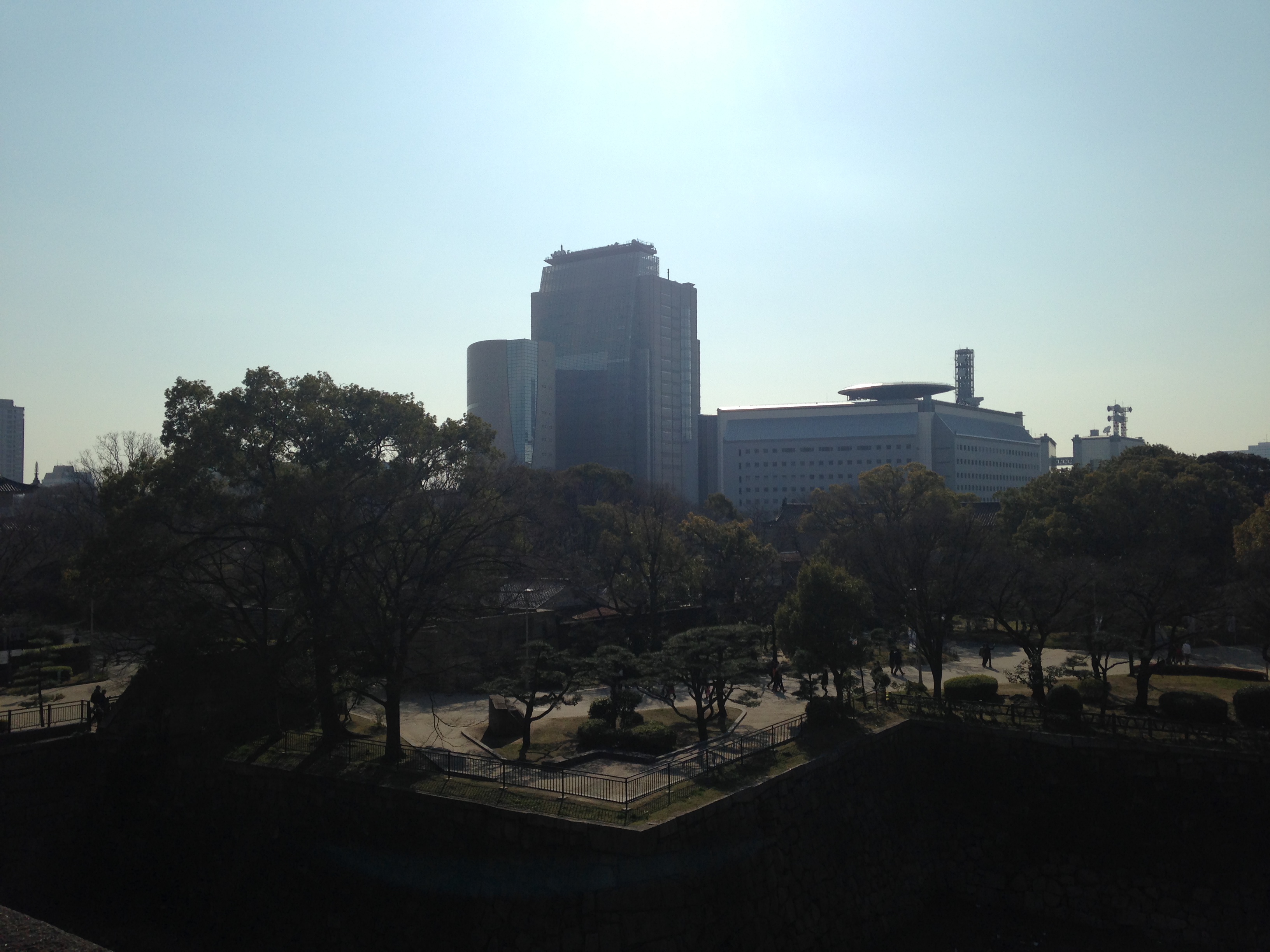
Osaka Museum of History: Built on the Bones of an Ancient Capital
Dig deep enough beneath Osaka's modern skyline and you hit the seventh century. In 1961, Osaka City University professor Tokutaro Yamane drove a shovel into the earth southwest of Osaka Castle and uncovered the remains of Naniwa-no-miya -- an imperial palace complex that had served as Japan's capital more than 1,300 years earlier. The discovery rewrote the city's identity. Osaka, long known as a merchant city and industrial powerhouse, turned out to have been an ancient seat of imperial power, predating even Kyoto. Four decades after Yamane's excavation, a thirteen-story building designed by César Pelli rose directly above those palace ruins. The Osaka Museum of History opened in 2001, and from its tenth-floor windows, visitors can look down at the very ground where emperors once held court.
An Emperor's Capital Beneath the Concrete
Naniwa Palace served as the imperial capital during two distinct periods between the sixth and eighth centuries. The first began in 645, when Emperor Kotoku relocated the capital from Asuka in Nara to Naniwa as part of the sweeping Taika Reforms that reshaped Japanese governance. The palace complex, completed in 652, featured a grand audience hall called the Daigokuden, supported by pillars seventy centimeters in diameter. The court resided here until fire and political shifts drew it elsewhere. Centuries later, Emperor Shomu revived Naniwa as a secondary capital in 744, rebuilding the palace complex. But the court stayed only a year. After that, the palace was abandoned, gradually buried beneath centuries of urban growth until Yamane's excavation brought it back to light. Today, the archaeological park preserves the foundations and a reproduction of the Daigokuden's stone base, open to anyone walking the grounds.
Thirteen Floors Over Thirteen Centuries
The museum takes visitors on a descending journey through time. An elevator carries them to the tenth floor, where a full-scale diorama reconstructs the Daigokuden hall as it appeared in 744 -- the audience chamber where Japan's emperor received officials and conducted state ceremonies. Life-sized figures in period costume stand among massive painted columns, and floor-to-ceiling windows frame a direct view of Osaka Castle's central keep and the Naniwa-no-miya archaeological park below. The ninth floor shifts to the medieval and early modern periods, including the construction of the Osaka Honganji temple complex and Toyotomi Hideyoshi's transformation of the city through castle-building. The seventh floor reaches the modern era, recreating the 1920s when Osaka's population briefly surpassed Tokyo's and the city earned the nickname 'the nation's kitchen' for its dominance in commerce and manufacturing.
Pelli's Tower and Its Companion
César Pelli, the Argentine-American architect who designed the Petronas Towers in Kuala Lumpur and the World Financial Center in New York, brought his firm's signature approach to the museum project. Working with Japanese firm Nihon Sekkei, Pelli designed both the museum and the adjacent NHK Osaka Broadcasting Center as a unified complex connected by a glass atrium. The two buildings opened simultaneously in 2001, the same year the former Osaka City Museum closed its doors. The museum's collection has grown steadily since opening: from roughly 100,000 objects in 2005 to 138,595 catalogued items by 2016, with an additional 17,632 pieces held on deposit. The basement levels reveal something no amount of architectural planning could fabricate -- the actual remains of Naniwa Palace warehouses, walls, and water supply facilities, excavated in place and displayed exactly where they were found over a millennium ago.
Where the Past Refuses to Stay Buried
Osaka rarely appears on lists of Japan's ancient capitals alongside Kyoto and Nara, but the evidence beneath the museum argues otherwise. The Naniwa-no-miya ruins demonstrate that this city played a central role in the formation of the Japanese state during some of its most transformative centuries. The Taika Reforms launched from this ground reshaped land ownership, taxation, and governance across Japan. The museum's position -- physically above the ruins, visually connected to Osaka Castle across the park -- creates a layered experience that few museums anywhere can match. Standing on the tenth floor, looking from the reconstructed Daigokuden down to the actual ruins and across to the castle that Hideyoshi built a thousand years later, visitors see the full sweep of Osaka's history compressed into a single view. The city that once served as an emperor's capital became a merchant's paradise, then an industrial giant, and now tells all those stories from a tower built on the bones of the oldest one.
From the Air
Located at 34.68°N, 135.52°E in Chuo-ku, central Osaka, immediately southwest of Osaka Castle. From the air, the museum is identifiable as a tall rectangular tower adjacent to the NHK broadcasting center, with the green expanse of Naniwa-no-miya Park and Osaka Castle Park visible to the northeast. The Osaka Castle keep is a prominent visual landmark. Best viewed at 2,000-4,000 feet AGL for building detail. Osaka International Airport (Itami, RJOO) lies approximately 9 nautical miles north-northwest. Kansai International Airport (RJBB) is approximately 27 nautical miles south-southwest on its artificial island in Osaka Bay.
Sources
- Osaka Museum of History - Wikipedia
- Exploring the Osaka Museum of History and the Naniwa-no-miya Historic Site - Nippon.com
- Naniwa Palace history - naniwanomiya.jp
- NaniwaAR Excavation Story - naniwanomiya-ar.jp
- Osaka Museum of History - Wikipedia (collection data)
- Osaka population history - Daibiru 100th anniversary