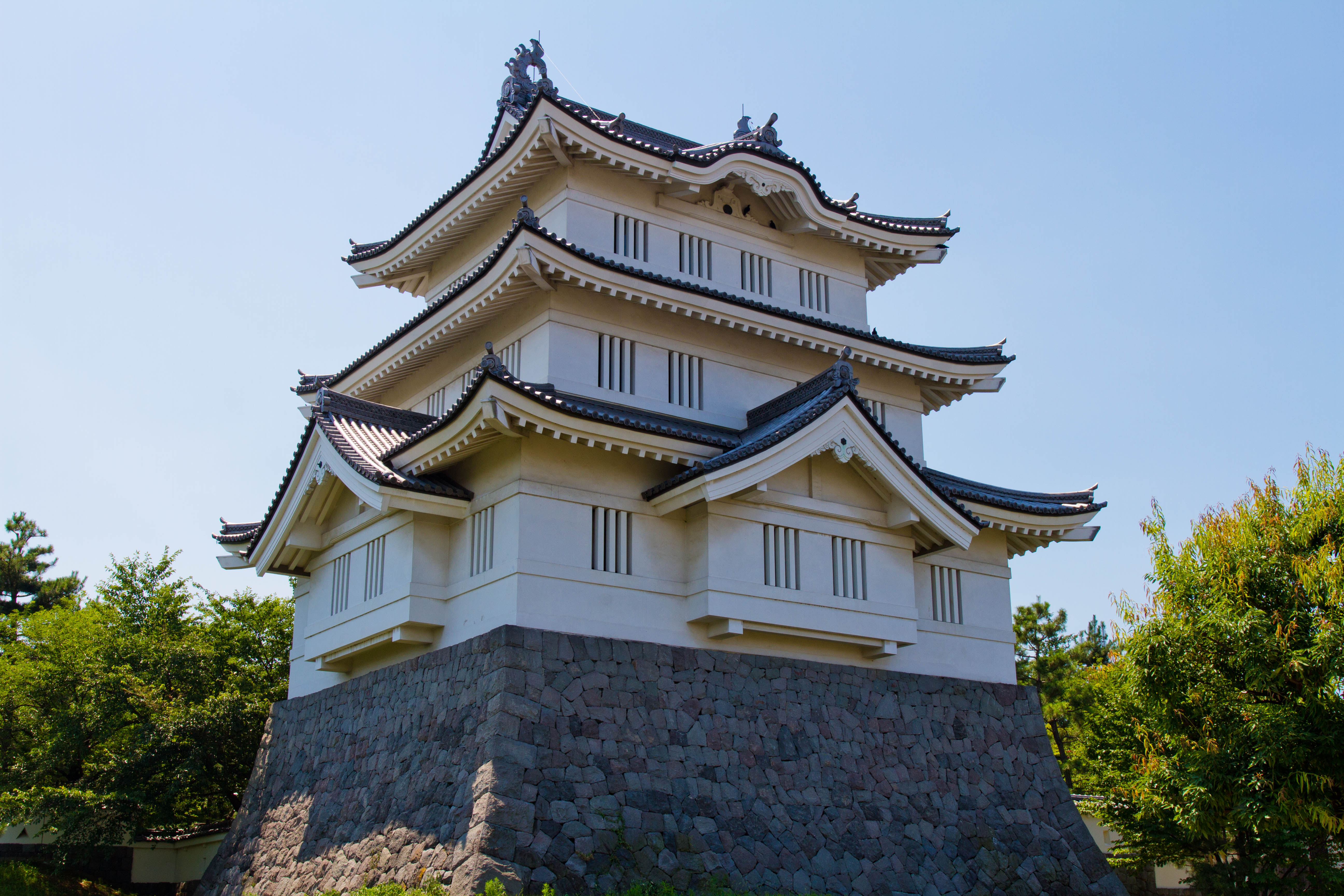
Oshi Castle
They tried to drown the castle. In the summer of 1590, the warlord Ishida Mitsunari -- commanding 23,000 soldiers on behalf of Japan's most powerful man, Toyotomi Hideyoshi -- ordered his troops to build 28 kilometers of earthen dikes around Oshi Castle and divert the waters of the nearby rivers to flood the defenders out. It was an ambitious plan modeled on Hideyoshi's own famous siege of Takamatsu eight years earlier. But the marshes that surrounded Oshi had always been its greatest weapon, and the water rose against the besiegers as much as the besieged. The castle held. Inside its walls, 619 samurai and 2,000 local conscripts -- including the castellan's daughter Kaihime -- waited out the deluge for over a month. When they finally surrendered, it was not because the walls had fallen but because word arrived that their overlords, the Hojo clan, had been defeated at Odawara. Oshi Castle emerged from the ordeal with a nickname that endures to this day: the Floating Castle.
Built on Borrowed Ground
Narita Akiyasu completed Oshi Castle around 1479 on a low rise near the Tone River, threading its walls and baileys through the marshes and swamplands that blanketed the northern Kanto Plain. Those wetlands were not obstacles -- they were the design. The bogs and flooded paddies created natural moats that made conventional siege tactics nearly impossible, and the castle was soon regarded as one of the seven most important strongholds of the Kanto region. The Narita clan initially served as vassals to the Ogigayatsu Uesugi clan, but after the Uesugi's crushing defeat at the siege of Kawagoe Castle in 1546, the Narita shifted their allegiance to the ascendant Odawara Hojo clan. That switch cost them: the furious Uesugi Kenshin burned their castle town to the ground in 1574 as retribution for what he considered betrayal.
The Siege That Made a Castle Famous
When Toyotomi Hideyoshi launched his massive campaign against the Hojo clan in 1590, Oshi Castle's lord Narita Ujinaga was already at Odawara with his best warriors, leaving the home fortress desperately undermanned. Ishida Mitsunari arrived with 23,000 troops expecting a quick capitulation. Instead, the skeleton garrison -- led by Ujinaga's daughter Kaihime and his brother Narita Nagachika -- refused to yield. Ishida threw wave after wave of infantry assaults against the walls, but the surrounding marshes funneled attackers into killing zones. Frustrated, he turned to engineering. His army labored for days constructing a continuous ring of earthen dikes 28 kilometers long, then opened channels to flood the lowlands. Torrential rains obliged. The water rose, but so did the castle -- its elevated core platform stayed above the waterline while the flooded marshes turned the fortress into an island. For over a month the garrison held out, earning Oshi its legendary epithet.
The Aftermath That Changed Japan
The siege of Oshi ended not with a breach but with a message. When news reached the defenders that Narita Ujinaga had surrendered at Odawara, further resistance lost its purpose. The garrison laid down its arms. But the consequences of this drawn-out stalemate rippled far beyond the marshes of Gyoda. Ishida Mitsunari, who had been one of Hideyoshi's most trusted administrators, emerged from the siege with his military reputation in tatters. The image of a bureaucrat who could not reduce a castle defended by farmers and a woman followed him for the rest of his career. After Hideyoshi's death in 1598, Ishida struggled to rally support among Japan's powerful daimyo, many of whom questioned his competence as a field commander. That lack of confidence was a contributing factor in his catastrophic defeat at the Battle of Sekigahara in 1600 -- the battle that handed control of Japan to Tokugawa Ieyasu and ended the Sengoku period for good.
From Fortress to Park
After 1590, Tokugawa Ieyasu claimed the Kanto region as his own and rebuilt Oshi Castle as the seat of the 100,000 koku Oshi Domain. For the next 270 years, the castle served as an administrative center under a rotating succession of daimyo from the Matsudaira and Abe clans. The castle town thrived during the Edo period, enriched by its position near the Nakasendo highway -- one of the five great roads connecting Edo to the provinces -- and its access to river trade on the Tone. When the Meiji Restoration swept away the feudal order after 1868, every structure of Oshi Castle was demolished. The site became a public park. In 1988, the city of Gyoda erected a reconstructed donjon -- a concrete tower housing the local history museum -- to honor the castle's memory and draw visitors to a city that had once held off the most powerful army in Japan.
From the Air
Located at 36.137N, 139.453E in the city of Gyoda, Saitama Prefecture, on the Kanto Plain northwest of Tokyo. The castle site is now a public park with a reconstructed tower visible from the air. The flat, low-lying terrain and remnant waterways hint at the marshlands that once made the fortress so formidable. Nearest major airports: Tokyo Narita International (RJAA) approximately 55nm east, Haneda Airport (RJTT) approximately 40nm south. Honda Airport (RJTS), a small general aviation field, lies approximately 5nm southwest. The Tone River is visible nearby, running through the agricultural landscape of the northern Kanto Plain.