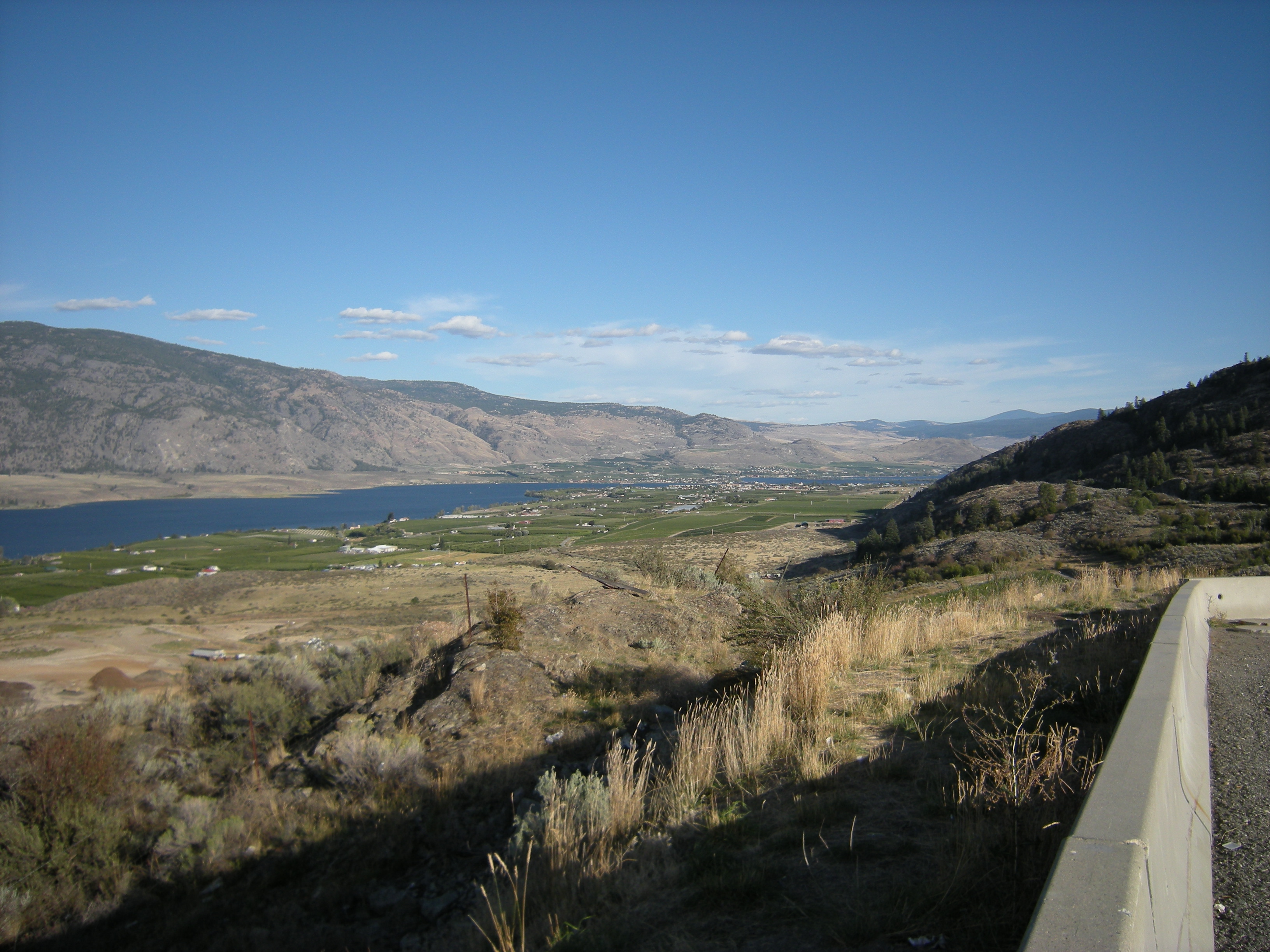
Osoyoos: Canada's Only Desert
Canada has a desert, and nobody believes it. In the southern Okanagan Valley, in the rain shadow of the Cascade Mountains, annual precipitation drops below ten inches. Prickly pear cactus grows. Rattlesnakes hunt. Temperatures exceed 100°F in summer. It's the northern tip of the Great Basin Desert ecosystem, extending from Nevada through eastern Washington to this improbable corner of British Columbia. The Osoyoos Desert Centre was built to prove to skeptical visitors that they're actually standing in desert - Canada's only true desert, a landscape so contrary to national identity that it needs a building to explain itself.
The Desert
The Osoyoos area averages less than 10 inches of annual precipitation - the driest place in Canada. The Cascade Mountains block Pacific moisture; what little rain falls in summer evaporates quickly in temperatures that routinely exceed 40°C (104°F). The ecosystem is Great Basin shrub-steppe: sagebrush, antelope brush, bunchgrass, and yes, prickly pear cactus. Creatures you wouldn't expect in Canada live here: Pacific rattlesnakes, scorpions, black widow spiders, and the endangered burrowing owl. The landscape looks more like Nevada than the Canadian Rockies, which confuses tourists expecting universal greenness.
The Ecosystem
The South Okanagan grasslands are among Canada's most endangered ecosystems - over 80% has been lost to agriculture, development, and invasive species. The remaining fragments support species found nowhere else in Canada: the sage thrasher, the Great Basin spadefoot toad, and the western harvest mouse. The sandy soils host specialized ant communities. The antelope brush shrublands provide critical habitat for wintering mule deer. Conservation efforts struggle against vineyard expansion and housing development - the same climate that creates desert makes excellent wine country, and wine country attracts development.
The Wine
The Okanagan's desert climate proved ideal for wine grapes. Summer heat ripens grapes to perfection; cool nights preserve acidity; winter cold creates ice wine opportunities. The wine industry exploded in the 1990s, transforming orchards and sagebrush into vineyards. Osoyoos is now surrounded by wineries, the desert landscape converted to agriculture. The tension is obvious: the same aridity that creates desert supports an agricultural industry that destroys desert. Irrigation turns shrub-steppe into vineyard; the desert shrinks with every new planting. The economic argument is powerful; the ecological loss is irreversible.
The Centre
The Osoyoos Desert Centre opened in 1999 to interpret and protect a remnant of native grassland. A boardwalk trail winds through 67 acres of desert ecosystem, with interpretive signs explaining the landscape's uniqueness. The centre conducts research, monitors endangered species, and educates visitors who often don't believe they're in a desert until they see rattlesnake warning signs. It's a small island of conservation in a sea of development - insufficient to save the ecosystem, sufficient to remember what's being lost.
Visiting Osoyoos
Osoyoos is located in the South Okanagan Valley, on Highway 97 near the U.S. border. The Osoyoos Desert Centre is located 3 km north of town; boardwalk tours are self-guided or guided. Hours are seasonal; check before visiting. The Nk'Mip Desert Cultural Centre, operated by the Osoyoos Indian Band, offers Indigenous perspectives on the desert ecosystem. Osoyoos Lake offers beaches and water sports; the town has resort-style lodging. Wine touring is a major draw; dozens of wineries offer tastings. The Okanagan Falls to Osoyoos drive passes through desert landscapes. Summer is hot; spring and fall offer mild weather and fewer crowds. Watch for rattlesnakes on trails.
From the Air
Located at 49.03°N, 119.47°W in the South Okanagan Valley, British Columbia. From altitude, the Osoyoos area is visibly different from surrounding terrain - tan and brown rather than green, the arid landscape of the rain shadow. Osoyoos Lake gleams blue in the valley bottom; vineyards create geometric patterns on the benchlands. The U.S. border is visible as a cleared line just south. The terrain is semi-arid: sagebrush, grassland, and irrigated agriculture. The Cascade Mountains rise to the west, catching the moisture that this valley never receives. This is Canada's only true desert, visible from altitude as the dry outlier it is.