Otago Gold Rush
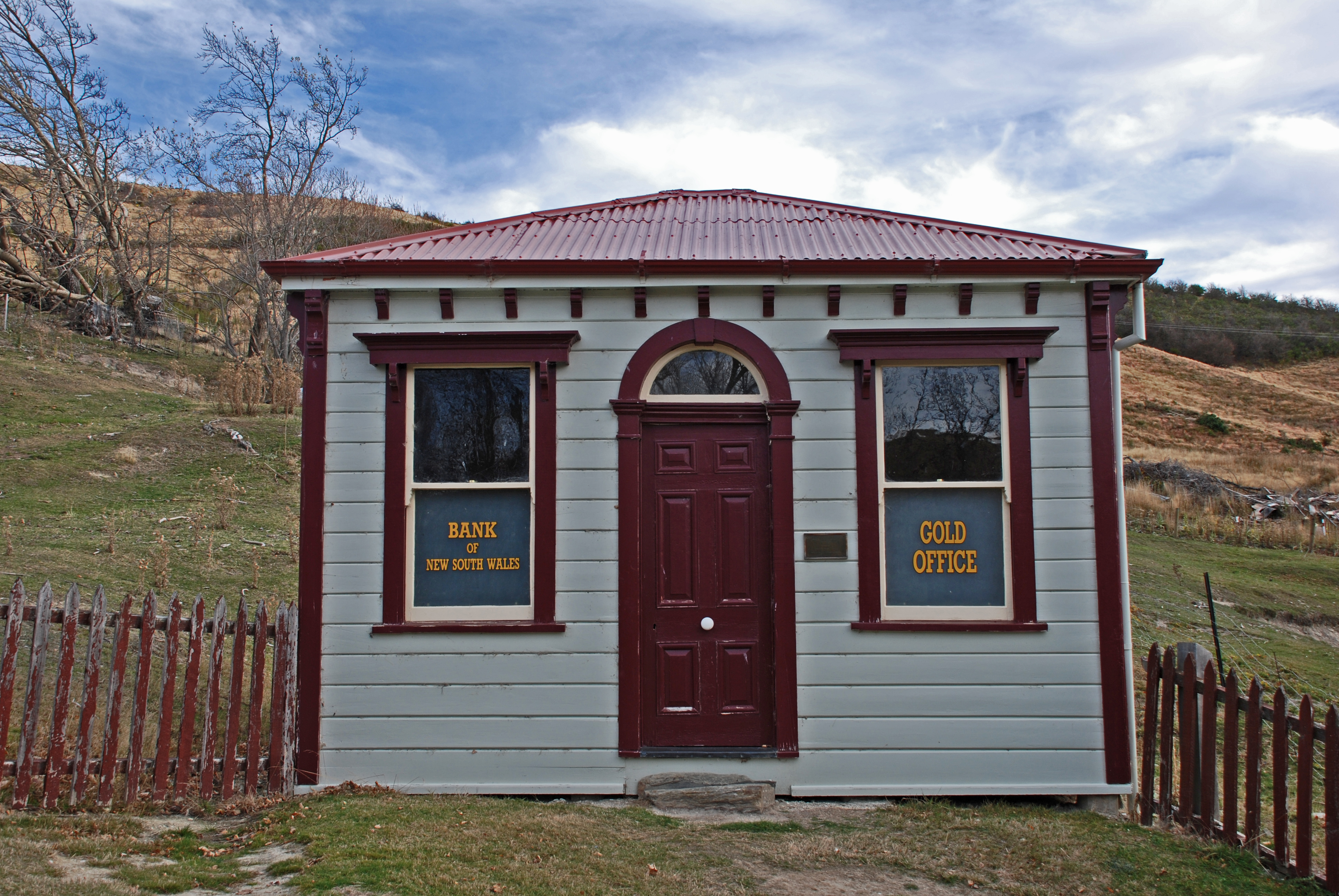
Gabriel Read shoveled away two and a half feet of gravel, hit soft slate, and saw gold "shining like the stars in Orion on a dark frosty night." That was 25 May 1861, in a creek bed near Lawrence at the foot of the Otago hills. Within months, the quiet colonial settlement of Dunedin -- barely thirteen years old -- found itself the staging point for New Zealand's greatest gold rush. By February 1864, some 18,000 miners were scattered across Central Otago, many of them veterans of the California and Victorian rushes who had followed the glint of precious metal halfway around the world one more time. They came with pans and sluice boxes, with ambition and desperation in roughly equal measure, and they remade this corner of New Zealand in ways that persist to this day.
Stars in Orion
Gabriel Read was an Australian prospector who had chased gold across two continents before arriving in Otago. His find at Gabriel's Gully, near the banks of the Tuapeka River, was not the first gold discovered in the region -- small quantities had turned up near Palmerston as early as 1851, and along the Mataura River in 1856. But earlier finds had generated little excitement in a colony preoccupied with more practical matters. What changed everything was scale. When John Hardy of the Otago Provincial Council announced that he and Read had prospected country "about 31 miles long by five broad, and in every hole they had sunk they had found the precious metal," the rush began in earnest. Read's letter appeared in the Otago Witness on 8 June 1861, and by Christmas, 14,000 prospectors crowded the Tuapeka and Waipori fields.
Canvas Towns and Calico Walls
The goldfields spawned instant communities. Mining towns materialized from canvas, calico, and rough timber -- temporary shops, hotels, and huts clustered wherever a strike was reported. As the fields proved durable, some settlements solidified into timber and concrete. Janet Robertson, who lived in a small cottage in Tuapeka, watched the transformation firsthand. It was in her home that Gabriel Read wrote his discovery letter, and as miners flooded the area, she opened her doors, cooked meals, and cared for the men passing through. Women like Susan Nugent-Wood, a writer who worked in several official positions on the goldfields, and Harriet Heron, who lived in a tent at Fourteen-Mile Beach for three years as the only woman in camp, shaped these communities as much as any prospector. When husbands died in mining accidents or from disease, widows often took over their businesses. Elizabeth Potts received a hotel license in Lawrence in 1869, one of many women who stepped from domestic life into commerce by necessity.
Dunedin's Golden Windfall
The rush made Dunedin rich. Founded only in 1848, the city briefly became New Zealand's largest town as gold money poured through its banks, warehouses, and ports. Many of Dunedin's stately Victorian and Edwardian buildings date from this period of sudden prosperity. The wealth endowed institutions that outlasted the gold itself: the University of Otago, New Zealand's first university, was founded in 1869 on goldfield profits. But the boom was already fading. By the mid-1860s, the easily accessible alluvial gold was thinning out. The region's population dropped sharply, and Dunedin never again reached such relative prominence. The deep south of New Zealand settled into a quieter prosperity -- comfortable, but no longer the center of colonial ambition.
After the Pans Were Empty
When the individual prospectors moved on, the industrialists moved in. About 5,000 European miners remained in 1871, joined by thousands of Chinese miners invited by the province to rework claims the first wave had abandoned. Friction between European and Chinese miners contributed to the introduction of New Zealand's head tax -- an ugly chapter in the country's immigration history. Attention shifted to the gravel beds of the Clutha River, where engineers attempted to build a steam-powered mechanical dredge. In 1881, the dredge Dunedin became the world's first commercially successful gold dredge, operating until 1901 and recovering 17,000 ounces of gold. The environmental cost was enormous: by 1920, the Rivers Commission estimated that 300 million cubic yards of material had been moved by mining in the Clutha catchment alone, raising the river bottom by as much as five meters. Today, OceanaGold still mines commercially at Macraes Mine near Palmerston, processing more than five million tonnes of ore annually. The gold rush ended, but the mining never quite stopped.
From the Air
The gold rush centered on Central Otago, with Gabriel's Gully located near Lawrence at approximately 45.88S, 169.68E. The goldfield region stretches from Lawrence northwest through the Maniototo Plain to Cromwell and Arrowtown. From the air, look for the distinctive tussock-covered hills and schist rock outcrops of Central Otago, with the Clutha River winding through the landscape. Nearest airports include Queenstown (NZQN) to the west and Dunedin (NZDN) to the east. The Otago Central Rail Trail follows the old railway line through the heart of the goldfield country. Best viewed at 4,000-8,000 ft for the sweep of the landscape.