Otis Redding
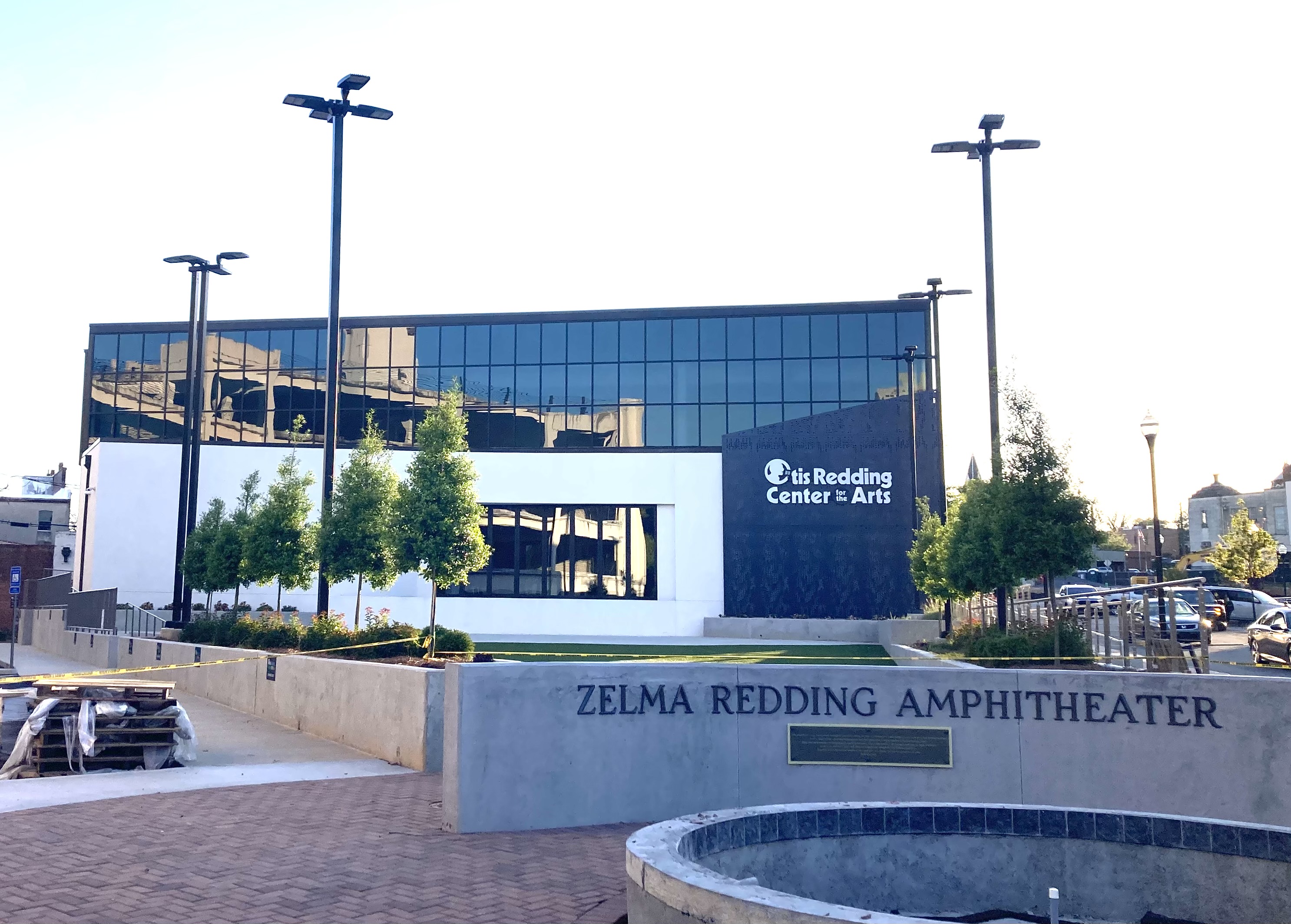
Three days. That is how long separated Otis Redding's final recording session from the plane crash that killed him. On a December afternoon in 1967, he laid down "(Sittin' On) The Dock of the Bay" at Stax Records in Memphis—a song his wife disliked, the label thought was not R&B, and the bassist feared would ruin their reputation. Redding believed it was the best thing he had ever written. He was right. Released posthumously in January 1968, it became the first song in American chart history to reach number one after its artist's death. But the story of Otis Ray Redding Jr. is not the story of one song. It is the story of a voice that came out of the public housing projects of Macon, Georgia, and changed the sound of a nation.
A Voice Forged in Macon
Redding was born on September 9, 1941, in Dawson, Georgia, the fourth of six children. His father was a sharecropper who later worked at Robins Air Force Base and occasionally preached in local churches. When Otis was three, the family moved to Tindall Heights, a predominantly African-American public housing project in Macon. He sang in the Vineville Baptist Church choir, learned guitar and piano, and took drum and singing lessons starting at age 10. Every Sunday he earned six dollars performing gospel songs on Macon radio station WIBB. He won the five-dollar prize at a teen talent show for 15 consecutive weeks. At 15, he dropped out of Ballard-Hudson High School to support his family after his father contracted tuberculosis. He dug wells. He pumped gas. And he sang whenever anyone would let him, citing Little Richard and Sam Cooke as the twin poles of his musical world. "I would not be here without Little Richard," he said. "I entered the music business because of Richard."
The Driver Who Stole the Session
Redding's breakthrough at Stax Records reads like a scene from a movie because it essentially was one. In 1962, guitarist Johnny Jenkins needed a driver to take him to a recording session in Memphis. Redding, who had been singing with Jenkins's band the Pinetoppers, drove. When Jenkins's session ended early with nothing usable, Redding was allowed to perform two songs. The first, "Hey Hey Baby," struck studio chief Jim Stewart as too close to Little Richard. The second was a ballad called "These Arms of Mine." Stewart later recalled: "There was something different about it. He really poured his soul into it." The single sold more than 800,000 copies. The kid who drove the car drove himself straight into a recording contract that would reshape American music.
From the Chitlin' Circuit to Monterey
Redding spent his early career performing on the Chitlin' Circuit—the network of venues hospitable to African-American entertainers during segregation. He was initially popular mainly with Black audiences. That began to change when he performed at the Whisky a Go Go on the Sunset Strip in Los Angeles, becoming one of the first soul artists to play for rock audiences on the West Coast. Bob Dylan attended and offered Redding an altered version of "Just Like a Woman." Booking agent Bill Graham put him at the Fillmore Auditorium and afterward declared it "the best gig I ever put on in my entire life." The Beatles sent a limousine to pick up the Stax crew in London. Then came June 1967 and the Monterey Pop Festival. Backed by Booker T. & the M.G.'s, Redding opened with Sam Cooke's "Shake," asked the crowd if they were the "love crowd," and closed with "Try a Little Tenderness." Brian Jones and Jimi Hendrix watched from the wings, captivated. "I got to go, y'all, I don't wanna go," Redding told the audience. It was his last major concert.
Gone at Twenty-Six
On December 10, 1967, Redding's Beechcraft H18 crashed into Lake Monona in Madison, Wisconsin, in heavy rain and fog. He was 26 years old. Four members of the Bar-Kays, their valet Matthew Kelly, and pilot Richard Fraser also died. The sole survivor, Ben Cauley, woke just before impact to see bandmate Phalon Jones look out the window and say, "Oh, no!" More than 4,500 mourners came to the funeral at Macon's City Auditorium, overflowing the 3,000-seat hall. Redding was entombed at his ranch in Round Oak, north of Macon. He died with television appearances booked on The Ed Sullivan Show and The Smothers Brothers Comedy Hour. The Bee Gees had written "To Love Somebody" specifically for him to record. He had been planning to build a summer camp for disadvantaged children.
Macon Remembers Its King
Rolling Stone ranked Redding 21st among the 100 Greatest Artists of All Time and eighth among the 100 Greatest Singers. The Rock and Roll Hall of Fame inducted him in 1989. Three of his recordings appear on the Hall's list of 500 Songs That Shaped Rock and Roll. In 2002, the city of Macon unveiled a memorial statue in Gateway Park, beside the Otis Redding Memorial Bridge that crosses the Ocmulgee River. His influence stretches in every direction—George Harrison credited "Respect" as the inspiration for "Drive My Car," the Rolling Stones named him a major influence, and Kanye West and Jay-Z built their 2011 single "Otis" from a sample of "Try a Little Tenderness." But his deepest legacy lives in the music itself: that raw, gritty, trembling voice that Booker T. Jones compared to Leonard Bernstein—"a leader who led with his arms and his body and his fingers."
From the Air
Otis Redding's memorial statue is located in Gateway Park at approximately 32.839°N, 83.621°W in Macon, Georgia, beside the Otis Redding Memorial Bridge crossing the Ocmulgee River. The Douglass Theatre where he won talent shows is in downtown Macon. His Big O Ranch and burial site are in Round Oak, about 15 nm north of Macon. Nearby airports include Middle Georgia Regional Airport (KMCN) approximately 9 nm south, and Robins Air Force Base (KWRB) about 15 nm south (restricted airspace). Best viewed at 1,500–2,500 feet AGL following the Ocmulgee River through Macon for context of Gateway Park and the memorial bridge.