Oudtshoorn
Pound for pound, ostrich feathers once approached the value of diamonds. That single economic fact explains everything about Oudtshoorn: the sandstone mansions on streets that should have stayed dusty, the cosmopolitan culture in a town ringed by semi-desert, and the peculiar local expertise in raising the world's largest bird. Founded in 1847 in the Little Karoo valley of South Africa's Western Cape, Oudtshoorn struggled for decades against scarce water supplies. Then the fashion industry discovered ostrich plumes, and the town discovered that its dry, warm climate was exactly what ostriches preferred.
When Feathers Were Currency
Oudtshoorn's first feather boom, from 1865 to 1870, transformed a struggling settlement into a place of genuine wealth. European and American demand for ostrich plumes, used in hats, boas, fans, and elaborate stage costumes, sent prices soaring. The 'feather barons' who controlled the local trade built lavish homes and civic buildings, monuments to a commodity that could lose its value as quickly as hemlines changed. Overproduction crashed prices after the first boom, but a second wave of prosperity followed from 1900 to 1914, driven by Edwardian fashion's appetite for ever more extravagant headwear. When World War I ended the fashion for large feathered hats, the second boom collapsed. The palaces remained, but the fortunes that built them evaporated. What survived was the infrastructure of ostrich farming itself, an industry that proved adaptable enough to outlast the specific demand that created it.
Two Hundred Thousand Birds
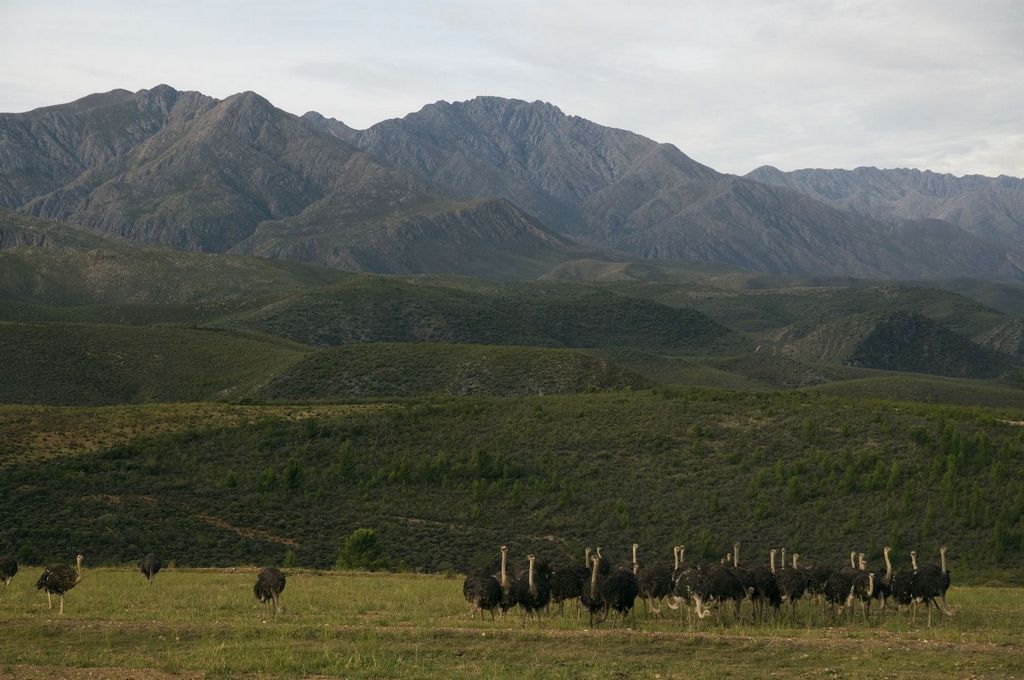
Oudtshoorn today claims the largest ostrich population of any place in the world, with roughly 200,000 birds as of 2012, outnumbering the town's approximately 67,000 human residents by about three to one. The birds are farmed for meat, leather, eggs, and feathers, though the feather trade now serves decoration and fashion accessory markets rather than the haute couture demand that fueled the booms. Several show farms operate specifically for tourists, offering hour-long tours that cover the full cycle of ostrich farming from incubation to products, with opportunities to feed the birds and, for lighter visitors, ride one. These are working farms, not wildlife sanctuaries, and the ostriches are domestic animals raised for commercial purposes. The experience is agricultural rather than pastoral, but it offers a genuine window into an industry that has shaped this town for more than 150 years.
Underground Oudtshoorn
The Cango Caves, located near Oudtshoorn, are among South Africa's most visited natural attractions. The limestone cavern system extends deep into the Swartberg foothills, with chambers of stalactites and stalagmites formed over millions of years. But the caves are only the most dramatic expression of the geological drama surrounding the town. Oudtshoorn sits in a valley between the Swartberg mountains to the north and the Outeniqua range to the south, both part of the Cape Fold Belt, the immense chain of folded rock that runs along South Africa's coastline. The scenic R62, which connects Oudtshoorn to Montagu and the wider Western Cape, threads through passes cut into these ancient formations. The drive from George over the Outeniqua Pass offers views that make clear why the Little Karoo remained isolated for so long and why its ecology, culture, and economy developed along such distinct lines.
The Karoo's Largest Town
With its population of 67,000, Oudtshoorn is the largest town in the Little Karoo, serving as the regional hub for commerce, education, and tourism. The town's economy has diversified beyond ostrich farming, though the birds remain central to its identity. Tourism now provides the largest share of revenue, drawing visitors to the ostrich farms, the Cango Caves, and the surrounding mountain passes. Agriculture continues to provide about a third of local employment. The nearest airports are in George, Port Elizabeth, and Cape Town, making Oudtshoorn accessible but never quite convenient, a remoteness that has helped preserve both its character and its landscapes. The town makes the most of this position, marketing itself as a gateway to the Garden Route and the Tsitsikamma National Park, places where the Karoo's stark beauty gives way to the lush coastal forests of the southern Cape.
From the Air
Coordinates: 33.58S, 22.20E. Oudtshoorn sits in the Little Karoo valley between the Swartberg mountains (north) and the Outeniqua mountains (south). From altitude, the town is the largest settlement visible in the valley, with ostrich farms and agricultural land surrounding it. Nearest airport: Oudtshoorn Airfield, a small facility. George Airport (FAGG) is about 60 km to the south over the Outeniqua Pass. Cape Town International (FACT) is approximately 430 km west via the R62 or N1. Expect clear conditions in the valley with potential mountain obscuration on the ranges.