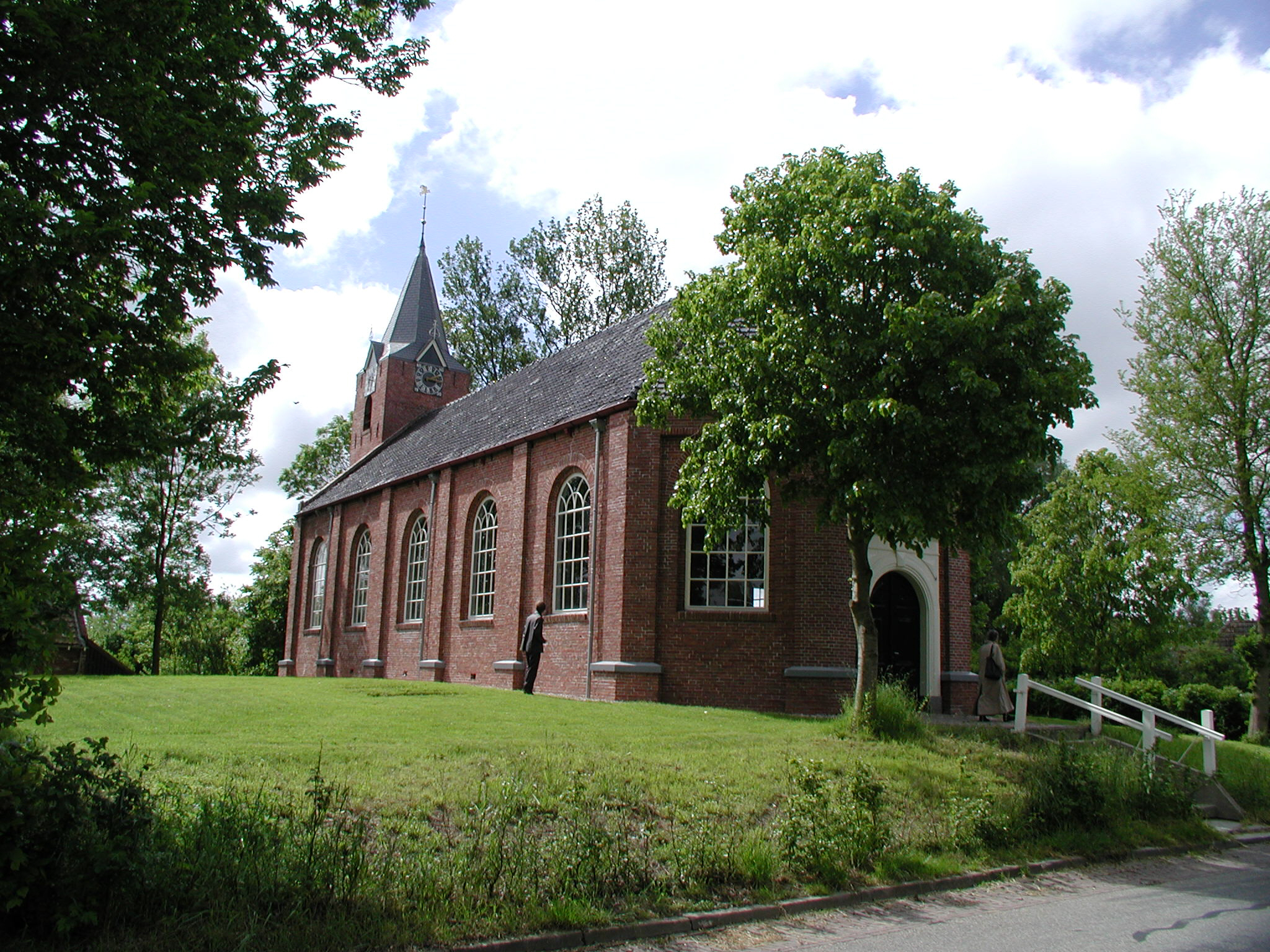
Our Lady of the Enclosed Garden
There is exactly one Dutch hermit. He lives in a former Protestant church in the village of Warfhuizen, in a small dwelling built into the bay next to the tower, on the northernmost edge of Catholic Holland. His name is Brother Hugo. He sings vigils softly in Latin at the start and end of every night, prays the Jesus Prayer in silence through the day, and receives pilgrims who come to see a statue of Our Lady of Sorrows that draws Catholics from across the country and beyond. The Netherlands lost its last traditional hermit in 1930. Brother Hugo, ordained a priest in 2015, is the unlikely successor.
How a Tradition Came Back
The Dutch hermit tradition was a southern phenomenon, rooted in the Catholic strongholds of Limburg and North Brabant after the Counter Reformation. Unlike most European hermitages, the Dutch versions kept public chapels attached to the hermit's cell, weaving the solitary life into local popular devotion. The tradition declined steadily from the 1880s and ended in 1930 with the death of the last brother at the de Schaelsberg hermitage in Valkenburg aan de Geul. The empty hermitages disappeared. Then, late in the twentieth century, the eremitic life began to reawaken across Europe - everywhere except, at first, the Netherlands. In 2001, Catholics purchased the empty Protestant church in Warfhuizen, built a hermit's dwelling into the structure, and revived the lineage seven decades after it ended. The Diocese of Groningen-Leeuwarden took on the canonical responsibility. The northernmost Marian shrine in the Netherlands had begun.
The Office of the Desert
For nearly all of Western Christian history, contemplative life has followed the rhythms set by Saint Benedict - eight short prayer offices distributed across the day. In 2009, Brother Hugo switched to something older and more austere: the Office of Saint John Cassian, who built his rule in the fifth century on the customs of the Egyptian Desert Fathers. The Cassianic day has no Benedictine canonical hours. It has two long vigils, one beginning the night and one ending it, sung softly in Latin. The hours between are unstructured by psalms; the hermit prays in silence using the Jesus Prayer, a single repeated phrase that contemplatives have used for fifteen centuries. The Limburgian inheritance shows up in the additions - the Rosary, sung litanies, the Baroque altars. The desert shows up in the silences between.
Inside the Walls
The 1983 Code of Canon Law, canon 603, asks more solitude of hermits than Dutch custom historically did. So the church at Warfhuizen has a large rood screen that divides it across the middle. On one side, the enclosed area where Brother Hugo lives and works. On the other, the nave that pilgrims may enter. The chapel is decorated in the manner of the seventeenth-century Catholic south - Baroque ornament, side altars holding relics. Saint Gerlach of Houthem, the medieval Limburgian hermit, has a reliquary in the right side altar. Saint Anthony Abbot, the desert father whose example launched Christian monasticism, is honored at the Holy Cross altar. The Jesus Prayer is sometimes sung in Greek after Compline - a courtesy to the Russian Orthodox volunteers who help around the shrine - and the Gregorian chant has a Carthusian flavor.
The Sorrowful Mother of Warfhuizen
What turned a hermitage into a pilgrimage site was a statue. A life-size processional figure of Our Lady of Sorrows - the mother of Jesus weeping at the foot of the cross - was enshrined in the chapel and given the title the Sorrowful Mother of Warfhuizen. Marian devotion is older than the Netherlands and as resilient as any religious instinct in Europe. The statue caught hold of local feeling first, then drew Catholics from further afield. Since May 2009, the Bishop of Groningen-Leeuwarden has permitted Eucharistic adoration here. Pilgrims come at 4 p.m. for daily adoration and the Rosary. The chapel is open to anyone. Brother Hugo is not - the rood screen sees to that - but his prayers run in parallel with the visitors' on the other side of the grill, the only Dutch hermit and his quiet congregation.
From the Air
Warfhuizen sits at 53.343°N, 6.425°E in the Hogeland region of Groningen province, about 6 km from the Wadden Sea coast and 20 km north of the city of Groningen. The hermitage is a modest brick church with a tower, visible as a low landmark above the flat polderland surrounding it - typical of Groningen village churches but distinguished by being one of the very few Catholic shrines this far north in the Netherlands. Nearest airport is Groningen Airport Eelde (EHGG), about 35 km south. Best viewed at low altitude in clear weather; the church tower is the visual anchor of the village.