Oxford: Faulkner's Yoknapatawpha and Ole Miss Football Saturdays
Oxford, Mississippi exists because someone hoped that naming a town after Oxford, England might attract a university. The gamble worked: the University of Mississippi arrived in 1848, and Ole Miss has shaped the town ever since. William Faulkner made Oxford world-famous, writing his Yoknapatawpha novels at Rowan Oak, transforming Lafayette County into the fictional county where generations of Southern families loved and killed and endured. Faulkner won the Nobel Prize in 1949; he's buried in the town cemetery, where visitors still leave whiskey on his grave. The Square - the courthouse surrounded by bookstores and restaurants - remains the center of a literary culture that draws writers to this day. But Oxford is equally famous for football: The Grove, the oak-shaded tailgating paradise at Ole Miss, where 100,000 people gather on autumn Saturdays to drink and eat and watch the Rebels play. The town lives between two identities - literary and athletic, intellectual and festive - and seems comfortable with both.
Faulkner's Oxford
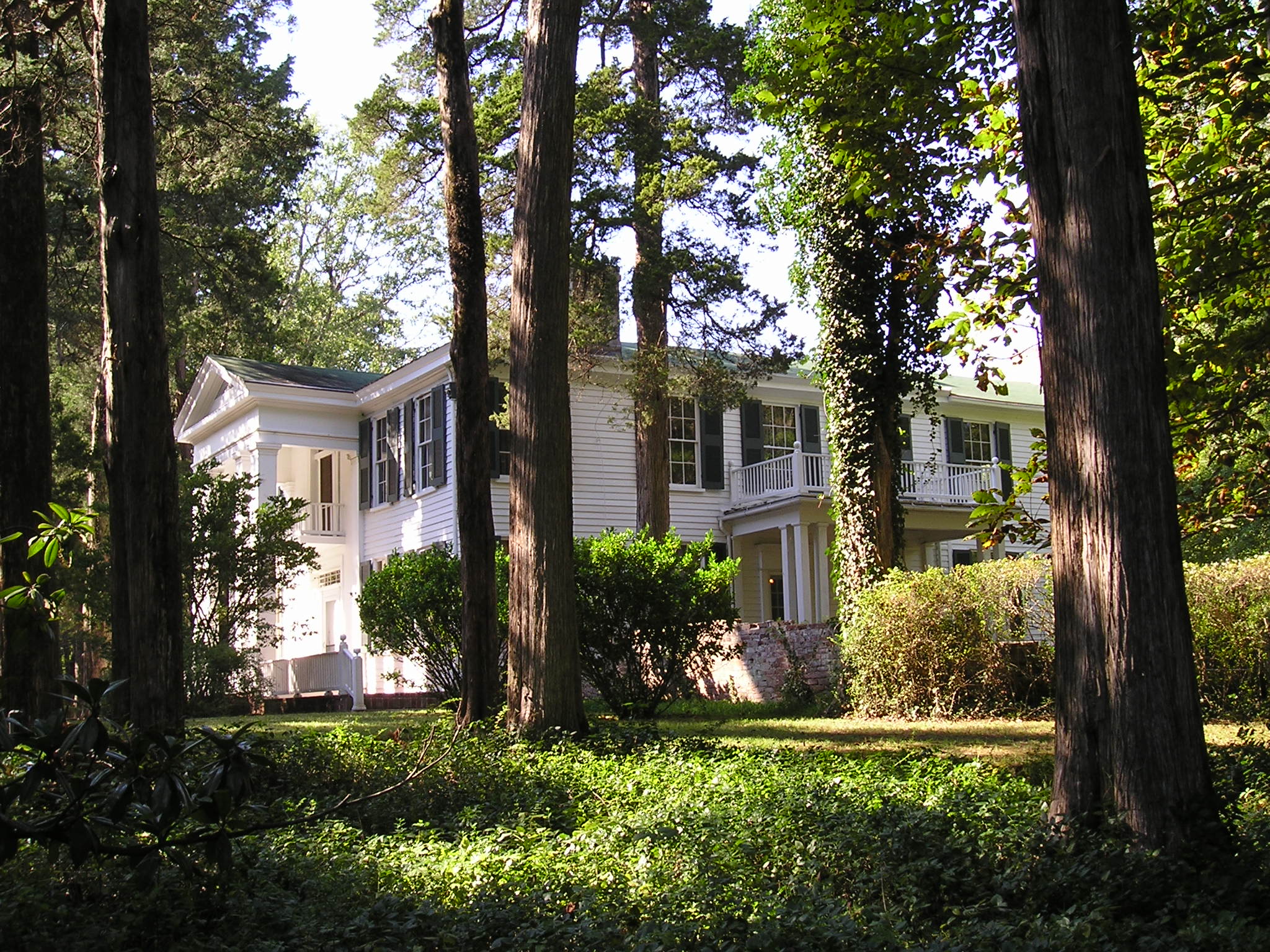
William Faulkner bought Rowan Oak in 1930 for $6,000, a Greek Revival home built in the 1840s, and lived there until his death in 1962. The house is preserved as he left it - his Underwood typewriter on the desk, his riding boots by the door, the outline of 'A Fable' penciled on the office wall. Faulkner set his novels in the fictional Yoknapatawpha County, which was Lafayette County barely disguised - Jefferson was Oxford, the courthouse was the courthouse, the families were families he knew. 'The Sound and the Fury,' 'As I Lay Dying,' 'Absalom, Absalom!' - the novels that made him the most important American writer of the twentieth century were written here, in this house, about this place. Oxford's literary tradition continued: John Grisham keeps a home here, Barry Hannah taught at Ole Miss, and Square Books anchors a culture where writers are celebrities.
The Grove and Ole Miss
The Grove is ten acres of oak trees in the center of the Ole Miss campus that transforms on football Saturdays into the most elaborate tailgating scene in American sports. By Friday evening, thousands of tents appear among the trees - not ordinary tailgates but chandeliered affairs with tablecloths and fine china, silver services and catered meals. Women wear sundresses and pearls; men wear ties and khakis. Drinks are served in actual glasses (cups are required for the Grove, but the glasses appear anyway). Sports Illustrated rates Grove tailgating among the top college experiences in America. The game itself is almost secondary - the gathering, the socializing, the performance of Southern hospitality is the point. Ole Miss may not win every game, locals say, but they've never lost a party.
Integration and Memory
On September 30, 1962, James Meredith became the first Black student to enroll at Ole Miss - but only after President Kennedy federalized the Mississippi National Guard and sent U.S. Marshals to enforce the court order. A riot erupted: two people killed, hundreds injured, the Lyceum's columns still bearing bullet holes. Ross Barnett, the segregationist governor, had personally blocked Meredith's enrollment. The riot remains Oxford's most painful memory, a reminder that this beautiful town was also the site of violent resistance to civil rights. Ole Miss has struggled to reckon with its Confederate symbols - the Colonel Reb mascot retired in 2003, the state flag with its Confederate emblem removed from campus in 2015. A civil rights memorial now stands on campus. The history remains contested; the beauty of The Grove exists alongside the violence of 1962.
The Square
Oxford's Courthouse Square survived the Civil War burning of 1864 - Union troops destroyed most of the town, but the courthouse stood. Rebuilt in the 1870s, it anchors a square of two-story buildings now filled with bookstores, restaurants, and bars that make Oxford feel like a small New Orleans. Square Books occupies three buildings: the main store, Off Square Books for lifestyle titles, and Square Books Jr. for children. City Grocery, upstairs on the Square, serves shrimp and grits that draw foodies from across the region. Ajax Diner offers soul food; Proud Larry's hosts live music. The Square comes alive at night, law students and writers and professors mixing at bars that close early by Oxford's strict laws - but the late-night parties continue elsewhere. Reader's Digest once wrote that if Oxford didn't exist, it would have to be invented.
North Mississippi Position
Oxford has no commercial airport; Memphis International (70 miles northwest) serves most visitors. US-278 and Highway 6 connect to I-55; the Natchez Trace Parkway runs south. Memphis's Beale Street and Graceland are day-trip distance; the Mississippi Delta begins an hour west. The town sits in Mississippi's Hill Country, gentler terrain than the flat Delta. From altitude, Oxford appears as a small town dominated by the Ole Miss campus - The Grove visible as oak canopy, the football stadium and basketball arena marking the athletic district, the Square visible at the center of the grid. What appears from the air as a modest college town is where Faulkner wrote his masterpieces, where James Meredith broke the color barrier, and where autumn Saturdays bring 100,000 people to tailgate among the oaks.
From the Air
Located at 34.37°N, 89.52°W in the Hill Country of North Mississippi. From altitude, Oxford appears as a college town - the Ole Miss campus dominating, The Grove's oak canopy visible, the Courthouse Square at the center of downtown. What appears from the air as a small Southern town is where William Faulkner wrote his Nobel Prize-winning novels and where Ole Miss tailgating in The Grove has become an American institution.