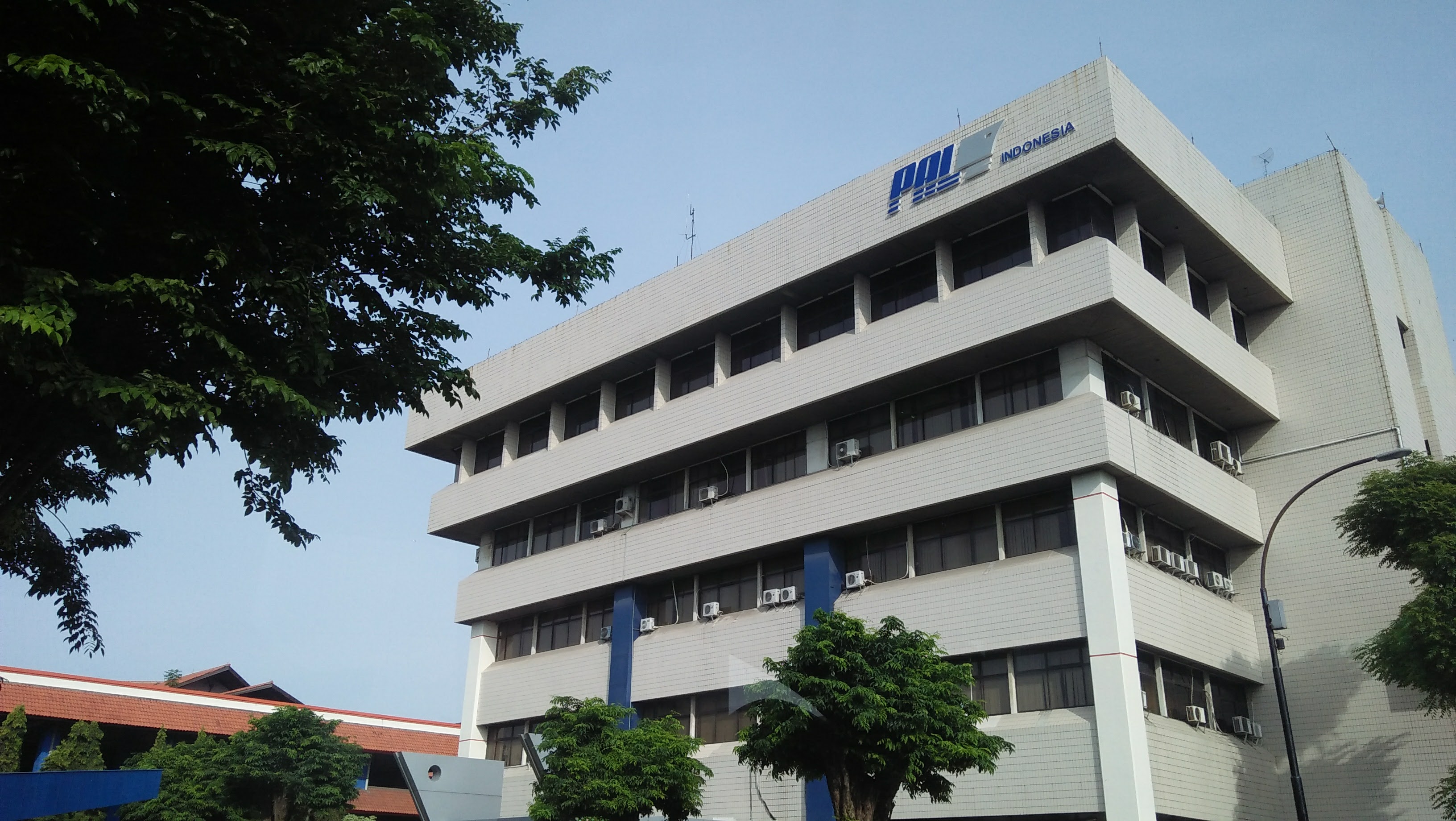
PT PAL Indonesia: The Shipyard That Arms an Archipelago
The keel of a submarine takes shape in a dry dock on Surabaya's industrial waterfront. Welders work in the equatorial heat, assembling hull sections that will soon slip beneath the Java Sea. This is PT PAL Indonesia, and the submarine is not for a foreign client -- it is the Nagapasa class, Indonesia's first jointly built submarine, a vessel that marks the country's transition from buyer to builder of undersea warships. The shipyard has come a long way from its origins as a Dutch colonial maintenance facility. Founded in 1939 as Marine Establishment by the Dutch East Indies government, renamed Kaigun SE 2124 under Japanese occupation, then nationalized after independence as Penataran Angkatan Laut -- each name change traces a chapter of Indonesian history through the hull plates and slipways of a single shipyard.
Colonial Dry Dock to National Enterprise
The Dutch built Marine Establishment to service their colonial fleet, not to empower the colony. Japan seized it during the occupation and repurposed it under a military designation. When Indonesia declared independence, the shipyard became Penataran Angkatan Laut -- PAL -- a state asset with a new mission: building the naval capacity of a young nation stretched across more than seventeen thousand islands. On April 15, 1980, the company's status changed from a statutory corporation to a joint-stock company, a restructuring that signaled commercial ambition beyond domestic military orders. PT PAL Indonesia (Persero) was now a business, not just a bureau, and it began competing for contracts that would have been unthinkable a generation earlier.
Warships for Export
The turning point came when foreign navies started placing orders. In 2015, the Philippine Navy contracted PT PAL to build its first landing platform dock, a $92 million deal that demonstrated the shipyard could deliver complex warships to international standards. The vessel was commissioned into service by June 2016, and a second Strategic Sealift Vessel followed months later. Malaysia signed a memorandum of understanding in November 2016 to have its first LPD ship constructed in Surabaya. By 2017, the order book had expanded to include Nigeria, Senegal, Guinea-Bissau, and Gabon -- African nations that found an alternative to European and American shipbuilders in Indonesia. In 2022, the United Arab Emirates signed for a landing platform dock of its own. PT PAL had become a shipbuilding magnet, drawing clients from ASEAN to Africa to the Middle East.
Beneath the Surface
Building surface warships is one thing. Building submarines is another category entirely -- the engineering tolerances are punishing, the consequences of failure catastrophic. PT PAL entered the submarine business through collaboration, first with South Korea on the Nagapasa-class boats and then signing an agreement with France's DCNS (now Naval Group) in April 2017 to collaborate on Scorpene-class submarines. The shipyard also developed the Kapal Selam Otonom, an autonomous underwater vehicle program that signals ambitions beyond manned submarines. In 2024, PT PAL secured its first contract for submarine maintenance, repair, and overhaul from a South Asian navy -- a milestone that proved the shipyard could not only build submarines but sustain them. For a facility that started as a colonial repair shop, the trajectory is remarkable.
The Full Catalog
The shipyard's product range reveals an enterprise that builds for every need the sea imposes on an archipelago nation. Frigates like the Martadinata class and the Babcock-designed Balaputradewa class -- known locally as Fregat Merah Putih, the Red White Frigate, after Indonesia's flag -- patrol the nation's vast exclusive economic zone. Sampari-class missile boats provide fast attack capability. Hospital ships of the Sudirohusodo class serve disaster relief across an earthquake-prone region. On the civilian side, PT PAL builds tankers up to 30,000 deadweight tons, bulk carriers, container ships, cargo vessels, passenger ferries, and even a 28-meter motor yacht. The shipyard also produces barge-mounted power plants and components for Indonesia's tsunami early warning system. From a warship that can fight to a barge that can generate electricity, the yard builds it.
A Shipyard in the Flight Path
From the air, PT PAL's sprawling complex is unmistakable along Surabaya's northern waterfront. Dry docks cut rectangular shadows into the coastline, their scale betraying the size of the vessels under construction. Cranes tower over hull sections in various stages of assembly. The shipyard sits adjacent to the Port of Tanjung Perak and within sight of the Jalesveva Jayamahe Monument, the 60-meter naval officer statue that embodies the same maritime identity PAL serves in steel and rivets. Together, the monument, the port, and the shipyard form a triangle of Indonesian naval ambition visible from a single pass over Surabaya's coast.
From the Air
Located at 7.21°S, 112.74°E on Surabaya's northern industrial waterfront, adjacent to the Port of Tanjung Perak. The shipyard complex is identifiable by its dry docks, assembly halls, and cranes visible at low to medium altitudes. The Jalesveva Jayamahe Monument stands nearby to the northeast. Nearest major airport is Juanda International Airport (WARR), approximately 18 km south. The Madura Strait separates the facility from Madura Island to the north, with the Suramadu Bridge visible to the northeast.