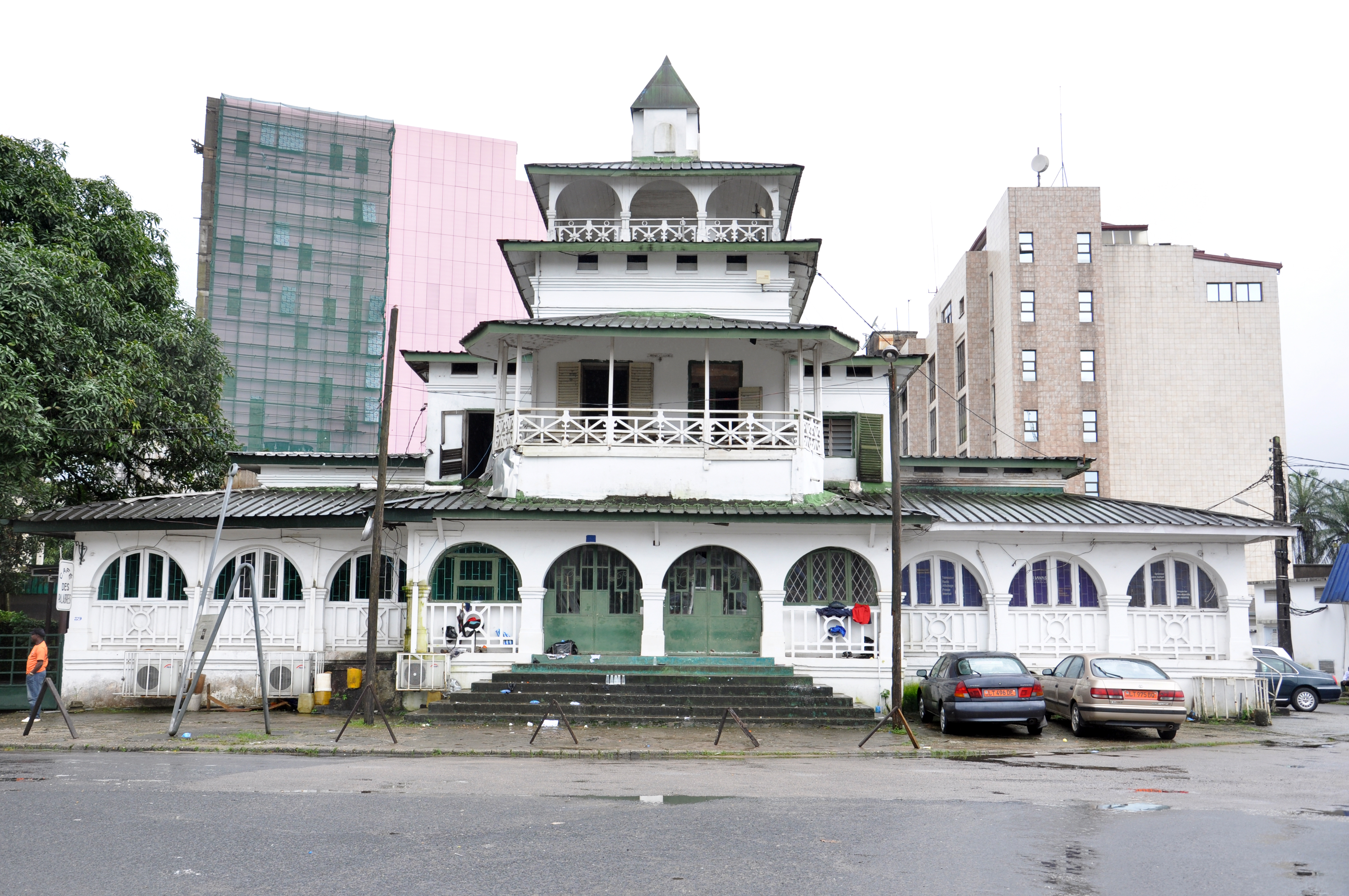
Palace of King Bell
The French novelist Louis-Ferdinand Celine called it La Pagode. He had come to Douala in 1916 as a civilian plantation overseer for a French forestry company -- a posting that followed his discharge from the army after being wounded in World War I -- and the building struck him hard enough to name it in his masterwork, Journey to the End of the Night. The palace he described still stands in the Bonanjo quarter of Cameroon's largest city, its Indian-influenced architecture a strange monument to the entangled ambitions of African kings, German colonizers, and the family whose name it still bears.
A King's Fortune
Auguste Manga Ndumbe, known as King Bell, ascended to the throne in 1897 at a moment when Douala's old economic order was collapsing. The city's wealth had long depended on controlling trade between the hinterland and the coast, but the German colonial administration was dismantling that monopoly. Rather than accept decline, Manga Ndumbe adapted. He built a large cocoa and palm oil plantation along the Kamerun-Wui river in the Mungo region and invested heavily in real estate in Bonanjo. His fortune soon surpassed that of the other ruling families of Akwa, Deido, and Bonaberi. In 1905, the Germans constructed this palace for him, a building whose Indo-European style reflected the cosmopolitan aspirations of a king navigating colonial power with remarkable shrewdness. He would live in it for only three years before his death in 1908.
The Hanging of Rudolph
Manga Ndumbe's son and heir, Rudolph Douala Manga Bell, moved into the palace with his wife Emma Engome Dayas, whose own heritage spanned continents. She was the daughter of a British captain named Dayas and Tebedi Eyoum, a woman from Bali. Rudolph governed from the palace from 1908 to 1914, a period of escalating tension with the German authorities. He opposed the colonial government's plans to expropriate Douala land from its indigenous owners, rallying both local and international support for his people's rights. The Germans responded with lethal force. On 8 August 1914, just as World War I was breaking out in Europe, they jailed and hanged Rudolph Douala Manga Bell. His execution transformed him into one of Cameroon's most celebrated martyrs, a symbol of resistance whose legacy would endure far longer than the German colonial regime that killed him.
An Empty Throne
Alexandre Douala Manga Bell, Rudolph's son, could have claimed the palace as his inheritance. Instead, he chose to live in Bali, leaving the mansion to a succession of other occupants. The choice carried the weight of memory: this was the house from which his father had been taken to his death. Since 1920, a long procession of inhabitants has passed through the building, but ownership has never left the Bell royal family. The compound, now known as Le Parc des Princes, still includes the Bell Chefferie, the traditional seat of the Bell clan's authority. The architecture remains an icon in Douala, its distinctive silhouette recognizable to generations of residents who have grown up in its shadow.
Between Monument and Memory
In 2006, the Douala art organization doual'art commissioned a historical marker for the palace, designed by Sandrine Dole. The sign presents an archival photograph of the building alongside a narrative of its past, an effort to ensure that passersby understand what they are looking at. It is a gesture that speaks to the palace's peculiar status in the city: universally known, deeply symbolic, yet vulnerable to the amnesia that overtakes any building inhabited long enough. The Bell dynasty's story touches every era of Cameroonian history, from pre-colonial trade networks through German and French colonial rule to independence and beyond. The palace, aging and lived-in, holds all those layers at once. It is not a museum, not a ruin, not quite a private home. It is a family's claim on a city's memory, still standing, still occupied, still theirs.
From the Air
Located at 4.04N, 9.69E in the Bonanjo district of Douala, Cameroon's economic capital on the Wouri River estuary. Nearest airport is Douala International Airport (FKKD), approximately 10 km southeast of the palace. The city's port area and dense urban grid are visible from altitude. Best viewed at 3,000-5,000 feet AGL where the Bonanjo quarter's colonial-era architecture is distinguishable from surrounding development.