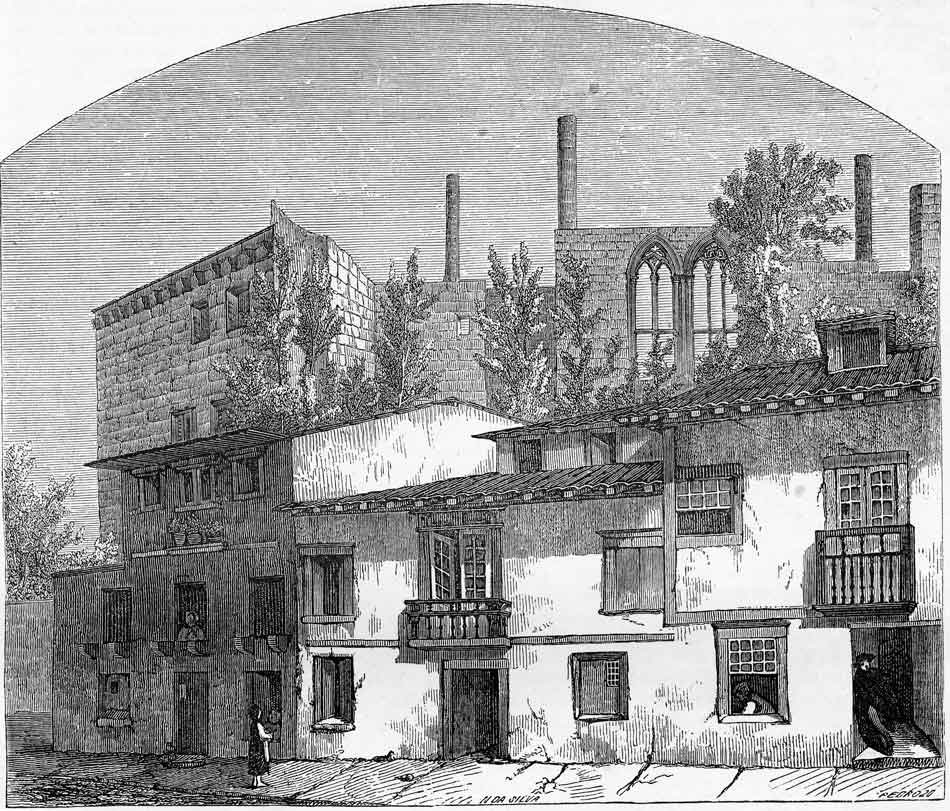
Palace of the Dukes of Braganza
For centuries, the people of Guimaraes treated the Palace of the Dukes of Braganza as a free quarry. The massive medieval residence, its aristocratic occupants long departed for grander estates in the south, had crumbled into ruin by the 19th century. Locals pried granite blocks from its walls to build their own homes. What they were dismantling, stone by stone, was one of the most ambitious residential buildings in 15th-century Portugal -- a palace inspired by the courts of France, Venice, and Aragon, built by an illegitimate prince who wanted the world to know he had arrived.
A Bastard's Ambition
Afonso, Count of Barcelos, was the illegitimate son of King John I of Portugal. Between 1420 and 1422, returning from diplomatic missions that had taken him through the grand courts of France, Venice, Aragon, and Castile, he ordered construction of a palace in Guimaraes that would reflect the architectural sophistication he had seen abroad. Some scholars attribute the design to a French architect named Antom. The building marked the beginning of Afonso's second marriage and his decision to establish a permanent residence in the town. The palace was still under construction in 1442, when the Regent Peter visited and conferred on Afonso the title of 1st Duke of Braganza -- transforming an illegitimate son into the founder of a dynasty that would eventually rule Portugal, and later Brazil.
A Palace of Chimneys and Stained Glass
The palace is built around a rectangular plan with four corner towers enclosing an interior courtyard, dominated by the chapel on the southeast wing. Six tall chimneys rise from the roofline, a distinctive silhouette visible across the city. The granite facades are punctuated by windows in varying styles -- cruciform, stained glass, standard, and oblique -- reflecting the different phases and influences of its construction. The interior courtyard features Gothic arches on the main floor and columns on the second, with granite-corbeled balconies running along every interior facade. The chapel, identifiable from outside by its two large Flemish stained-glass windows, extends from the southwest wing and is reached through a portal of four inset arches preceded by a staircase. The Banquet Hall and the evocatively named Hall of Lost Steps feature wooden ceilings shaped like the inverted keel of a ship, a design that gives the rooms an unexpected maritime grandeur.
Four Centuries of Neglect
The Braganza dynasty's move to Vila Vicosa in the 16th century marked the beginning of the palace's long decline. Without its noble residents, the building deteriorated rapidly. The 19th century brought active destruction, as townspeople repurposed its worked stone for humbler projects. By the early 20th century, old engravings show a structure reduced to walls and shadows, its interiors open to the sky. The palace was classified as a National Monument in 1910, but salvation came in a controversial form. Under the Estado Novo regime, a sweeping restoration rebuilt the palace to a grandeur that historians debate ever existed. The reconstruction implied a magnificence that may have owed more to 20th-century nationalist ambitions than to 15th-century reality. Nevertheless, the restored palace became an official presidential residence, its top floor fitted with suites for the President and Prime Minister, accessible by elevator.
From Ruin to Republic
Today the palace serves a triple purpose: museum, presidential residence, and symbol. The first floor houses reception areas, storage spaces, and administrative offices. The intermediary floor is open to the public as a museum, its halls displaying period furniture, tapestries, and artifacts within rooms warmed by massive stone fireplaces. The chapel retains its single nave covered by a wooden ceiling with visible joists, its richly carved benches preceding an elevated presbytery. Walking through the palace is an exercise in reading layers of time -- the 15th-century proportions, the 20th-century reconstruction, the museum installations, and the presidential quarters that ensure the building remains a working seat of government. The palace sits on the hillside below the Castle of Guimaraes, within a protected heritage zone established in 1952 that links it to the castle and the Romanesque Church of Sao Miguel. Together, these three monuments tell the story of Portuguese power from medieval fortress to ducal grandeur to modern republic.
From the Air
Located at 41.45N, 8.29W in Guimaraes, northern Portugal, immediately adjacent to the Castle of Guimaraes on the same hilltop. The palace's distinctive chimneys and rectangular form are visible from the air. Nearest major airport is Francisco Sa Carneiro (LPPR / Porto) approximately 50 km southwest. The building sits within Guimaraes' UNESCO World Heritage historic center at approximately 250 m elevation.