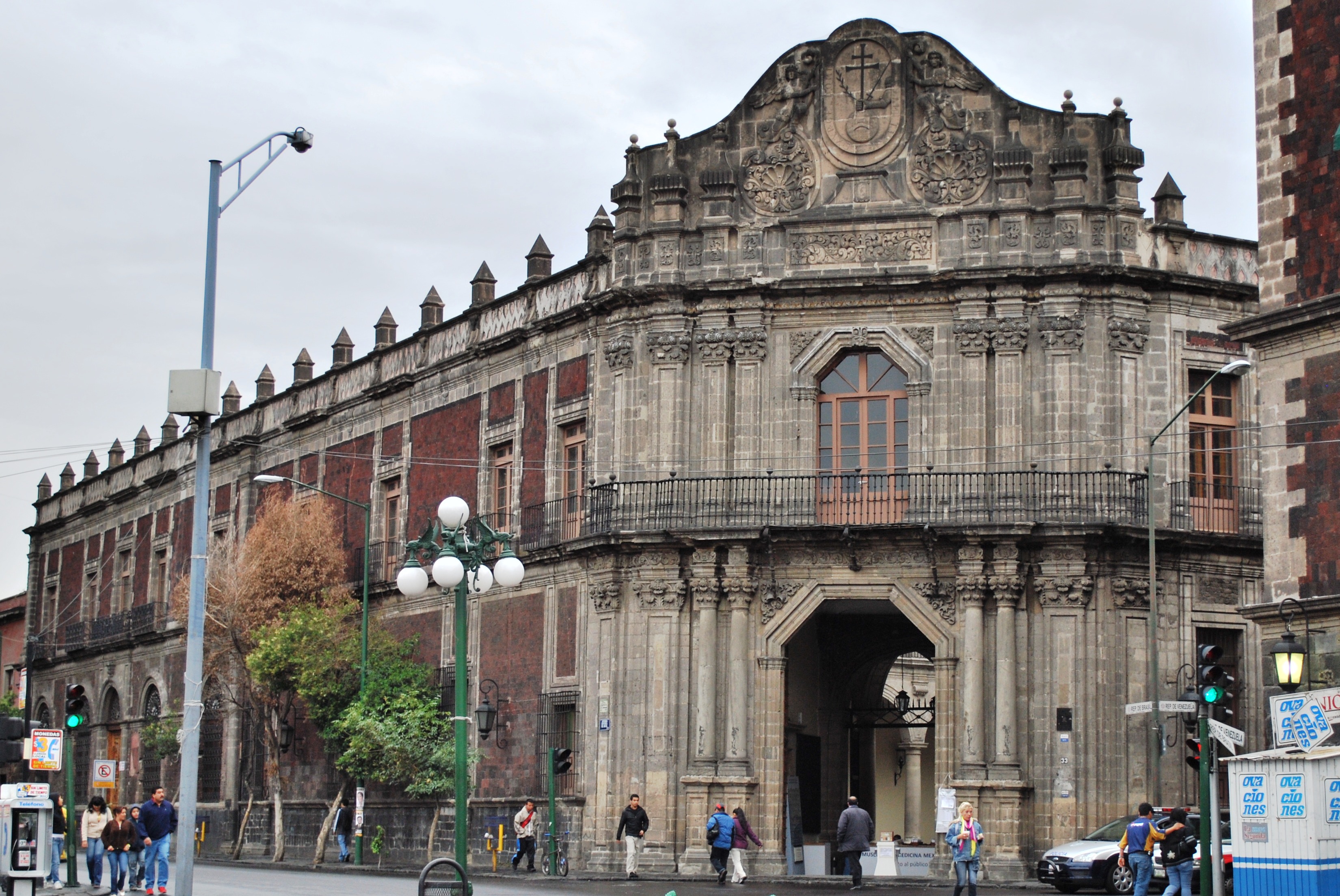
Palace of the Inquisition
There is a small window on the facade of the Palace of the Inquisition that faces the street without any identifying mark. It is called the Ventana de la Denuncia -- the Window of Denunciation. For two hundred years, anyone in Cartagena could approach this opening and anonymously accuse a neighbor of heresy, blasphemy, witchcraft, or practicing a forbidden faith. The accused might never learn who had turned them in. They would simply be summoned to the palace, and what happened inside those walls was designed to break the human body and will with methodical, religiously sanctioned precision.
The Third Tribunal in the Empire
Philip III of Spain decreed the establishment of the Inquisition tribunal in Cartagena in 1610, making it the third such office in the Spanish Empire after Lima and Mexico City. The choice was strategic, not arbitrary. Cartagena was the transit point between the Caribbean and Spain's settlements across western South America -- a commercial crossroads where goods, people, and ideas mingled in ways that made the crown nervous. Of particular concern were Portuguese merchants, many of whom were suspected of being crypto-Jews: converts to Catholicism who the Inquisitors believed secretly continued practicing Judaism. Between 1580 and 1640, the Spanish and Portuguese crowns were united under one monarch, and Portuguese traders moved freely through Spain's colonies, their religious loyalties perpetually under suspicion.
Behind the Baroque Facade
The palace that visitors see today was completed in 1770, though the Inquisition had operated from this site since 1610. The building is considered one of the finest examples of late colonial civil architecture in Cartagena, its Spanish Baroque facade featuring elaborate stone gateways, ornate balconies, and a central coat of arms. The structure is built on a wooden framework with limestone, organized around an elegant interior courtyard across three levels. Behind this refined exterior, the Inquisition conducted its work over two centuries. An estimated 800 people were tried within these walls for offenses ranging from heresy and blasphemy to bigamy and accusations of black magic. Roughly 50 were executed by burning at public spectacles known as autos-da-fe -- acts of faith performed as warnings to the rest of the population.
The Instruments and the Silence
The museum today displays the torture equipment once used on the accused. Racks, thumbscrews, and other instruments of coercion stand in the rooms where they were employed, alongside coins, maps, weapons, furniture, and church bells from the colonial era. In 2015, the torture implements were temporarily removed from display ahead of Pope Francis's visit to Colombia. They have since partially returned. The museum also preserves the anonymous complaint window -- the Ventana de la Denuncia -- that allowed denunciations to flow in from the street. What the display cases cannot convey is the fear the tribunal generated among Cartagena's diverse population of merchants, enslaved people, indigenous communities, and conversos whose private beliefs could become public accusations at any moment.
The Palace in Its Plaza
The Palace of the Inquisition faces the Parque de Bolivar, the central square of Cartagena's historic district. The proximity is not accidental -- the Inquisition palace, like the cathedral nearby, occupied a position of civic prominence, asserting the authority of religious law alongside civil power. The tribunal operated until Colombian independence ended its jurisdiction in 1811. Two centuries of hearings, confessions extracted under duress, and public executions closed with no ceremony, overtaken by a revolution that had larger matters in view. Today the palace serves as the Museo Historico de Cartagena, partially restored to preserve Colombia's cultural heritage. It stands as one of the most architecturally distinguished buildings in the old city and one of the most unsettling -- a place where the elegance of the facade and the brutality of the institution coexisted without contradiction, as they were designed to.
From the Air
Located at 10.4232N, 75.5516W on the Parque de Bolivar in Cartagena's walled historic center. The palace is part of the dense colonial building cluster visible from altitude. Rafael Nunez International Airport (SKCG) is approximately 2 nautical miles to the northeast. Best viewed at 2,000-3,000 feet AGL alongside the adjacent cathedral and surrounding colonial architecture. The Parque de Bolivar's tree canopy provides a green reference point within the terracotta rooftops of the old city.