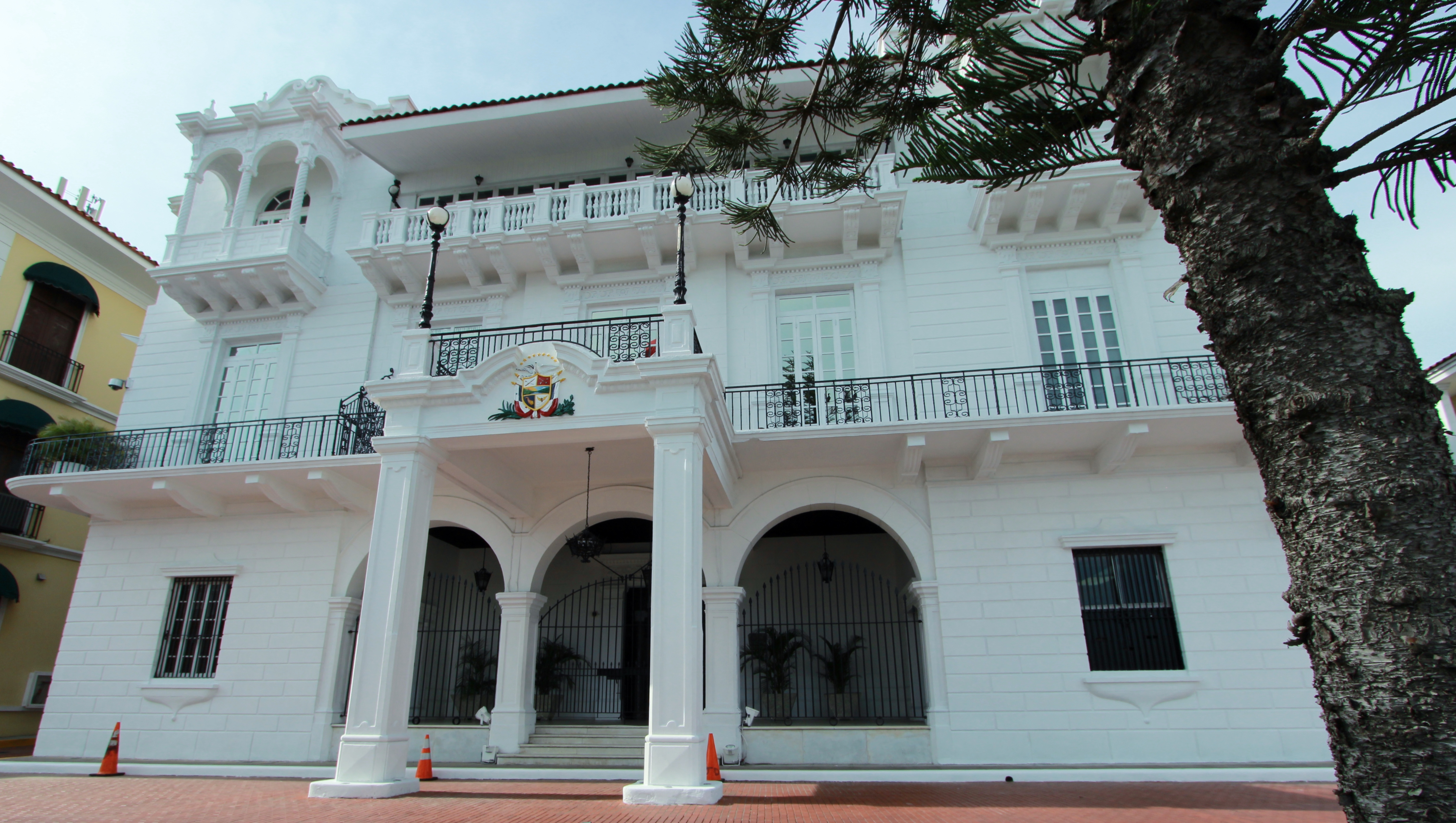
Palacio de las Garzas
The herons arrived first. In 1922, Panamanian poet Ricardo Miro suggested to President Belisario Porras Barahona that the newly restored presidential palace needed living ornaments, and so gray herons from the Darien jungle were released into the marble courtyard. They stayed. Today there is one heron for each of Panama's provinces -- ten in all since the creation of Panama Oeste -- and the birds have given the palace its name ever since: Palacio de las Garzas, the Palace of the Herons. When visiting heads of state bring large delegations, the herons are temporarily relocated to Summit Municipal Park on the outskirts of Panama City. The palace, it seems, belongs to the birds as much as to the president.
Born from a Pirate's Destruction
The building's origins reach back to 1673, two years after the Welsh privateer Henry Morgan sacked and burned the original Panama City -- Panama Viejo -- so thoroughly that the Spanish relocated the entire capital to a new site. Judge Luis de Lozada y Quinonez of the Royal Audience of Panama ordered construction of a government building on the new ground, in the district now called San Felipe. Over the centuries that followed, the structure served as a customs house, a bookkeeping office, a bonded warehouse, and a boys' teacher training college. A devastating fire nearly destroyed it in 1756. The building was rebuilt, repurposed, and rebuilt again. In 1875, it was finally designated the Presidential Palace, though it would take another half-century before it looked the part.
An Architect's Transformation
The palace that stands today is largely the work of architect Leonardo Villanueva Meyer, who in 1922 added a second and third floor, incorporated an Andalusian-style patio on the second level, and remodeled the Yellow Room and the presidential dining hall. The inauguration took place on August 3, 1923, though the State of Panama did not gain exclusive ownership of the building until 1938, when the National Bank of Panama finally moved its headquarters to Central Avenue. In 1934, an elevator was installed specifically for the visit of President Franklin D. Roosevelt, whose paralysis made climbing to the upper floors impossible. The elevator stayed long after Roosevelt departed. On the second floor, five allegorical sculptures -- Law, Justice, Labor, Perseverance, and Duty -- stand among the courtyard columns, carved by Italian artist Gaetano Olivari in 1915.
Walls That Remember
The colonial facade of the Palacio de las Garzas faces Avenida Eloy Alfaro, with the Bay of Panama glinting beyond. Look closely at the exterior and you will find something the restorers deliberately preserved: bullet holes from the 1951 coup d'etat, left in the walls as historical marks. Inside the Yellow Room, where official state ceremonies take place, a frieze displays 41 portraits of Panama's early governors and the members of the Provisional Government Junta, including Manuel Amador Guerrero, the nation's first president. Eleven murals by Panamanian artist Roberto Lewis trace the country's story from the arrival of the Spanish through Vasco Nunez de Balboa's sighting of the Pacific to independence. One mural depicts the Panamanian nation as a woman in a pollera receiving homage from ships of many nations -- a fitting image for a country defined by its position between two oceans.
Tamarinds, Trophies, and a Moorish Room
Adjacent to the Yellow Room lies the Tamarind Room, the presidential dining hall, its walls covered in murals of tamarind harvests and hunting scenes from Taboga Island, painted by Roberto Lewis and commissioned in 1938 by President Juan Demostenes Arosemena. The president's office on the second floor features a frieze of medallions bearing the faces of former leaders, with blank medallions reserved for those yet to come. A private library connects to a hidden staircase leading up to the third-floor residence, which includes five bedrooms, a family living room with a balcony overlooking the bay, and the Moorish Room -- designed in the style of the Alhambra and the Palace of Aranjuez. Not every president has chosen to live here. Several recent leaders, including Mireya Moscoso and Ricardo Martinelli, preferred their own homes and commuted to work. But the herons, at least, have never left.
From the Air
Located at 8.954N, 79.534W in the San Felipe district of Panama City's Casco Viejo (Old Town), on the waterfront facing the Bay of Panama. Best viewed from 1,500-2,500 feet AGL approaching from the bay side, where the colonial facade and courtyard are visible. The Cinta Costera coastal highway runs along the waterfront nearby. Nearest airport: Albrook 'Marcos A. Gelabert' International Airport (MPMG), approximately 2 nm west. Tocumen International Airport (MPTO) is 15 nm east.