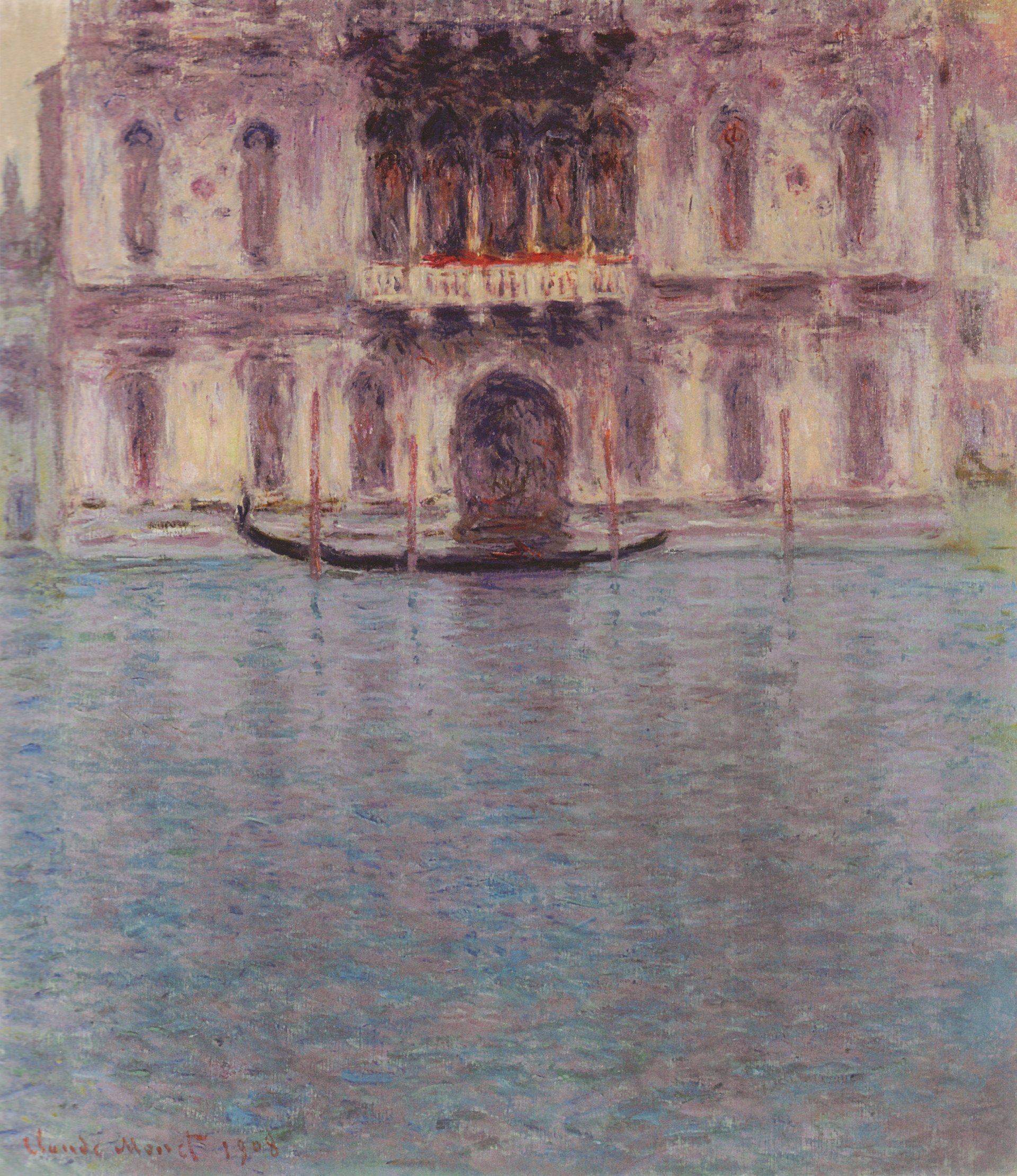
Palazzo Contarini Dal Zaffo
Claude Monet painted it in 1908, captivated by the way morning light caught the polished marble tiles that cover its three-story facade. John Ruskin admired its unusual union of severity and grace. But the story of Palazzo Contarini Dal Zaffo is less about architecture than about reinvention -- how a 15th-century palace built for a Venetian count became, four centuries later, the creative headquarters of an American heiress who filled its rooms with the most important musicians in Europe.
Stone From Three Worlds
The palazzo rises from the waters of Venice's Dorsoduro district, positioned on the Grand Canal between Palazzo Brandolin Rota and Palazzo Balbi Valier. Built in the second half of the 15th century, its architect remains unknown, though the design is frequently attributed to Giovanni Buora, Mauro Codussi, or Pietro Lombardo. Whoever drew the plans was working at the frontier of Venetian architecture: together with the nearby Palazzo Dario, this building ranks among the first Renaissance structures in the city. Its facade blends elements that should not coexist -- Byzantine window shapes and round decorations surviving from an earlier structure on the site, Renaissance proportions, and Tuscan ornamental details. The result is a building that reads like a compressed history of Venetian taste. Two noble floors share identical layouts, each centered on a pentafora flanked by single-lancet windows. Six round-arched openings line the ground floor, plus a central portal opening directly onto the canal. The left side offers a garden terrace overlooking the water, a rare luxury even in a city of palaces.
The Count of Jaffa's Legacy
The palazzo takes its primary name from Giorgio Contarini, Count of Jaffa -- rendered in Italian as Zaffo -- in Palestine. The Contarini dal Zaffo family, one of the most prolific builders among Venice's patrician class, rebuilt the interior between 1562 and 1582 while preserving the original exterior. For nearly two centuries after, the palazzo passed through the hands of wealthy families: the Manzoni from 1758, then the Angaran, then the Polignac. Each left traces, but none transformed the building's identity as thoroughly as its next owner. In 1901, the palazzo was purchased by Winaretta Singer, daughter of Isaac Singer, the American sewing machine magnate. By marriage she was the Princess of Polignac, and her double name -- Contarini Polignac -- endures on the building today.
Where Stravinsky Played
Under Winaretta Singer's ownership, the palazzo became the center of one of Europe's great intellectual salons. She was a patron of fierce conviction, supporting composers and artists at the moment when modernism was reshaping every art form. Igor Stravinsky was among the personalities who gathered in its rooms, performing and debating alongside other leading figures of the early 20th century. The salon attracted talent across disciplines, though music remained its heartbeat. Inside, frescoes by Giandomenico Tiepolo covered the walls -- 18th-century masterworks providing the backdrop for the century's most radical artistic conversations. The palazzo remains a private residence today, owned by the Decazes family, direct descendants of the Princess of Polignac. A major restoration between 2004 and 2007 stabilized the structure for another generation.
Canvas and Canal
The building maintains a cultural life beyond its walls. During the International Art Exhibitions of the Venice Biennale, its generous proportions make it a frequent venue for exhibitions and events. Its artistic legacy extends to the canvases it inspired: Monet's 1908 painting of the facade captures the play of light on marble and water that continues to define the palazzo's presence on the Grand Canal. He painted its neighbor Ca' Dario during the same visit, drawn to this particular stretch of the Dorsoduro waterfront where Gothic, Renaissance, and Byzantine forms crowd together along the fondamenta. From the canal, the polished marble tiles catch the shifting Venetian light and throw it back in tones that change by the hour -- the same quality that stopped Ruskin, Monet, and five centuries of visitors in their tracks.
From the Air
Located at 45.431N, 12.329E on the Grand Canal in Venice's Dorsoduro district. Best viewed at low altitude approaching from the south over the Giudecca Canal. The palazzo is identifiable by its polished marble facade between two neighboring palaces, with a garden terrace on the left side. Nearest airport: Venice Marco Polo (LIPZ), 8 km north. Venice Lido (LIPV) also nearby to the southeast.