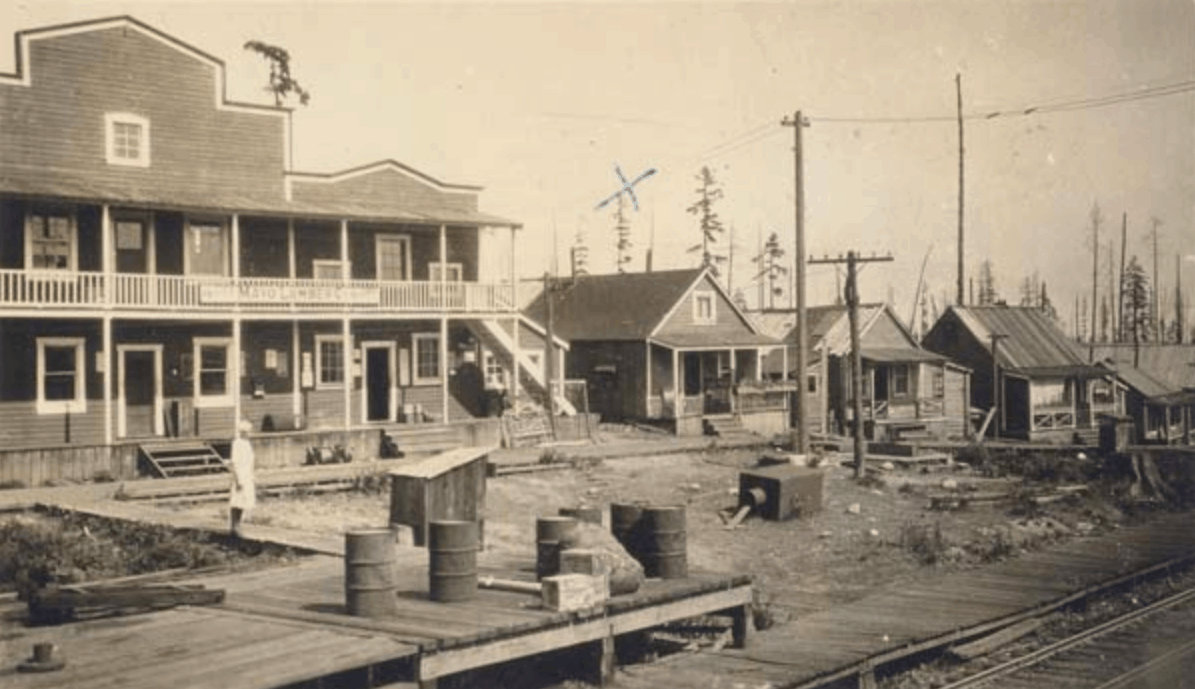
Paldi, British Columbia
In November 1949, India's first Prime Minister, Jawaharlal Nehru, traveled to a tiny lumber mill town on Vancouver Island. He brought his daughter, Indira Gandhi -- who would herself become prime minister decades later -- to visit a place called Paldi, population roughly 1,500. What drew a head of state to a logging settlement in the Cowichan Valley was the reputation of its founder, Mayo Singh Manhas, whose charitable donations to both Canadian and Indian organizations had made his name known on two continents. The visit was a recognition that something remarkable had happened in the woods near Duncan: three Sikh businessmen from Punjab had built not just a mill, but a community that became one of Canada's earliest experiments in multiculturalism.
Three Cousins from Hoshiarpur
Mayo Singh Manhas, his brother Ganea Singh Manhas, and their cousin Doman Singh founded the town in 1916. All three were Sikh businessmen who had emigrated from Punjab, and they named their settlement Mayo after its primary investor. The name lasted two decades before bureaucratic confusion forced a change -- the post office kept mixing up mail with Mayo, Yukon. In 1936, the town was renamed Paldi, after the village in Hoshiarpur, Punjab, from which the three founders had emigrated. The new name carried a piece of home across the Pacific, stitching a small corner of Vancouver Island to the Punjab that the founders had left behind.
Gurdwara, Temple, and Schoolhouse
By 1919, the community had established a Gurdwara -- a Sikh house of worship. A school followed shortly after. Then in 1923, the Japanese community of Paldi built a wooden hall next to the Gurdwara that served as both a Buddhist temple and a gathering place. Several forms of Buddhism were practiced there, and the building also hosted celebrations, community meetings, and occasionally United Church services. At its peak, Paldi was a place where East Indian, Japanese, Chinese, and European families worked the same mill, sent their children to the same school, and worshipped in buildings that stood side by side. The school closed in 1969 when enrollment declined and remaining children were bussed to nearby Lake Cowichan. The homes were razed in 2005. But the Gurdwara remained standing.
The Last Building Standing
When developers moved to build over the former town site, the Paldi Gurdwara became the focus of a preservation fight that brought national attention in 2012. A court-ordered sale threatened to erase the last physical trace of the community, but the Sikh community advocated fiercely for protected status. Their efforts succeeded: the Cowichan Valley Regional District designated the Gurdwara a Historic Site in 2014, and in 2016, the province of British Columbia recognized it as a site of cultural importance, due in part to the advocacy of former Attorney General Wally Oppal. The temple had been rebuilt and renovated multiple times over the decades, with Gurdwaras also established in Lake Cowichan in 1969 and Duncan in 1985. But the Paldi Gurdwara remains the original -- the place where Sikh spiritual life on Vancouver Island began.
What Paldi Remembers
Two books preserve the story of this vanished community. Joan Mayo, daughter-in-law of founder Mayo Singh, wrote Paldi Remembered in 1997, collecting photographs and oral histories from the town's five decades as a working mill settlement. In 2002, Archana B. Verma published The Making of Little Punjab in Canada, an academic study of Sikh life in Paldi. Today the Cowichan Valley Trail -- part of the Trans Canada Trail, completed in 2017 -- passes through the former town site along the route of the old railway that once carried lumber to market. Hikers walk through a place where the forest has reclaimed the houses, where the mill machinery has been hauled away, where the Buddhist temple and the schoolhouse are gone. What remains is a Gurdwara, a trail, and the memory of a town that demonstrated, a century before the word became common, what multiculturalism could look like when people simply needed each other to survive.
From the Air
Located at 48.79N, 123.85W near Duncan on Vancouver Island, in the Cowichan Valley. The former town site is now largely reclaimed by forest along the Cowichan Valley Trail corridor. Nearest airports: CYYJ (Victoria International, ~65 km S), CAM3 (Duncan/Quamichan, nearby). The Cowichan River valley is visible from altitude as a broad lowland corridor running west from Duncan.