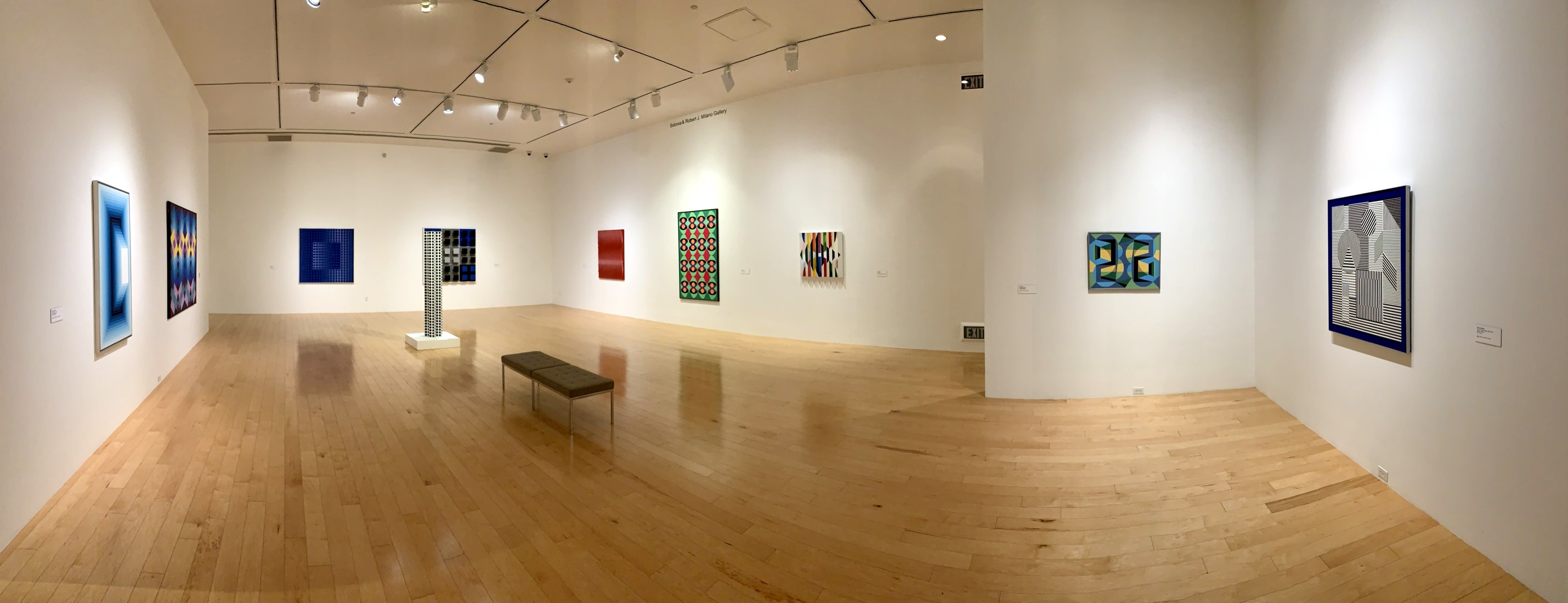
Palm Springs Art Museum
The museum that became the Palm Springs Art Museum did not begin with oil paintings. It began with desert ecology and indigenous culture. Founded in 1938 as the Palm Springs Desert Museum, its original purpose was to document the Colorado Desert's natural history and the Cahuilla people who had lived within it for two thousand years. That founding intent — the idea that understanding a place requires understanding both its landscapes and its peoples — still runs through an institution that has grown to encompass fine art, natural science, and architecture across 75,000 square feet of gallery space.
Architecture Worthy of Its Contents
E. Stewart Williams, the Palm Springs architect whose work defines much of the city's mid-century modernist identity, designed the museum's main building. That building was added to the National Register of Historic Places in 2016, a recognition that the container had achieved the same cultural significance as many of the objects it holds. Williams had already designed the Mountain Station of the Palm Springs Aerial Tramway and Frank Sinatra's Twin Palms estate in the Movie Colony East neighborhood; the museum building extended his engagement with the question of how architecture should respond to the desert's particular qualities of light, heat, and open space. The result is a building that earns its place in an art museum's permanent collection, even if it cannot be hung on a wall.
Twenty-Four Thousand Objects
The permanent collection divides roughly in two: approximately 12,000 fine art objects and 12,000 natural science specimens. The fine art holdings include works in glass, sculpture, photography, and painting, with particular strength in contemporary art by California artists and in Native American art from the Southwest and California. The natural science collection maintains the institution's founding connection to the Colorado Desert environment, offering specimens that document the ecology of a region that extends from Palm Springs south into Mexico. This dual identity — as both art museum and natural history institution — is unusual and reflects the specific vision of the founders, who believed that a desert community needed both.
Architecture as Exhibition
The Architecture and Design Center, which opened in 2014, made explicit something that had always been implicit about Palm Springs: that the city itself is an open-air museum of mid-century modernist design. The center focuses on the work of the architects who shaped the Coachella Valley from the 1930s through the 1970s — Richard Neutra, Albert Frey, John Lautner, E. Stewart Williams himself — and on the design principles they shared. By 2012 the museum had also opened a satellite location in Palm Desert, extending its reach to the broader region. The institution had grown from its 1938 origins into something recognizably metropolitan, without entirely losing the desert specificity that justified its founding.
The Cahuilla Thread
The museum's origins in documenting the Cahuilla people have remained part of its programming, even as the collection expanded into contemporary and international art. This is significant in a city where the Cahuilla land ownership — the Agua Caliente Band of Cahuilla Indians owns significant portions of Palm Springs proper in a checkerboard pattern of alternating land sections — is a daily fact of local governance. The museum's long engagement with Cahuilla culture is not merely historical documentation; it is an ongoing relationship with a people whose presence in the valley predates the Spanish, the Americans, and the celebrities by a very long time.
From the Air
Located at 33.82°N, 116.55°W in downtown Palm Springs, California. The museum is adjacent to the Palm Springs Art Museum Architecture and Design Center. Palm Springs International Airport (ICAO: KPSP) is approximately 2 miles to the east.