Palm Springs: The Desert Oasis of Midcentury Dreams
The Agua Caliente Band of Cahuilla Indians knew the hot springs for centuries before tourists arrived. The natural water, rising at 106 degrees from the desert floor, attracted everyone who came after: tuberculosis patients seeking dry air, Hollywood stars seeking privacy, developers seeking profit. Palm Springs became the getaway of choice in the 1930s and 40s - close enough to Los Angeles for a weekend, remote enough for discretion. The architecture that emerged became its own attraction: midcentury modern, post-and-beam, glass walls, flat roofs, swimming pools like gems in the brown landscape. When celebrity abandoned Palm Springs for newer destinations, architecture enthusiasts rediscovered it. The design that seemed dated became iconic; Modernism Week now draws tens of thousands.
The Springs
The Agua Caliente Band has occupied the Palm Springs area for at least 2,000 years, developing sophisticated irrigation from the artesian springs and the Whitewater River. The hot springs were sacred; the canyons rising into the San Jacinto Mountains provided seasonal migration. Spanish missions brought disruption; American settlement brought dispossession. But the Agua Caliente retained a checkerboard pattern of land ownership that made the tribe wealthy as Palm Springs developed. The tribal spa and casino now anchor part of downtown. The springs that drew the Cahuilla still draw visitors, though the water is now channeled through resort facilities.
The Stars
Hollywood discovered Palm Springs in the 1930s, when studio contracts required actors to remain within two hours of Los Angeles. The desert was just close enough. Frank Sinatra built a compound with a piano-shaped pool; Marilyn Monroe posed in poolside photos; the Rat Pack gathered at establishments that now trade on their memories. Elvis honeymooned here. Clark Gable hid here. The desert offered what Los Angeles couldn't: privacy, heat, swimming pools without paparazzi. The celebrity era peaked in the 1960s; as jet travel made distant destinations accessible, Palm Springs became too close to be exotic. The famous departed, leaving houses that became their own attractions.
The Architecture
Palm Springs became a laboratory for midcentury modern architecture, the desert setting ideal for glass walls and flat roofs. Richard Neutra, Albert Frey, Donald Wexler, and other architects designed homes that seemed to dissolve into the landscape - indoor-outdoor living, swimming pools as architectural elements, the mountains framed through floor-to-ceiling windows. The style persisted longer here than elsewhere; when modernism fell from fashion, Palm Springs preserved it through neglect. Rediscovery came in the 1990s; architecture tours emerged; preservation efforts protected what demolition elsewhere destroyed. Modernism Week, held each February, now draws 160,000 visitors to tour homes that once sheltered celebrities in scandals and sobriety.
The Revival
Palm Springs nearly died when the stars left. Downtown emptied; hotels closed; the population aged toward extinction. The revival began with LGBTQ visitors who found tolerance in what the mainstream abandoned. Architecture enthusiasts followed, then boutique hotel developers, then a creative class priced out of Los Angeles. The downtown revived with vintage shops, farm-to-table restaurants, and a weekend scene that would have puzzled the Rat Pack. The old Palm Springs - retirees, golf, country clubs - coexists uneasily with the new Palm Springs - weekend visitors, design tourists, celebrities again (though now Instagram-famous rather than movie-famous).
Visiting Palm Springs
Palm Springs is located in the Coachella Valley of Southern California, 100 miles east of Los Angeles. The Palm Springs Aerial Tramway ascends to 8,516 feet in the San Jacinto Mountains, offering a 50-degree temperature drop. The Palm Springs Art Museum interprets modern art and regional history. Tahquitz Canyon, managed by the Agua Caliente Band, provides desert hiking with waterfall destination. Architecture tours operate daily, especially extensive during Modernism Week (February). Lodging ranges from boutique hotels to major resorts; book ahead for festival weekends. Summer temperatures exceed 110°F; winter is ideal. The experience combines desert landscape, architectural significance, and the peculiar pleasure of defying climate with swimming pools and air conditioning.
From the Air
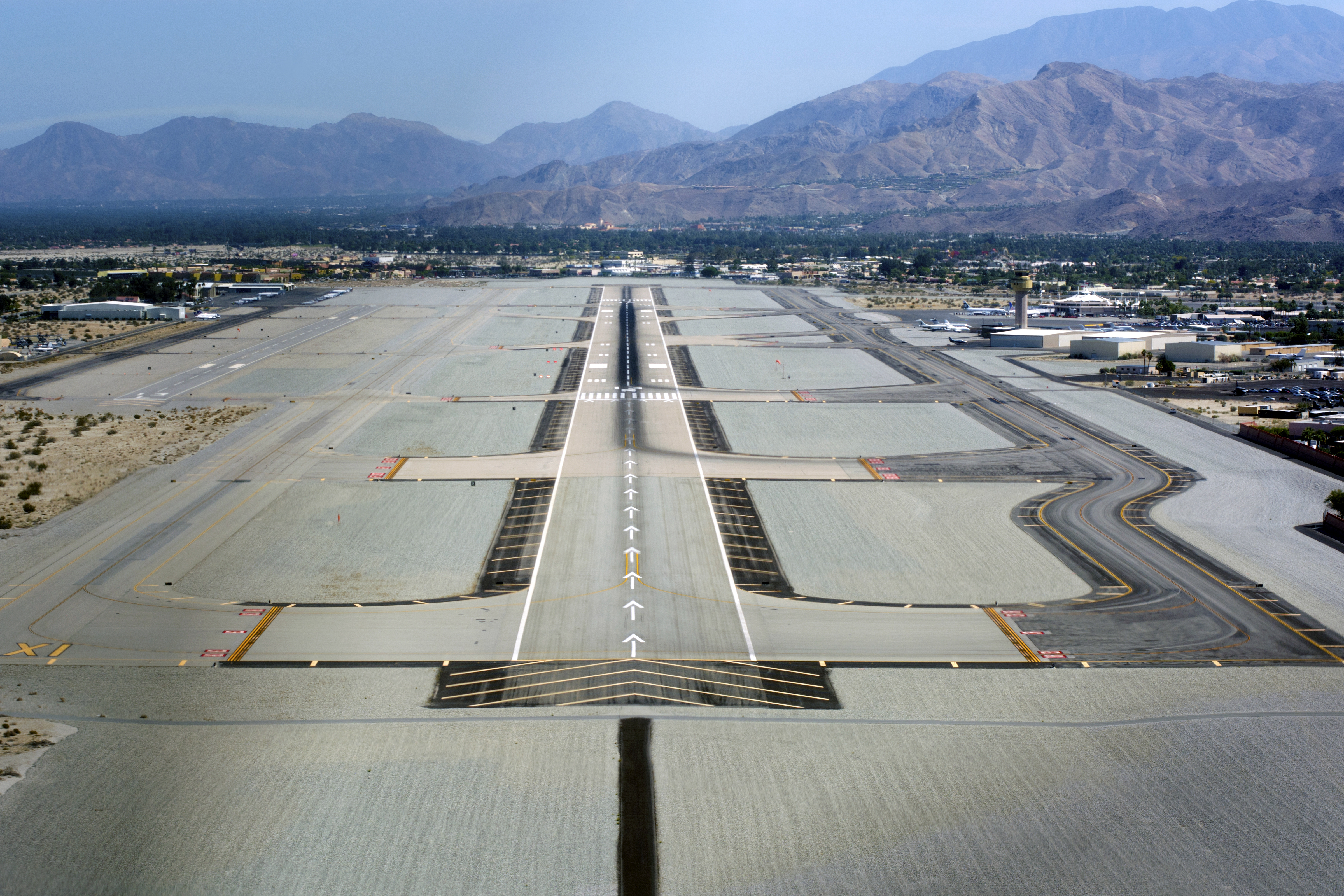
Located at 33.83°N, 116.55°W in the Coachella Valley of Southern California, where the San Jacinto Mountains rise dramatically from the desert floor. From altitude, Palm Springs appears as a grid of green amid tan desert - the golf courses and swimming pools that define it visible as blue dots against the brown. The San Jacinto Mountains rise 10,000+ feet immediately west, the tramway's path visible ascending the steep face. The Coachella Valley stretches southeast toward Indio and the Salton Sea. Wind farms cluster at the valley's northwest entrance where the pass creates steady winds. What appears from altitude as an irrigated oasis in harsh desert is exactly that - water, engineering, and air conditioning creating habitable space where nature intended otherwise, the midcentury modern dream made sustainable through sheer infrastructure.