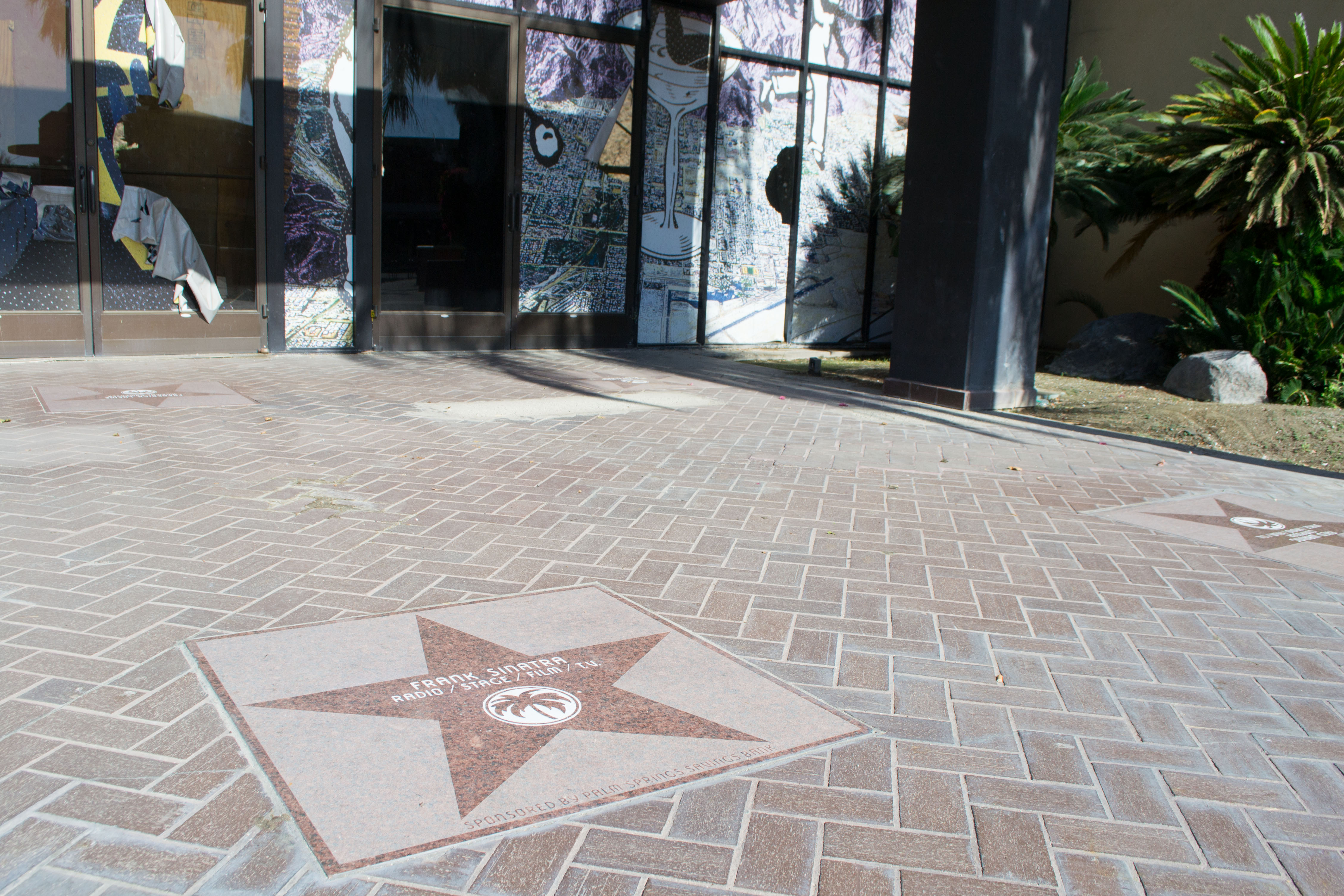
Palm Springs Walk of the Stars
On Hollywood Boulevard, a star means you have achieved a certain scale of fame — the kind measured in box office grosses, Grammy nominations, or television ratings. On Palm Springs' Palm Canyon Drive, a star means something slightly different. The Walk of the Stars that Gerhard G. Frenzel and Barbara Foster-Henderson established in 1992 honors not only entertainers but architects, athletes, civic pioneers, humanitarians, and military figures — seven categories in total, reflecting a city's understanding that what makes a place worth living in is more complicated than a list of celebrities who vacationed there.
The Seven Categories
The decision to organize the Walk of the Stars into seven categories rather than the Hollywood Walk's single entertainment focus was consequential. By adding designations for Literary figures, Civic/Pioneer honorees, Humanitarians, Architect/Artist/Designer, Athletes, and Military personnel alongside Entertainment, the founders created something more honest about what Palm Springs actually was. Yes, Frank Sinatra and Bob Hope and Bing Crosby walked these streets. But so did the architects who designed the buildings that became the city's cultural inheritance, the civic activists who built its institutions, and the military personnel who trained at the nearby air bases that were essential to the city's wartime economy. The star on the sidewalk belongs to all of them equally.
The Price of Recognition
Unlike the Hollywood Walk of Fame, which requires a committee nomination and a separate sponsorship fee that has historically exceeded forty thousand dollars, the Palm Springs Walk of the Stars charges a sponsorship fee that was set at fifteen thousand dollars as of 2023. The fee funds the cost of the star installation and surrounding infrastructure. Nearly 480 stars have been installed since the Walk's founding in 1992, a pace of installation that reflects sustained interest in the program and a community willing to fund recognition for figures it considers significant. The stars are embedded in the sidewalk along Palm Canyon Drive, the city's main commercial thoroughfare, where visitors encounter them as part of the everyday act of walking downtown.
The Boulevard and Its History
Palm Canyon Drive, where the Walk of the Stars is located, is the main artery of downtown Palm Springs — the street along which mid-century Hollywood arrived, shopped, dined, and was occasionally photographed. The Walk of the Stars was modeled after the Hollywood Walk of Fame, but its location on a desert boulevard rather than a Hollywood commercial strip gives it a different character. The scale is smaller, the pace slower, and the relationship between the honorees and the place is often more direct: many of the people commemorated in the sidewalk actually lived in Palm Springs, not merely visited it, and their connection to the city extends beyond the celebrity associations that the stars nominally document.
The Architecture Category
The inclusion of an Architect/Artist/Designer category in the Walk of the Stars reflects Palm Springs' specific relationship with modernist design. A city whose architectural heritage is a primary driver of tourism — Modernism Week in February regularly draws tens of thousands of visitors — has good reason to honor the people who created that heritage in the same public space where it celebrates its entertainers. Albert Frey, E. Stewart Williams, Richard Neutra, and others who shaped the built environment that distinguishes Palm Springs from every other desert resort community in California receive recognition in the same sidewalk stars as the performers who used those buildings as backdrops for the good life.
From the Air
Located at 33.82°N, 116.55°W along Palm Canyon Drive in downtown Palm Springs, California. Palm Springs International Airport (ICAO: KPSP) is approximately 2 miles to the east.