The Fair That Remade a City
San Diego had a population of 39,578 when it decided to host an international exposition — making it the smallest city in American history to undertake such an ambition. The occasion was the opening of the Panama Canal, and the city's leaders were determined to use the moment to put San Diego on the map as the first American port that Pacific-crossing ships would reach. They transformed Balboa Park into something extraordinary, and what they built there has never entirely gone away.
The Architect Who Changed San Diego
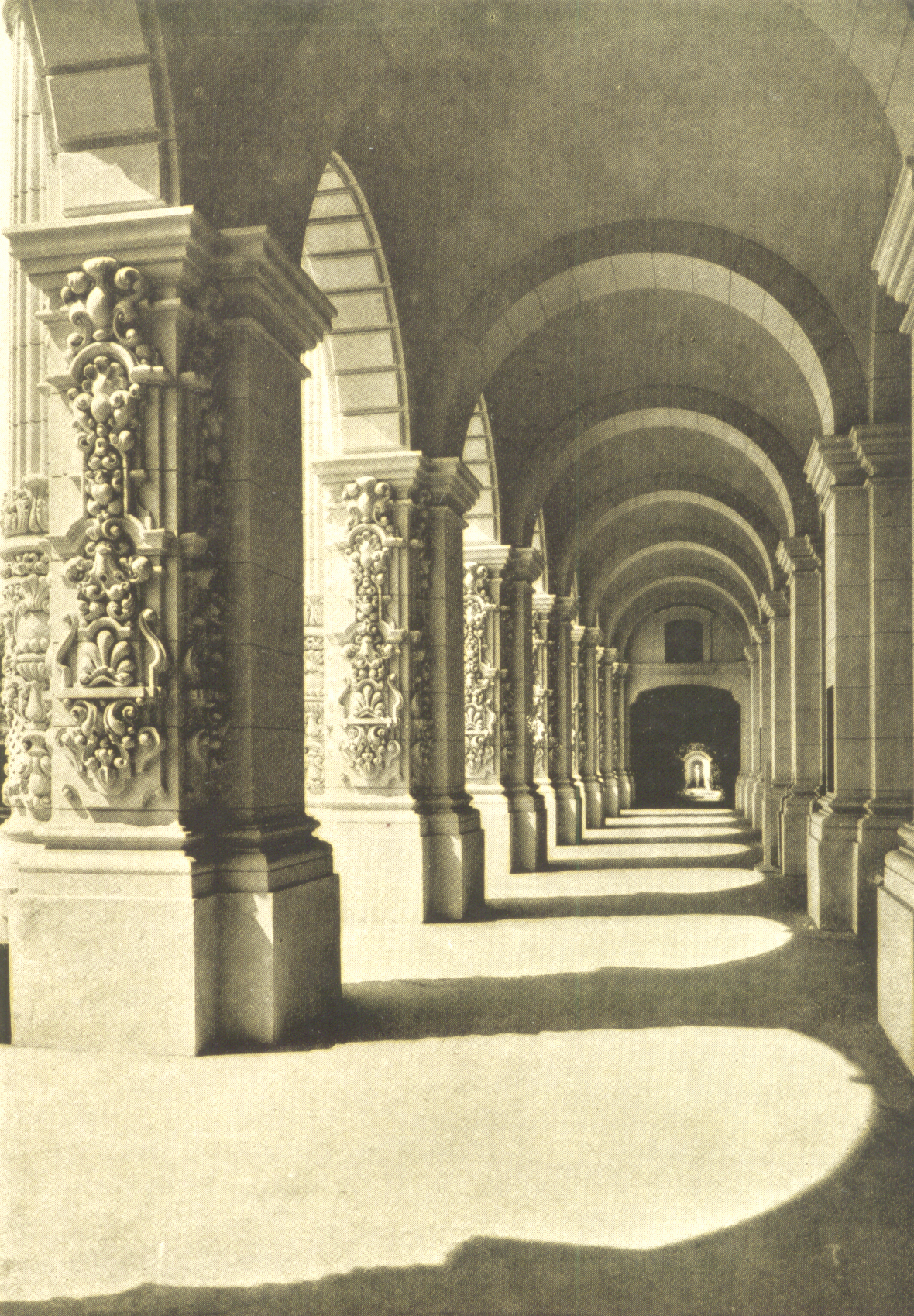
The architectural vision for the Panama-California Exposition belonged to Bertram Goodhue, a New York architect who had never previously worked in Spanish Colonial Revival style at any significant scale. Goodhue immersed himself in the historical record of Spanish architecture in the Americas and produced for San Diego something genuinely original — not a reproduction of existing buildings but a synthesis of Spanish and Mexican Colonial elements applied to a California setting.
The result was a series of buildings that have defined San Diego's visual identity ever since. The California Building, with its tower and ornate facade, became the exposition's centerpiece and the city's most recognizable landmark. The Cabrillo Bridge carried visitors into the park across a canyon. The colonnaded buildings along the central promenade gave the exposition an architectural coherence unusual for temporary fair construction. Most of the buildings were designed to be temporary; most were kept permanently.
The Luminaries Who Attended
The Panama-California Exposition opened on January 1, 1915, and ran through January 1, 1917 — extended by a year because of its success. During that two-year run, it attracted visitors who represented the full spectrum of early twentieth-century American public life.
Former President William Howard Taft attended. Theodore Roosevelt came. Franklin Roosevelt, then Assistant Secretary of the Navy, visited. Thomas Edison made the trip. Henry Ford attended. The list of notable visitors was a roll call of the era's significant figures, drawn to a small California city that had organized something genuinely worth seeing. The exposition demonstrated San Diego's capacity to host events of national significance — a demonstration the city has continued to make in the century since.
What the Exposition Created
The lasting contribution of the 1915 exposition was not the fair itself but the infrastructure it created. Balboa Park was transformed from a largely undeveloped mesa into a cultural campus with permanent buildings, landscaped grounds, and the civic identity it retains today. The institutions that formed around the exposition's exhibits — the Museum of Us (then called the San Diego Museum), the Natural History Museum — became permanent features of the park.
The exposition also planted, in the most literal sense, the landscape of modern Balboa Park. The planting program that accompanied the fair introduced the eucalyptus groves, the flowering trees, and the formal gardens that give the park its present character. The garden design has evolved over the century since, but the bones of what the exposition planted are still visible in the mature trees that shade the park's pathways.
The Final Night
The exposition closed on January 1, 1917, with a pyrotechnic display that spelled out the words WORLD PEACE–1917 in fire across the sky over Balboa Park. The message was freighted with irony that its organizers could not have fully anticipated: the United States would enter the First World War just three months later, in April 1917.
The closing celebration's optimism was genuine and not yet contradicted by events. San Diego had successfully hosted a two-year international exposition, had built the architectural legacy that defines Balboa Park, and had demonstrated that a small city with ambition and organization could accomplish something extraordinary. The fire that spelled WORLD PEACE over the park captured a moment before the world changed — a flash of civic confidence that has, despite everything, proven durable.
From the Air
The Panama-California Exposition's legacy is the entire cultural campus of Balboa Park, its Spanish Colonial Revival buildings identifiable from the air as the dense institutional cluster north of downtown San Diego.