Panama Viejo
Henry Morgan wrote it plainly: "There we were forced to put out the fires of the enemy's houses; but it was in vain, for by 12 at night it was all consumed that might be called the City." On January 28, 1671, the first European city on the Pacific coast of the Americas -- a place that had stood for 152 years, grown to 10,000 inhabitants, and funneled the gold and silver of Peru toward Spain -- ceased to exist in a single night of flame. What survived became Panama Viejo, a field of stone ruins in the suburbs of the modern capital, and a UNESCO World Heritage Site since 1997.
The First Pacific City
Pedro Arias Davila founded the settlement on August 15, 1519, with about a hundred colonists. It was the first permanent European settlement on the Pacific Ocean, replacing the failing cities of Santa Maria la Antigua del Darien and Acla on the Caribbean side. Two years later, Charles V of Spain elevated it to city status by royal decree and granted it a coat of arms. The location was strategic: Panama became the launching point for Spanish expeditions into Peru and the critical junction where Andean gold and silver were loaded onto mule trains bound for the Atlantic port of Nombre de Dios and then onward to Spain. Genoese merchants controlled the city's commerce for nearly a century, operating under a concession from the Spanish crown. By 1610, the city held 5,000 people, 500 houses, several convents, chapels, a hospital, and a cathedral.
Fire, Plague, and Pirates
The city endured catastrophe with stubborn regularity. Fires in 1539 and 1563 destroyed large sections but failed to halt growth. Pirates and indigenous warriors from Darien raided repeatedly in the early seventeenth century. An earthquake on May 2, 1620 damaged many buildings. Then, on February 21, 1644, the Great Fire consumed 83 religious buildings including the cathedral. Still the city rebuilt. By 1670, Panama's population had reached 10,000 -- a thriving colonial capital on the Pacific rim. But the greatest threat was already marching through the jungle. The Welsh privateer Henry Morgan, acting on intelligence that Spain was assembling forces to attack Jamaica, set out from the Caribbean coast with 1,400 men. His nine-day march across the isthmus was an ordeal of hunger and exhaustion, but the Spanish forces sent to ambush him in the jungle passes fled without fighting.
Morgan's Sack
Morgan's force reached the plains outside the city on January 28, 1671. Though outnumbered and facing cavalry and heavy guns, the English defeated Panama's militia. What happened next remains disputed three and a half centuries later. The city's viceroy, Don Juan Perez de Guzman, wrote that enslaved people and homeowners set fire to their own houses rather than let the English loot them. Morgan claimed his men tried to extinguish the blazes but could not. Contemporary accounts support the story that Panama's own inhabitants burned their city -- there was no incentive for Morgan's forces to destroy what they had not yet plundered. Either way, the fire was total. Morgan reported 400 Spanish casualties, though the true death toll was certainly higher. The surviving population rebuilt several kilometers to the west, at the site of the modern capital's Casco Viejo district. Morgan was arrested upon his return to England but escaped punishment after proving he had not known about the recently signed Treaty of Madrid ending hostilities between England and Spain. He was later knighted.
Ruins in the Suburbs
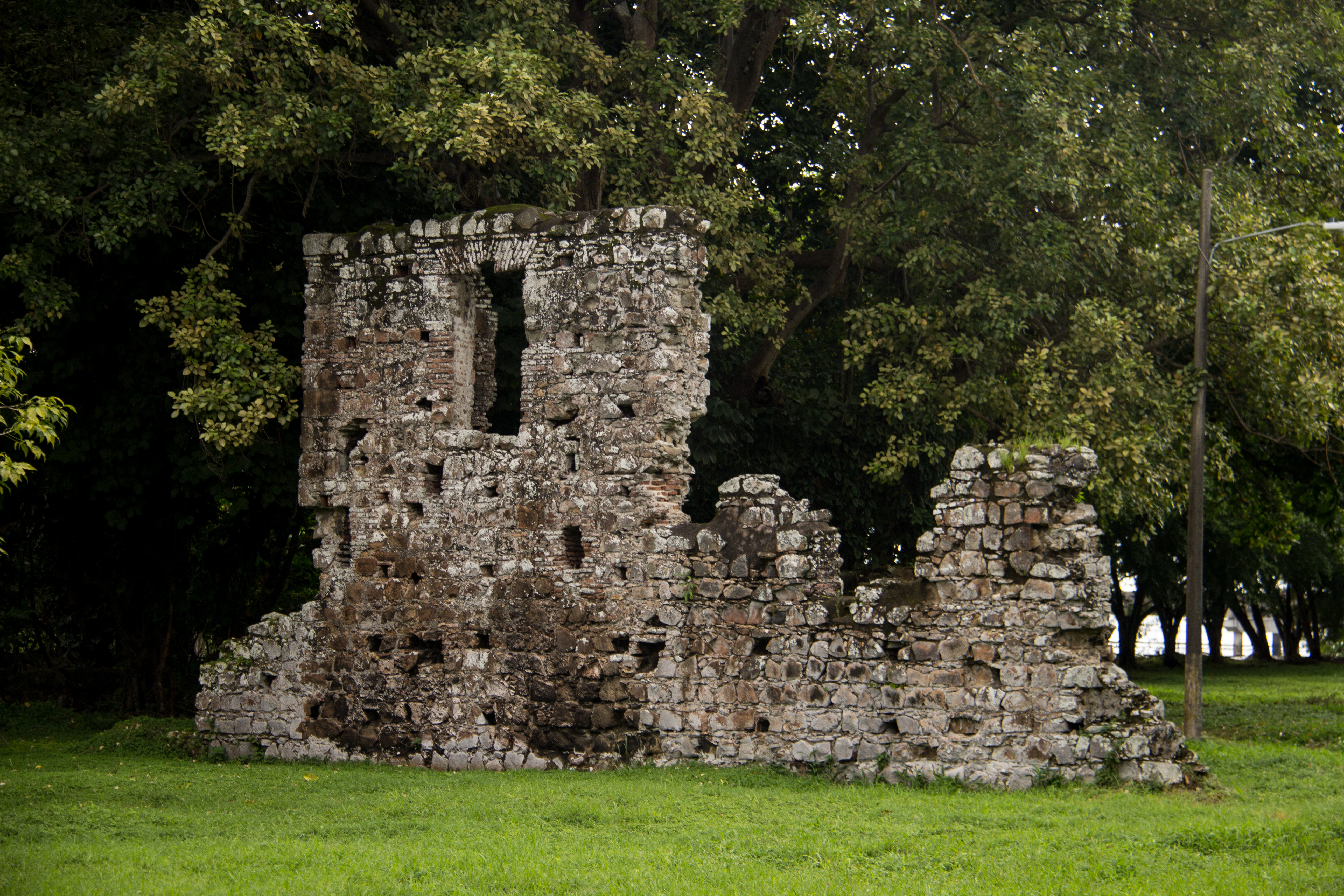
Today Panama Viejo sits in the eastern suburbs of Panama City, its stone cathedral tower rising above a landscape of modern apartment blocks and shopping centers. The ruins include the remains of convents, the Casa de los Genoveses where Genoese merchants once conducted their trade, and fragments of the city's original street grid. The cathedral tower offers views across the ruins to the gleaming skyline of Costa del Este. UNESCO inscribed the site in 1997, recognizing it as the "oldest continuously occupied European settlement in the Pacific coast of the Americas" -- a designation that reflects not the ruins themselves but the unbroken human presence from 1519 to the present. The archaeological site and the historic district of modern Panama City together form a single World Heritage property, linking the destroyed original to the city that rose from its ashes.
From the Air
Panama Viejo is located in the eastern suburbs of Panama City at 9.007N, 79.485W, along the coast of the Bay of Panama. The ruins are identifiable from altitude by the cathedral tower standing amid surrounding modern development. The site is approximately 6 km east of downtown Panama City. Nearest airports: Tocumen International (MPTO, 12 km east) and Marcos A. Gelabert/Albrook (MPMG, 10 km west). Recommended viewing altitude: 2,000-3,000 feet for the contrast between ruins and modern city.