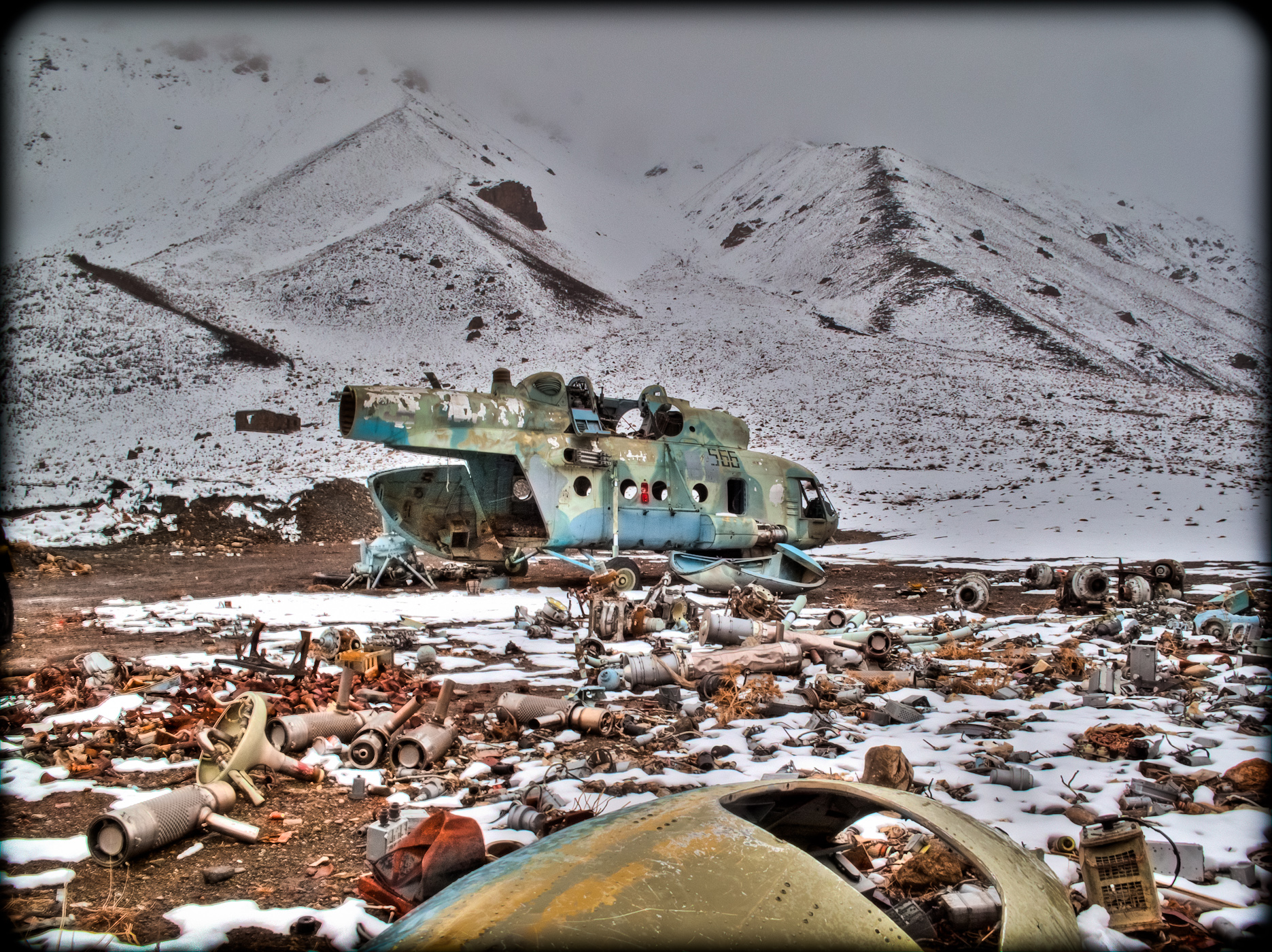
Panjshir Valley
The name means "Five Lions" in Dari, though nobody agrees on which five. Some say the word refers to five brothers who dammed the river in ancient legend. Others point to five Sufi saints. Whatever the origin, the Panjshir Valley has earned its ferocious name many times over -- repelling the Soviet Army in the 1980s, holding off the Taliban in the 1990s, and resisting their return in 2021. Nearly one hundred kilometers long, flanked by peaks of the Hindu Kush, and home to over one hundred thousand people, this narrow corridor through northeastern Afghanistan has shaped the country's history far out of proportion to its size.
Passage Through Deep Time
Human presence in the Panjshir dates to the Bronze Age. Archaeological relics unearthed during President Daoud Khan's era hinted at just how ancient the settlement is, though local Tajiks -- who make up Afghanistan's largest ethnic Tajik concentration here -- trace their own ancestry to migrants from Samarkand roughly seven hundred years ago. The valley has always been a corridor, not a dead end. Two passes cross the Hindu Kush from its upper reaches: the Khawak Pass at 3,848 meters, leading to Afghanistan's northern plains, and the Anjuman Pass at 4,430 meters, crossing into Badakhshan. Alexander the Great's armies used these routes. So did Timur's. The same geography that made the Panjshir a highway for conquerors also made it a stronghold for those who resisted them.
Stones of War and Wealth
As early as the first century AD, Pliny the Elder noted gemstones from this region. In the Middle Ages, the Saffarid and Samanid dynasties minted coins from Panjshir silver. But it was the emeralds that drew the world's attention. By 1985, stones exceeding 190 carats had been pulled from the valley's mines -- crystals reported to rival the finest output of Colombia's legendary Muzo mine. During the Soviet-Afghan War, emerald revenue funded the mujahideen resistance, with rough stones transported to Pakistan for cutting and distribution across global markets. The mineral wealth was not incidental to the valley's military significance; it was inseparable from it. Control the mines and you financed your army. Lose them and you depended on foreign patrons whose agendas might not align with your own.
The Lion's Commander
Ahmad Shah Massoud, born in the valley and later called the Lion of Panjshir, led an uprising against the government of Daoud Khan in 1975 and went on to command the mujahideen defense against nine Soviet offensives between 1980 and 1985. Not once did the Soviets permanently hold the valley. When the Taliban swept across Afghanistan in the late 1990s, Massoud again defended the Panjshir, making it one of the last territories the movement could not conquer. He was assassinated by al-Qaeda operatives posing as journalists on September 9, 2001 -- two days before the attacks on New York and Washington. In April 2004, the valley became the administrative heart of a new Panjshir Province, carved from Parwan Province in recognition of its distinct identity. The province was considered one of Afghanistan's safest regions during the years of the international ISAF-backed government.
Resistance Returns
When the Taliban retook Kabul in August 2021, the Panjshir's old defiance reasserted itself almost immediately. Former Vice President Amrullah Saleh and Ahmad Massoud -- the commander's son -- vowed to resist from the valley that had repelled invaders for decades. On August 22, the National Resistance Front claimed to have retaken districts in northeastern Afghanistan. The Taliban announced hundreds of fighters were converging on the Panjshir. Negotiations were held between resistance delegates and a Taliban delegation in the Parwan city of Charikar. By September 6, the Taliban claimed full control. The resistance disputed it: Ali Maisam Nazary, the NRF's foreign relations head, stated that sixty percent of the province remained under resistance control. Reporters from Iran's Tasnim News Agency confirmed on September 11 that both Taliban and NRF fighters remained in the valley -- and that civilians were fleeing in anticipation of continued fighting.
A Valley Looking Forward
Beyond its martial reputation, the Panjshir holds unrealized economic potential. Engineers have identified sites for hydroelectric dams that could make Kabul's capital region energy self-reliant, with the Rewat locality earmarked for the first project. A ten-turbine wind farm built in April 2008 demonstrated the valley's viability for renewable power. The Panjshir River, which divides the valley along its length, carries water that could generate far more electricity than the region currently produces. Whether the valley's future will be defined by its mineral deposits, its energy potential, or its apparently inexhaustible capacity for resistance depends on decisions that have yet to be made -- by Afghans and by the outside powers that have never been able to leave this country alone for long.
From the Air
Located at 35.27°N, 69.47°E, the Panjshir Valley extends nearly 100 km northeast from the Shomali Plain into the Hindu Kush. From cruising altitude, it appears as a dramatic green corridor carved between barren, snow-capped peaks. The Khawak Pass (3,848 m) and Anjuman Pass (4,430 m) are visible at the valley's upper end. Bagram airfield (OABG) lies southwest of the valley entrance. Best viewed at 20,000-25,000 ft for the full sweep of the gorge. The Salang Pass highway is visible to the west, threading through the mountains toward northern Afghanistan.