Paranapiacaba
The clock tower is modeled on Big Ben. The timber cottages are laid out in a tidy English grid. The Chief Engineer's residence on the hilltop is pure Victorian. And all of it sits at 700 meters' elevation in the Brazilian Atlantic Forest, wreathed in cloud and surrounded by orchids. Paranapiacaba is one of the strangest transplants in colonial history -- a slice of Surrey dropped into the Serra do Mar by British railway engineers who came to move coffee and ended up building a town. Its name, from the Tupi language, means "where you will find the sea," because from this ridgeline perch above São Paulo, on a clear day, you can see all the way to the coast.
Rails, Coffee, and the British Empire's Reach
In the middle of the nineteenth century, the British-owned São Paulo Railway Company needed a way to move coffee beans from the plantations of the interior to the port of Santos. The problem was the Serra do Mar, a coastal escarpment that rises like a wall between the plateau and the sea. British engineers carved a zig-zag railway line through the mountain terrain -- a feat of Victorian engineering that required a funicular system to haul trains up and down the steep grades. Where the line reached its highest point, the company built a village for its workers: houses, a station, a church, a clock tower. They built it in the style they knew, which meant timber-frame cottages arranged in an 1890s grid pattern that would have looked perfectly natural in the English countryside. In the Brazilian jungle, the effect was surreal.
Boom, Bust, and the Sound of Silence
For roughly thirty years, Paranapiacaba thrived. The funicular demanded constant human attention -- operators, mechanics, brakemen -- and the village filled with families who lived and worked around the railway. But when automated machinery replaced the labor-intensive cable system, the village's reason for existing evaporated almost overnight. The population declined sharply, and buildings that had been homes became shells. What might have been the end of the story in another country became, in Paranapiacaba's case, a kind of preservation through neglect. Because few people had reason to tear anything down or build anything new, the Victorian-era town survived largely intact into the modern age -- its timber walls weathering in the subtropical humidity, its grid streets slowly being reclaimed by the surrounding forest.
A Museum You Can Walk Through
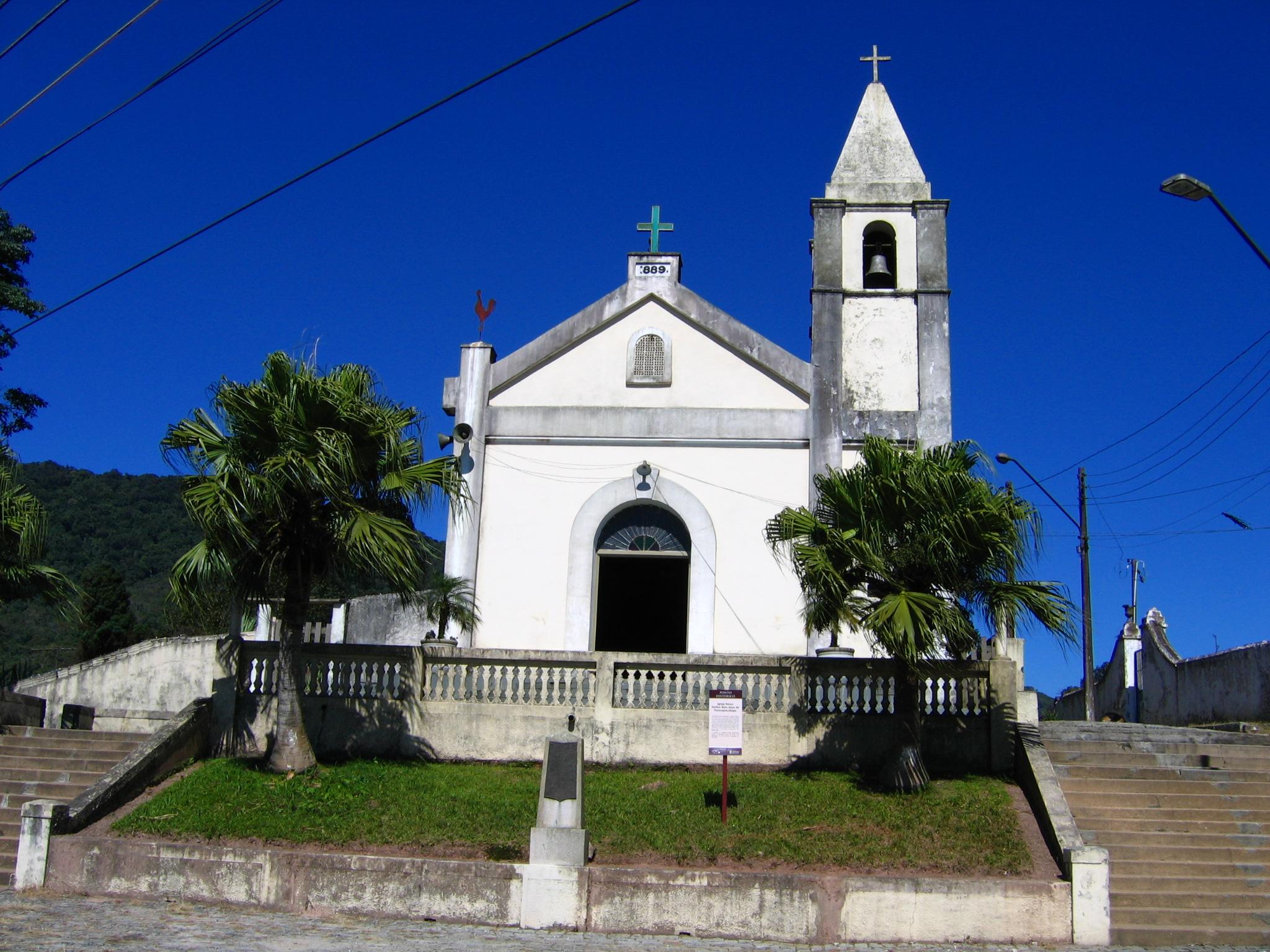
Today the old railway infrastructure has been converted into one of the district's main attractions. The Funicular de Paranapiacaba railway museum, established in 1970, preserves the steam engines, British carriages, and cable machinery that once powered the mountain crossing. The locomotive stations and workers' cottages are open to the public. On the hilltop above the village, the Castilino -- the former residence of the Chief Engineer -- houses the Centro Preservação da História de Paranapiacaba, displaying railway maps and photographs from the town's operational days. The parish church, Capela do Alto da Serra, has been standing since it first opened on 8 August 1884. Walking the grid of streets, visitors encounter something rare: not a reconstruction or a theme park, but an actual working-era town that simply stopped working and forgot to disappear.
Forest, Fog, and a Second Life
The Mata Atlântica -- the Atlantic Forest -- presses in from every side. The Parque Estadual da Serra do Mar offers hiking trails through some of Brazil's most biodiverse terrain, where orchids and bromeliads crowd the canopy and the air is thick with moisture. Paranapiacaba's elevation makes it a natural cloud-catcher; fog drifts through the streets with regularity, softening the edges of the Victorian architecture and lending the whole village a dreamlike quality. The Brazilian government has designated Paranapiacaba a historic district and invested in its preservation, hoping to develop it as both a suburb of greater São Paulo and a tourism destination. The village that the British built to serve a railway nobody uses anymore has found a new purpose: a place where visitors can step into a past that belongs to two continents at once.
From the Air
Located at 23.78°S, 46.31°W in the Serra do Mar mountains, approximately 61 km southeast of central São Paulo. The village sits at roughly 700 meters elevation on the coastal escarpment. Nearest major airport: Guarulhos International (SBGR), approximately 75 km to the north-northwest. Congonhas (SBSP) is closer at about 50 km to the west-northwest. The settlement is small and nestled in dense Atlantic Forest; look for the railway infrastructure and grid-pattern clearings in the forested mountains. Often obscured by low cloud and fog.