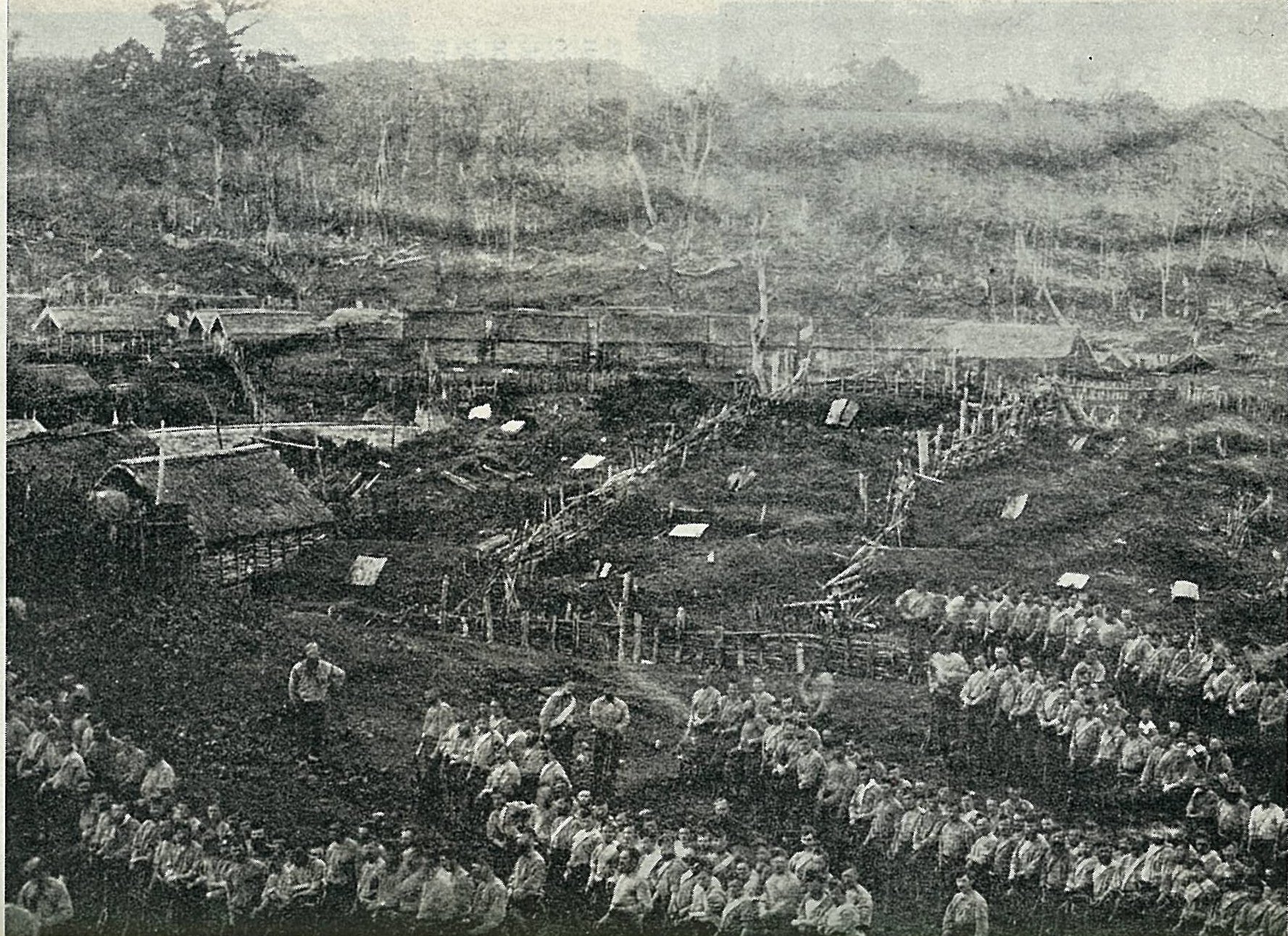
Parihaka
On the morning of 5 November 1881, while the rest of the British Empire celebrated Guy Fawkes Night, 1,600 colonial troops marched on a Maori village on the western slopes of Taranaki Maunga. They expected resistance. What they found instead were rows of children singing and dancing at the entrance, then rows of seated women, and finally 2,500 adults sitting in silence around their leaders, Te Whiti o Rongomai and Tohu Kakahi. No weapons were raised. No blows were struck. The two chiefs had spent fifteen years building Parihaka into something the colonial government could not comprehend: a community that fought land confiscation with ploughs instead of muskets, and met armed invasion with stillness.
Built from Dispossession
Parihaka was founded in 1867, one year after the end of the Second Taranaki War and two years after the Crown confiscated nearly all Maori land in the Taranaki region. Te Whiti o Rongomai and Tohu Kakahi, both veterans of the conflicts, withdrew to a remote site on the western side of the mountain and established an open farming community. They renounced violence and declared they would defend their people's land through spiritual authority and peaceful action. The settlement grew rapidly. By the late 1870s, more than 2,000 Maori who had been dispossessed of their land by confiscation had gathered at Parihaka. European visitors remarked on the community's cleanliness, industry, and the extensive cultivations that produced cash crops alongside food sufficient for all inhabitants. It was, by the standards of the time, a model settlement, and that made it dangerous to a government built on the premise that Maori could not govern themselves.
Ploughmen Against Empire
On 26 May 1879, Te Whiti launched a campaign that confounded the colonial authorities. Organised groups of Maori ploughmen began moving across Taranaki, ploughing through the 'confiscated land' that settlers had fenced and claimed. They used hoes and oxen-drawn ploughs. They did not threaten anyone. They simply farmed land they believed was still theirs. The government arrested the ploughmen in waves, but each group was replaced by another. More than 400 were eventually imprisoned without trial, many sent to the South Island. The campaign drew attention across the British Empire, and newspaper reports of the Maori ploughmen's nonviolent struggle later influenced the thinking of Mahatma Gandhi during his years in South Africa. Te Whiti and Tohu were practicing organized nonviolent resistance decades before Gandhi made it a global strategy.
The Day of Silence
Native Affairs Minister John Bryce led the invasion personally. The 1,600 troops, a force comprising 644 armed constabulary and 956 volunteer militiamen, advanced on Parihaka expecting the fortified resistance they had trained for. Instead, they were met by singing children. After pushing past the children and the seated women, the soldiers found the entire adult population sitting peacefully around Te Whiti and Tohu. The two chiefs were arrested without incident. In the days that followed, the troops systematically dismantled the village: looting property, destroying crops, and dispersing the inhabitants. By December, many of the displaced Maori faced starvation. Bryce offered them work, but it was the ultimate humiliation: roadmaking and fencing for the subdivision of their own land. The government then withheld 5,000 acres of Parihaka reserve land as 'indemnity' for the cost of suppressing what it called 'the Parihaka sedition.'
Imprisoned Without Trial
Te Whiti and Tohu were never tried. In May 1882, the government passed the West Coast Peace Preservation Bill, which decreed that the two chiefs would be jailed indefinitely and could be re-arrested without charge at any time if released. Bryce justified the law by arguing he feared a jury might acquit them, or that a conviction might result in a lenient sentence. The Indemnity Act followed, shielding anyone who had used measures 'in excess of legal powers' during the invasion. Titokowaru, another leader imprisoned at the Pungarehu constabulary camp, went on a hunger strike. He was eventually charged with threatening to burn a hotel and with the offence of sitting on his own marae. Even after their release, the chiefs returned to a Parihaka still under armed guard, with pass laws and bans on public meetings enforced by the constabulary stationed in the village.
A Memory That Won't Stay Buried
The story of Parihaka lay largely forgotten by non-Maori New Zealand until historian Dick Scott published The Parihaka Story in 1954, revised and expanded as Ask That Mountain in 1975. Since then, it has become one of the defining events in New Zealand's reckoning with its colonial past. Tim Finn and the band Herbs released a song called 'Parihaka' in 1989. Witi Ihimaera's 2011 novel The Parihaka Woman brought the story to a wider audience. In 2022, songwriter Don McGlashan drew a pointed parallel: New Zealanders remember the Gunpowder Plot of 5 November 1605 with annual Guy Fawkes celebrations, but the events of 5 November 1881 at Parihaka remain far less well known. His chorus suggests a correction: 'Light up John Bryce on the 5th of November. Make it Parihaka Day.' Te Whiti and Tohu rebuilt their community after the invasion, launching new protest marches in 1884 and renewed land occupations in 1886. The village endures today, a living settlement and a symbol of what nonviolent resistance costs and what it preserves.
From the Air
Parihaka (39.30S, 173.83E) is a small settlement on the western slopes of Taranaki Maunga, on the coast of New Zealand's North Island. It sits approximately 40 km south-southwest of New Plymouth Airport (NZNP). The settlement is not prominently visible from altitude but lies in the coastal lowlands between the mountain and the Tasman Sea. Taranaki Maunga (2,518 m) dominates the skyline to the east. The surrounding landscape is pastoral farmland. Hawera Aerodrome is approximately 30 km to the southeast.