Paris Gibson Square Museum of Art
Just before Paris Gibson Square Museum of Art opened its doors in 1977, a portion of the building exploded. The blast was not an accident but a favor. Producers of the Charles Bronson film Telefon needed to blow something up, and the city of Great Falls needed to demolish a brick annex marring the historic structure. The filmmakers rigged a prop Jeep to ram the 1913 addition and detonate it, saving the city $23,000 in demolition costs. The explosion hurled flaming debris onto nearby rooftops, but the museum emerged unscathed, ready to begin its unlikely second act as Montana's premier contemporary art space.
Four Girls and a Schoolhouse
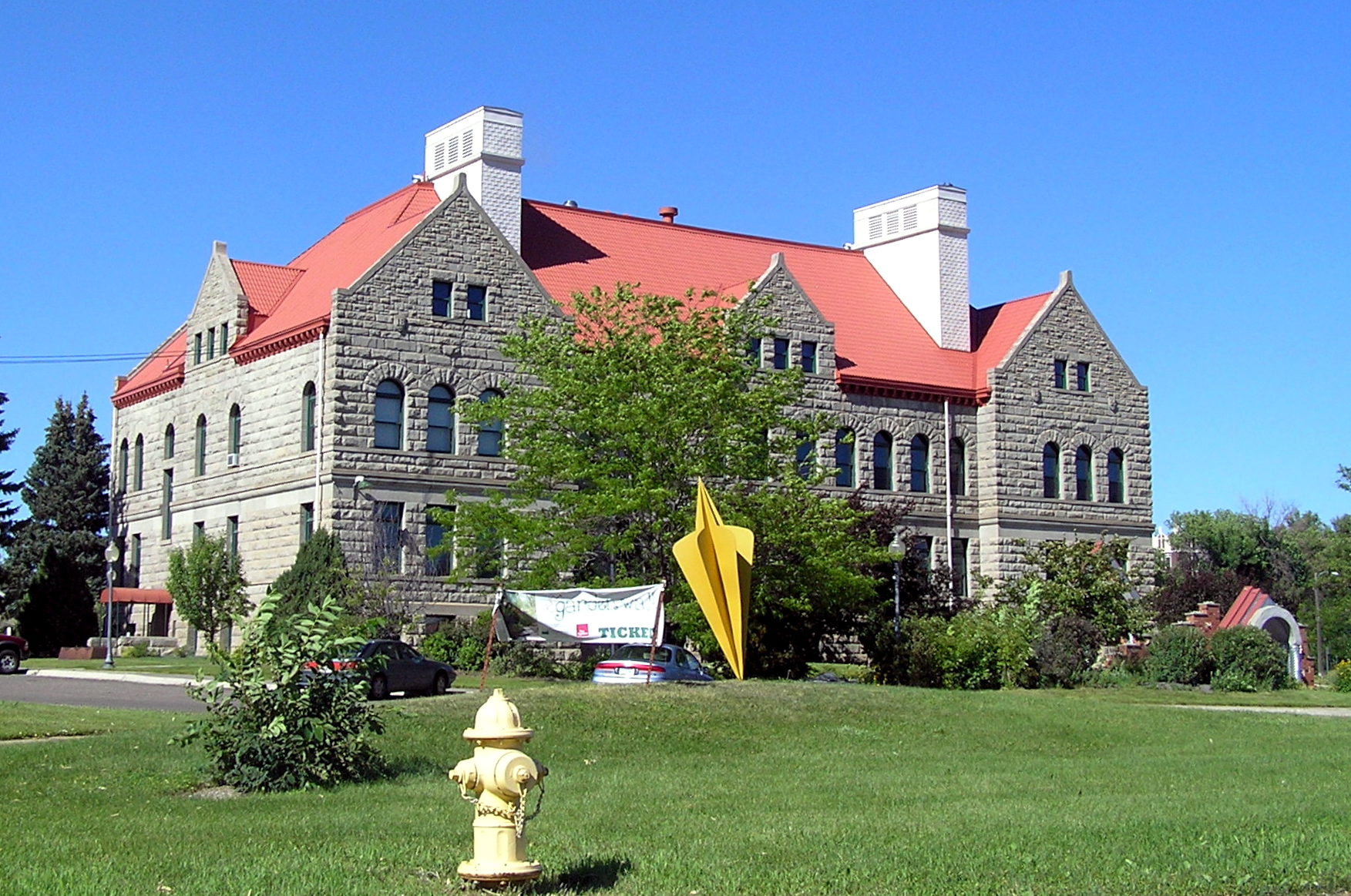
The grey sandstone Romanesque Revival building was constructed in 1896 to house Great Falls High School, which had been founded in 1890 when four teenage girls, newly arrived in the city, asked to receive a public high school education. Those four young women constituted the first class, meeting in a corner of a classroom in the Whittier Building until the new building was ready. Architect William White's design won out over three other proposals, and construction created a structure with massive walls sunk into shale bedrock. The building served as the city's high school until 1931, when voters approved bonds for a new million-dollar facility. Renamed Paris Gibson Junior High School after the city's founder, it educated students until 1975, when the junior high moved to renovated quarters elsewhere.
From Abandonment to Andy Warhol
After the junior high departed in June 1975, the building sat vacant for a year. Vandalism and weather took their toll on a structure already worn from decades of public school use. There was genuine fear the historic building might be demolished. But in 1977, Paris Gibson Square Museum of Art formed and took ownership. The transformation was slow but steady. On December 30, 1999, the Andy Warhol Foundation for the Visual Arts awarded a $30,000 grant to support an exhibit of contemporary Native American art titled "Material Culture: Innovation in Native Art." The Square found itself in the company of the Hirshhorn Museum, the Museum of Contemporary Art in Los Angeles, and the New Museum in New York City as grant recipients that year.
Sculptures in the Garden
The outdoor sculpture garden inaugurated in 1993 tells its own story of Montana creativity. Robert Harrison's "Gibson Gateway," a blue-painted brick archway framed by freestanding walls, won a statewide competition to become the garden's first piece. Richard Swanson's "Prairie Tops" arrived in 2001, a fluted aluminum form painted yellow that resembles a dreidel standing near the southeast corner. In 2002, Great Falls High School art teacher Lisa Easton created "Two Sisters" using shonkinite, a locally significant rock, with carved stones of various sizes emerging from gravel held in a steel basin. Theodore Waddell's weathering steel sculpture stands near the west entrance, its brown patina deepening with each Montana winter.
Budget Wars and Boiler Failures
The museum's history reads like a primer on small-city cultural survival. In 1993, Cascade County agreed to provide $66,000 annually for building maintenance plus a mill levy split with the local historical society. But in 2003, when PPL Montana challenged property taxes on Black Eagle Dam, the resulting county budget crisis slashed the museum's maintenance funds to $60,720. The Square launched aggressive membership drives with new "Patron" and "Benefactor" categories. Grants from the Dufresne Foundation and federal agencies helped stabilize finances. Then on December 30, 2012, one of the museum's two boilers failed while the second came close to dying. The Square applied for an emergency housing grant, only to learn that city-owned buildings operated by nonprofits did not qualify for the intended public-agency-only funds.
Ghosts and Gray Sandstone
Seven galleries spread across the first and second floors display folk art, abstract work, postmodern pieces, and functional artwork like jewelry. Former classrooms from the school era remain on the second floor, now part of the exhibition space. The basement houses the Education Department, where art classes run on quarterly schedules. Museum executive director Kathy Lear admitted in July 2010 that she once heard ghostly radio music coming from the basement late one afternoon. The building, listed on the National Register of Historic Places since 1976, still carries echoes of the students who walked its halls. Free art programs serve seniors, veterans, teens, and adults with disabilities. Every third grader in the Great Falls Public Schools receives a free museum tour and art activity, ensuring that the building founded because four girls asked for an education continues to educate.
From the Air
Located at 47.51N, 111.28W at 1400 First Avenue North in Great Falls, Montana. The grey sandstone Romanesque Revival building is visible in the downtown grid. Great Falls International Airport (KGTF) lies approximately 3 miles to the southwest. The museum occupies a full city block with its distinctive sculpture garden visible from lower altitudes. The building's historic architecture contrasts with modern commercial structures nearby.