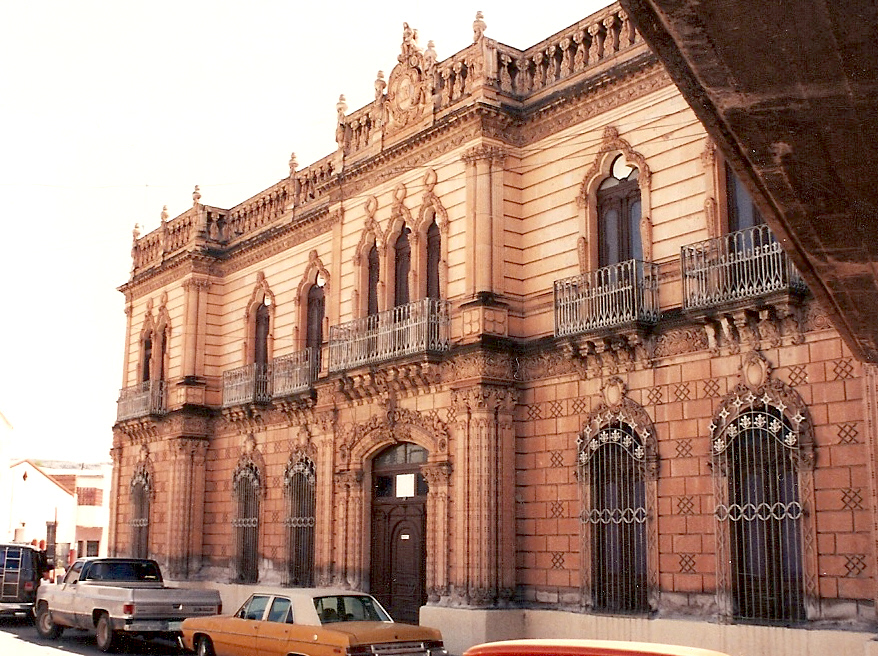
Parral, Chihuahua
On July 20, 1923, a black Dodge touring car turned onto a narrow street in Hidalgo del Parral and was shredded by rifle fire. Inside was Pancho Villa, the revolutionary general who had once commanded armies of thousands and raided across the US border. He died in a city that understood violence and ambition intimately -- a city that had been built, quite literally, on a hill of silver called Cerro la Prieta. Parral's story is inseparable from what lies beneath its streets.
The Hill That Built a City
Hidalgo del Parral mushroomed from the base of Cerro la Prieta, a hill rich in silver-bearing ore sitting on the eastern foothills of the Sierra Madre Occidental. The bedrock here, both sedimentary and volcanic in origin, yields silver veins with and without lead. Silver mines at nearby Santa Barbara had been operating since 1567, established in the territory of the Conchos people. But in 1631, a vast new silver strike transformed the settlement. By 1640, the Spanish monarch Philip IV declared Parral the Capital of the World of Silver -- a title granted at the height of an empire that stretched from Eastern Asia to Italy to the Low Countries. The mines demanded food and labor, so the colonial authorities built a permanent mine-ranch complex around them, developing grain farms and stock ranches across the surrounding terrain to feed a growing population.
Outlaws, Revolutionaries, and a Dodge Sedan
Parral has always attracted larger-than-life characters. "Dirty" Dave Rudabaugh, a border ruffian and sometime associate of Billy the Kid, spent time here during his years of cross-border trouble. But the city's most famous association is with Pancho Villa. The revolutionary general, who had risen from banditry to command the feared Division del Norte, was living in semi-retirement in the region when assassins ambushed his car in Parral's streets. He was initially buried in the city before his remains were later moved. The assassination remains one of the Mexican Revolution's most debated episodes -- Villa had too many enemies to count, from the Huerta federalists he had fought to the Carranza faction that distrusted him, to various personal rivals nursing old grudges.
A Mining Baron's Palace and a Pueblo Magico
Modern Parral, with roughly 110,000 inhabitants, wears its mining heritage openly. Visitors can tour the Palacio de Alvarado, a late 19th-century mansion built by a mining baron whose wealth came from the same veins that drew the Spanish four centuries earlier. With a guide, you can enter the mine itself. The city holds Pueblo Magico status, Mexico's designation for towns with exceptional cultural or historical significance. The old train station, the colonial churches, and the narrow streets climbing the hillsides all reflect a place whose wealth came from underground and whose culture was shaped by the people who dug for it -- indigenous Conchos laborers, Spanish fortune-seekers, and the generations of Mexican families who followed.
High Desert and Thunderstorms
Parral sits 220 kilometers south of the state capital of Chihuahua, in the Sierra Madre's eastern foothill belt. The climate is semi-arid, moderated by altitude. Summer brings heavy thunderstorms that turn dry arroyos into temporary rivers, while the dry season from October through May alternates between mild days and chilly nights. Frosts are common but not persistent. The landscape is characteristically northern Mexican -- scrubby hills, exposed rock, wide skies. The city has produced an improbable roster of notable figures: Humberto Mariles, who won double gold in show jumping at the 1948 London Olympics; Aurora Reyes Flores, the first female exponent of Mexican muralism; Carlos Slim's mother, Linda Helu Atta; and UFC fighter Yair Rodriguez. For a city built on silver, Parral has always punched above its weight.
From the Air
Located at 26.93N, 105.67W in the southern part of Chihuahua state, Mexico. The city sits at roughly 1,700 m elevation in the foothills of the Sierra Madre Occidental. There is no major commercial airport at Parral; the nearest is General Roberto Fierro Villalobos International Airport (MMCU/CUU) at Chihuahua, approximately 220 km north. The terrain is semi-arid foothill country with exposed volcanic geology. From the air, look for the distinctive Cerro la Prieta hill and the city clustered at its base in a valley setting.