Partridge Island (Saint John County)
The Mi'kmaq called it Quak'm'kagan'ik -- "a piece cut out." According to their tradition, the island was born when the culture hero Glooscap smashed a dam that Big Beaver had built at the Reversing Falls, and a chunk of debris was swept downstream to the harbour mouth. European settlers gave it the more prosaic name Partridge Island, and in 1785 they designated it something far grimmer: North America's first quarantine station. For the next century and a half, this small island in the Bay of Fundy would serve as the gateway to Canada for hundreds of thousands of immigrants -- a place of hope for many, and a place of death for more than a thousand who never made it past the harbour.
The Famine Ships Arrive
The island's darkest chapter began in the 1840s, when the Great Famine drove millions from Ireland. Potato blight had destroyed the staple crop, and while other agricultural products were commandeered and exported by the British Crown, entire communities starved. Those who could scrape together passage money boarded ships for North America. During the famine years, some 30,000 immigrants were processed by the physicians on Partridge Island. Many arrived already sick with typhus, carried aboard the overcrowded vessels that would later be called coffin ships. In 1847 alone, 1,196 people died at Partridge Island and in the adjacent city of Saint John during the typhus epidemic. By the 1890s, the island was processing over 78,000 immigrants a year -- a staggering throughput for a station on a tiny island at the edge of the Bay of Fundy.
A Doctor Who Volunteered
James Patrick Collins was born around 1824 in County Cork, Ireland, and immigrated to Saint John with his family in 1837. He studied medicine in Paris and London before returning to practice from his family's home on Mill Street. In May 1847, when the typhus epidemic overwhelmed Partridge Island's quarantine station with nearly 2,500 patients, Dr. George J. Harding could not manage alone. Collins volunteered, knowing the danger. He earned fifty pounds a month for his service. By late June, he had contracted typhus himself. Collins died on July 2, 1847, less than a month after he had begun treating patients on the island. His funeral on July 4 drew nearly 4,000 mourners -- reputedly the largest funeral in Saint John's history. His remains were sealed in a lead coffin and transported to the Roman Catholic cemetery with special permission from the Saint John Common Council.
Fortress, Lighthouse, and Memory
Partridge Island was never only a quarantine station. A lighthouse began operating there in 1791, only the third light station built in British North America, and a signal station soon followed to alert the harbour to vessels approaching from the Bay of Fundy. The island served as Saint John's principal military fortification from 1800 until 1947, the only fort in the city used during every period of military activity, from the War of 1812 through both World Wars. Remains of the Royal Artillery gun battery from 1812 are still visible. The island was also home to generations of families -- lightkeepers like Captain Samuel Duffy, hospital staff like the Harding doctors, stewards Thomas McGowan and the Hargrove brothers, and teachers who ran the island's school. It was, in its way, a complete community: isolated by water, bound by duty.
Crosses on a Closed Island
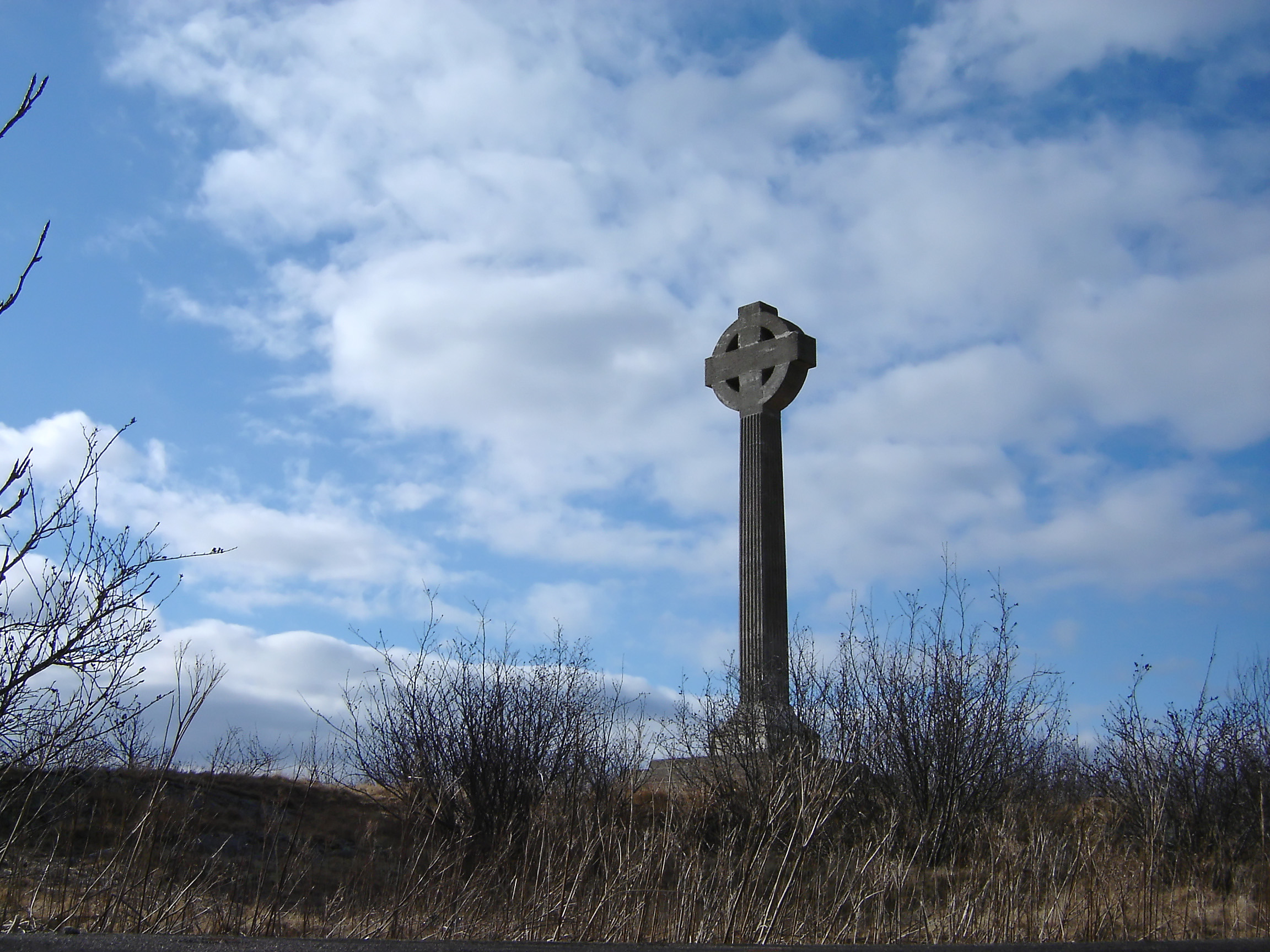
Six graveyards hold the remains of those who died on Partridge Island -- Protestant, Catholic, and Jewish immigrants buried alongside the staff who cared for them. A Celtic Cross memorial to the Irish dead of 1847 was dedicated in 1927 and restored in 1985. Additional memorials were built in the 1980s by the Saint John Jewish Community, the Loyal Orange Lodge, and heritage organizations. But the island itself is now closed to the public. Boat tours operated from 1982 to 1995, when the island's small museum shut down. All remaining buildings have been vandalized or burned. The 19th-century graveyard was nearly obliterated by military construction during World War II; fewer than three dozen graves remain. A 2014 feasibility study estimated that creating a walkway to the island would cost between $27 and $40 million. The soil is contaminated. The breakwater is crumbling. Canada's Ellis Island equivalent sits just offshore, close enough to see from the city, too damaged to visit.
From the Air
Located at 45.24°N, 66.05°W at the mouth of Saint John Harbour in the Bay of Fundy. The island is clearly visible as a distinct landmass at the harbour entrance, connected to the mainland by a breakwater. Nearest airport is Saint John Airport (CYSJ), approximately 16 km east. Partridge Island, the harbour, and the Reversing Falls gorge upstream are all prominent visual landmarks. Best viewed at 2,000-4,000 feet AGL to see the island in the context of the harbour approach.