Pasonanca Park
Before he commanded the American Expeditionary Forces in World War I, before the tanks rolled across France and the doughboys became legends, General John J. Pershing was the governor of a remote province in the southern Philippines. In 1912, from his post in the Moro Province, he ordered the construction of a public park in the hills above Zamboanga City. Thomas Hanley, a marksman Pershing had personally requested from the United States, arrived to lay out the grounds. What they started would become Pasonanca Park -- a green refuge that has outlasted every political era the Philippines has passed through since.
The General's Garden
Construction began under Pershing and was completed during the administration of Frank W. Carpenter, Governor of the Department of Mindanao and Sulu from 1914 to 1920. The park grew to include an amphitheater, a convention center, separate campsites, and extensive picnic areas spread through the hillside terrain. It was a statement of the American colonial project's ambitions for Mindanao -- a public amenity planted in a region that had resisted Spanish control for three centuries. That a military governor built a park, rather than another fort, says something about the particular confidence of the moment.
Water That Never Stands Still
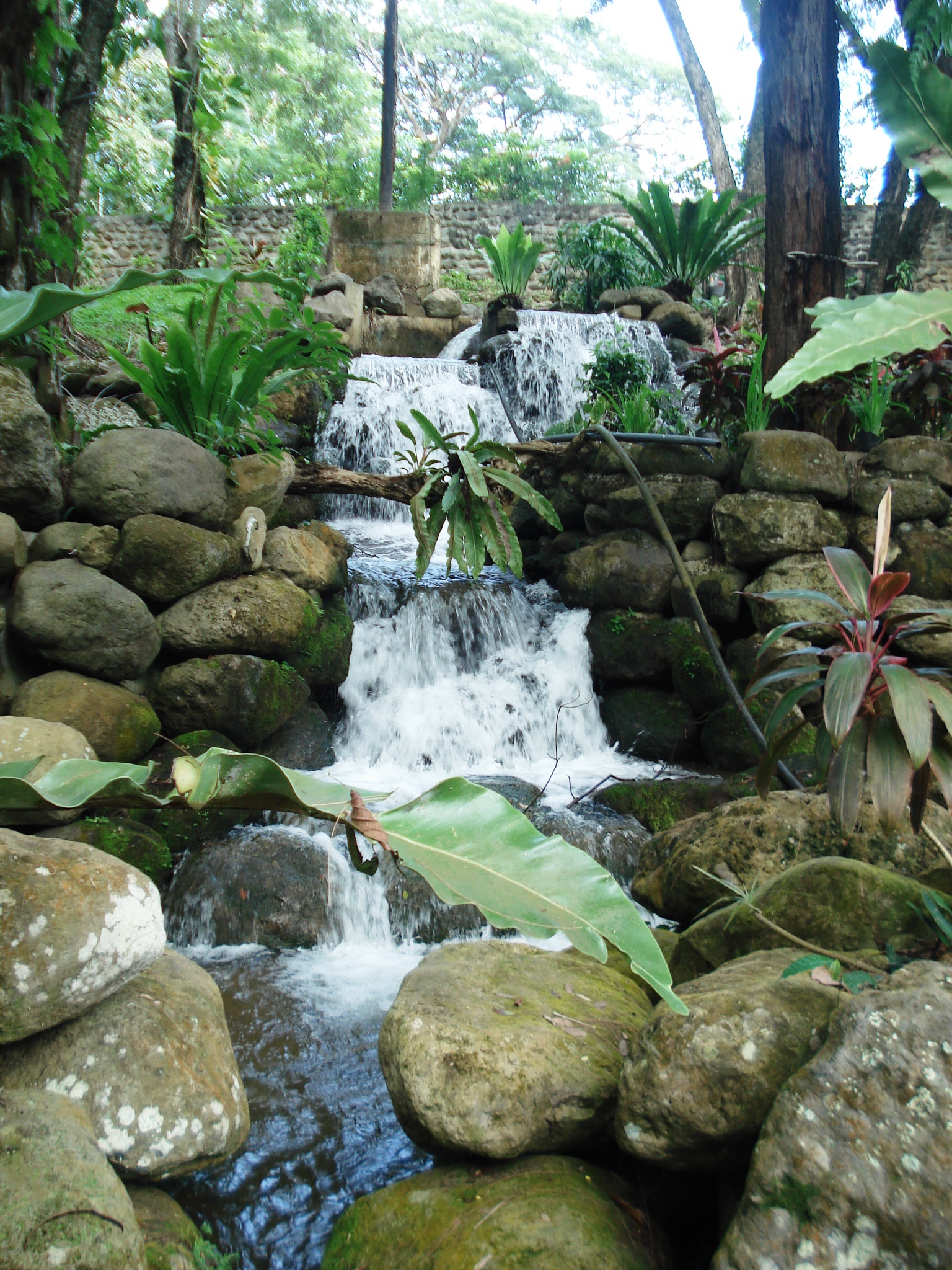
The park's three swimming pools are its most popular draw, and their design reveals a quiet engineering ingenuity. The Olympic-size main pool and the children's pool with its four water slides are gravity-fed: water drains naturally into the pools from higher ground, fills them, and continuously overflows to create a small creek that flows down the hillside. The water never sits stagnant. The system requires no mechanical pumps to maintain its circulation. For visitors, this means a swim in constantly refreshed water; for the park, it means a self-sustaining feature that has operated for decades with minimal infrastructure. The children's slides are graded by difficulty -- beginners on the right, experienced swimmers on the left -- a practical touch in a country where swimming is both recreation and survival skill.
Sleeping in the Canopy
Perched among the trees, the Pasonanca Tree House was originally built in April 1960 as a Youth Citizenship Training Center, funded with the assistance of the Zamboanga City Council. Over the decades it has evolved into something more eccentric: a rentable lodging with the amenities of a small motel room, suspended in the forest canopy. Thousands of visitors climb to it each year for a nominal fee. The structure has the charm of a civic project that found a second life -- what began as youth programming infrastructure became one of the park's most distinctive attractions.
Butterflies and the Mayor's Memory
La Jardin de Maria Clara Lobregat, named after the late mayor of Zamboanga City, occupies a corner of the park devoted to living color. Orchids and roses fill the garden beds, while butterflies drift through enclosed spaces designed to keep the species visible and close. An adjacent aviary houses parrots, eagles, and turkeys. The garden park doubles as a modest city museum, its grounds anchored by a statue of Lobregat herself. The entrance fee is kept deliberately low -- cheaper than comparable parks in Zamboanga -- a decision that keeps the space accessible to the families and schoolchildren who are its most frequent visitors.
From the Air
Pasonanca Park is at 6.953N, 122.073E in the hilly northern outskirts of Zamboanga City. From altitude, look for a prominent green patch of parkland and tree canopy set among the rising terrain north of the urban center. Zamboanga International Airport (RPMZ) is approximately 5 km southeast. At low altitude, the swimming pools and open amphitheater areas are visible clearings within the forest. The Pasonanca Natural Park extends further into the mountains to the north.