Pasteur Institute of Iran
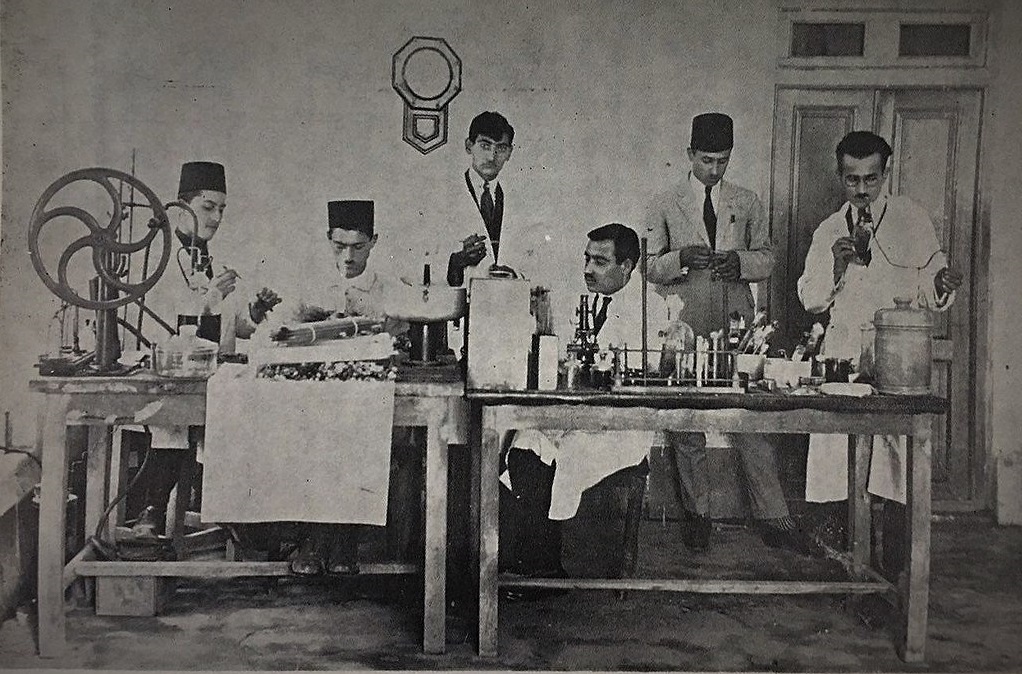
In 1922, a young Iranian physician named Dr. Abolghasem Bahrami traveled to the Pasteur Institute in Paris, learned its methods, and returned to Tehran carrying a historic rabies strain. With that single vial, he established the rabies department at the Pasteur Institute of Iran -- and began a chain of work that would lead the World Health Organization to adopt the institute's concurrent serum-and-vaccine method as its global standard for rabies prevention. The institute had been open for only two years. It would spend the next century proving that the partnership between French scientific tradition and Iranian public health ambition could save lives on an enormous scale.
A Franco-Iranian Compact
The Pasteur Institute of Iran was established in 1920 through an agreement between the Institute Pasteur of Paris and the Iranian government. Its founding was made possible in part by the tradition of waqf -- Islamic charitable endowment. In 1923, Abdol-Hossein Mirza Farmanfarmaian donated the land on which the new building was constructed. Other branches in Tehran and across Iran were similarly established on donated land, from Shemiranat to Amol to Akanlu in Hamedan. In 1946, a new cooperation agreement made the Iranian institute financially and administratively independent from Paris. Dr. Marcel Baltazard, the fourth and last French director, led the institute until 1961 and continued as scientific advisor until 1966. What began as a colonial-era knowledge transfer became an institution that stood on its own.
The War on Rabies
Before the Pasteur Institute, rabies was a death sentence in Iran. Stray dogs roamed the cities and villages, and a bite meant an agonizing end. The concurrent method of injecting both serum and vaccine -- pioneered and demonstrated by the institute -- proved so effective that the WHO adopted it as a global guideline. In 1973, the institute's rabies department was designated a WHO Collaborating Center for rabies control and research. It remains one of the institute's signal achievements: a contribution so fundamental to global public health that it alone would have justified the institution's existence.
Epidemics and Expeditions
The institute's work extended far beyond rabies. Its BCG vaccine for tuberculosis was administered to 238 million children across 22 countries. When cholera epidemics struck Iran repeatedly during the institute's first fifty years, the facility became the largest cholera vaccine production platform in the region -- producing enough surplus to compensate for shortages at the Pasteur Institute of Paris itself. In 1946, plague broke out in Iran's Kurdistan Province. The institute's Department of Epidemiology dispatched expeditionary groups equipped with field laboratories. Between 1946 and 1965, these teams controlled plague outbreaks in western and northwestern Iran, rescuing many people from death. The institute also developed an anti-typhoid vaccine based on native microbes and conducted early research into polio, arboviruses, and tularemia.
The First of Its Kind
The Pasteur Institute of Iran holds the distinction of being the country's first medical research center. Before World War II, when laboratories were scarce across the country, most of Iran's health problems were addressed through the institute. It founded the nation's Leprosy treatment center, helped establish the Iranian Blood Transfusion Organization, and led the effort to disinfect Tehran's drinking water in the early 1950s. Today, the institute employs 1,300 staff across 28 departments and five branches in different cities. Around 300 hold PhDs or Master's degrees. The institution produces biopharmaceuticals and diagnostic kits, publishes the peer-reviewed journal Vaccine Research, and continues to specialize in infectious diseases -- a mission that has not changed since Dr. Bahrami carried that rabies strain home from Paris over a century ago.
From the Air
Located at 35.692N, 51.396E in central-west Tehran, near the intersection of major avenues in the government district. The institute campus is not individually prominent from the air but sits within Tehran's dense urban core. Nearest airports are Mehrabad International Airport (OIII), approximately 6 km to the west, and Tehran Imam Khomeini International Airport (OIIE), about 50 km to the southwest. The institute's proximity to Mehrabad makes it visible during low-altitude approaches from the east. The Alborz Mountains to the north provide a constant visual reference.