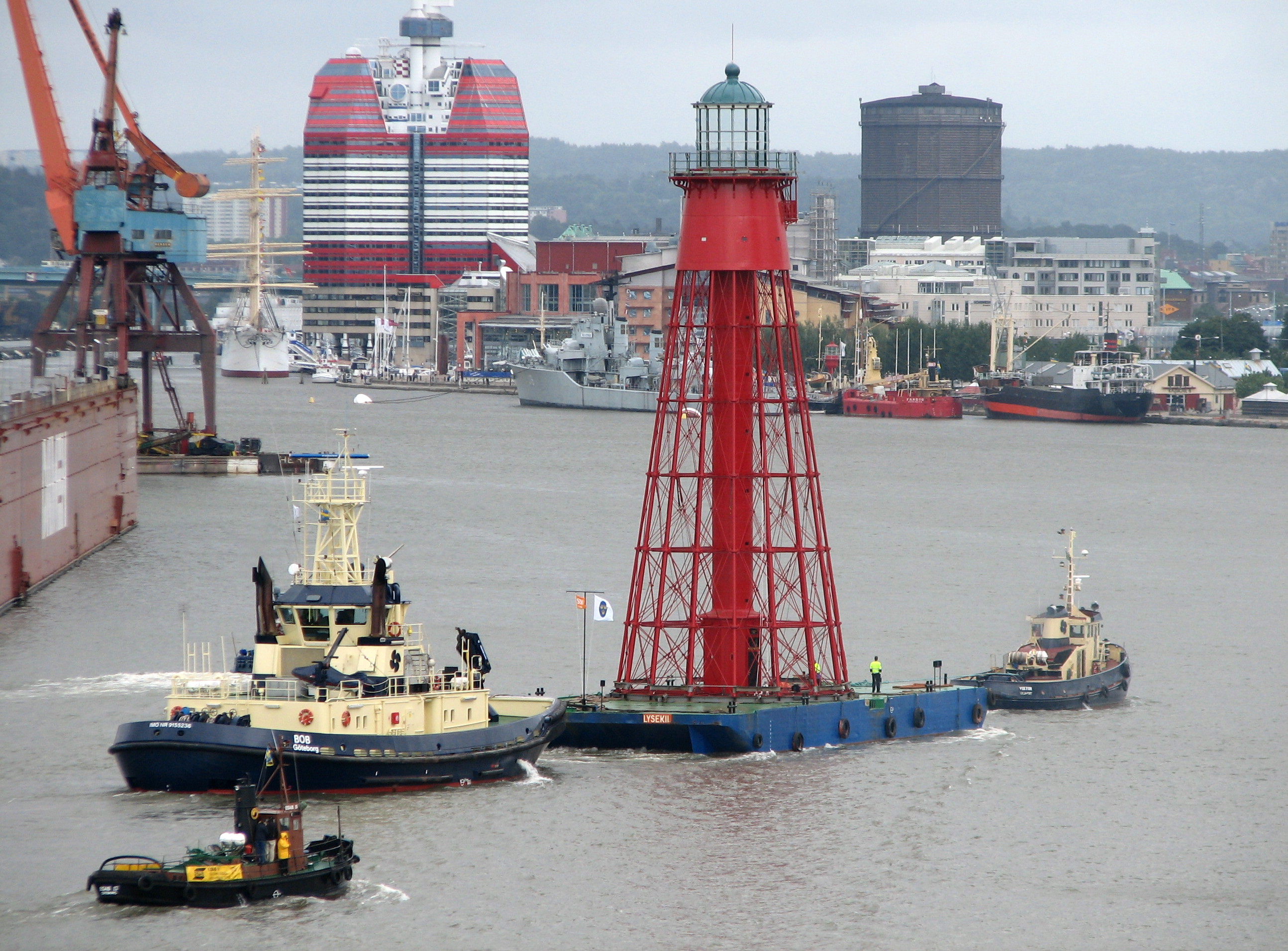
Pater Noster Lighthouse
During the February 2020 Gothenburg Film Festival, an emergency nurse from Sweden won a lottery that 12,000 people from 45 countries had entered. Her prize: one week alone in a lighthouse lens room, watching film premieres while the world began its pandemic isolation. The Pater Noster Lighthouse, perched on the rocky islet of Hamneskar in the Bohuslan archipelago, had found perhaps its strangest purpose yet, a century and a half after its iron tower first threw light across the Skagerrak.
A Light Delayed, Then Delivered
Plans for a lighthouse on this exposed stretch of Swedish coast date to the 1750s, but officials instead placed a light on the Carlsten fortification at Marstrand. The waters remained treacherous. Finally, in 1868, Pater Noster rose from the granite, designed by engineer Nils Gustaf von Heidenstam in his signature iron style. The tower housed a massive first-order Fresnel lens, its flame burning colza oil extracted from rapeseed. A paraffin lamp replaced the original in 1887, and the lighthouse stood watch for nearly a century more before automation arrived in 1964, bringing a smaller fourth-order lens. By 1977, maritime authorities had deemed Pater Noster obsolete, deactivating it in favor of the modern Hatteberget lighthouse in open water.
Rust, Rescue, and Rebirth
Salt water is merciless to iron. Without keepers to maintain it, Pater Noster began to corrode, its metal skeleton growing rusty and weak. In 2002, a restoration project began that would test the patience of everyone involved. Workers transported the tower first to Uddevalla, then to Gothenburg, where the extent of the damage became clear. Funding shortfalls stretched the timeline, but local companies and volunteers refused to let the lighthouse die. In summer 2007, the restored tower returned to Hamneskar by ship, and that autumn its light blazed again across waters it had guarded for over a century.
The Isolated Cinema
The Gothenburg Film Festival's 2020 experiment captured global imagination. In a world suddenly aware of isolation's weight, the idea of watching movies alone in a lighthouse lens room seemed both terrifying and appealing. The winning nurse arrived as pandemic restrictions tightened across Europe, spending a week with nothing but films, the sea, and the memory of all the keepers who had lived similarly solitary lives in the era before automation. The lens room that once magnified light to guide ships now held a screen, a chair, and one person's complete attention.
A Home on the Horizon
The lighthouse's transformation continued. In 2015, furniture company Marbodal renovated the lens room with a high-end kitchen as part of a publicity campaign. The 2020 pandemic year also saw the former keeper's quarters converted into Ett Hem vid Horisonten, a hotel and conference center whose Swedish name translates to A Home on the Horizon. The boutique operation earned international recognition, winning the Global New Concept Award from the AHEAD Awards in 2022. What began as a navigational necessity in 1868 has become something entirely different: a place where the isolation that once defined lighthouse keeping has been reimagined as luxury, where guests pay for the solitude that keepers once endured.
From the Air
Pater Noster Lighthouse stands at 57.90N, 11.47E on the islet of Hamneskar in the Bohuslan archipelago, northwest of Gothenburg. The distinctive iron tower is visible from altitude against the granite rocks and open sea. The lighthouse sits approximately 30km northwest of central Gothenburg. Gothenburg Landvetter Airport (ESGG) is the nearest major field. The surrounding waters of the Skagerrak strait connect the North Sea to the Kattegat. Look for the lighthouse among the scattered rocky islets that characterize this exposed section of Swedish coastline.