Patriots Point
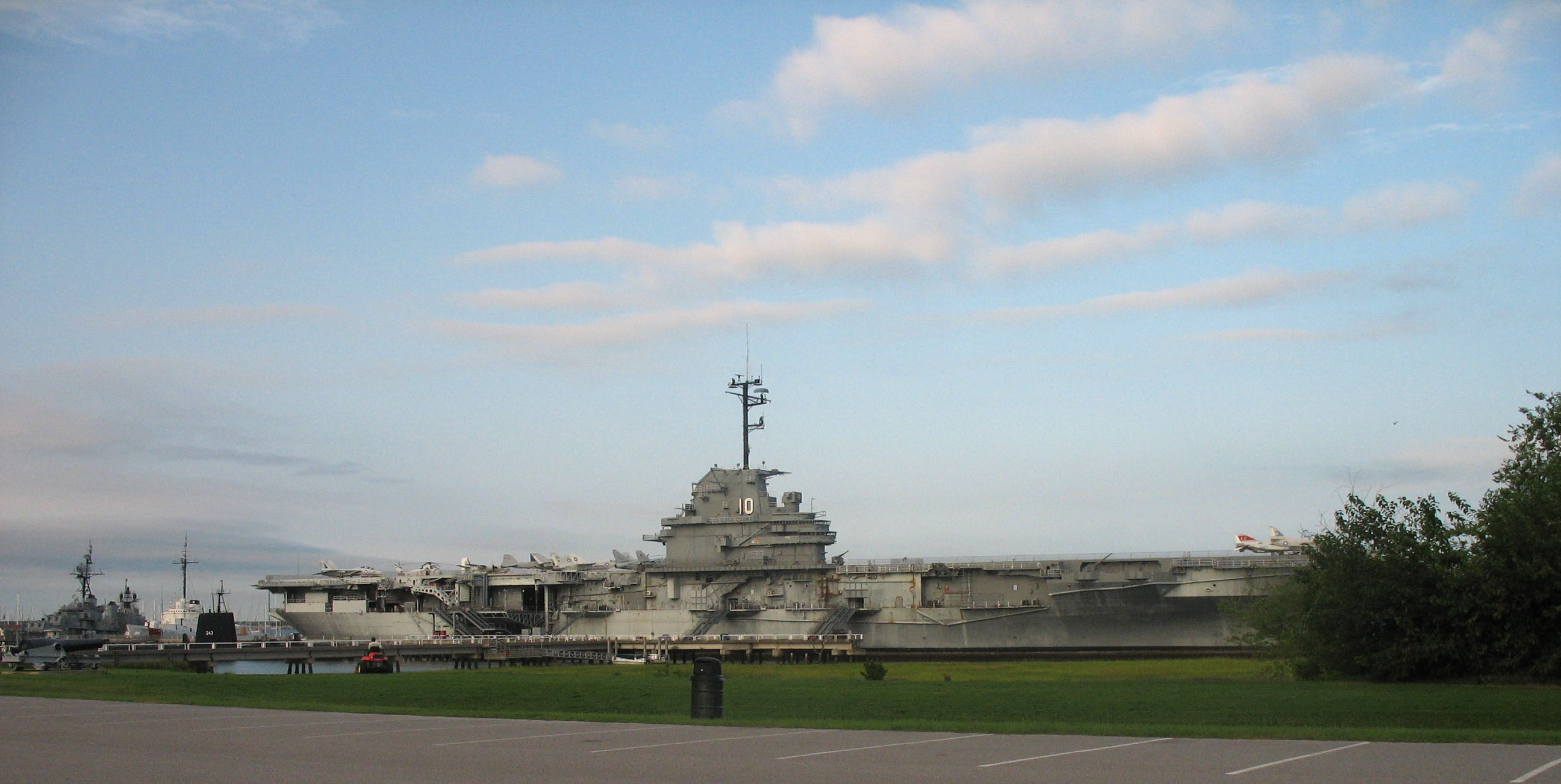
They called the USS Laffey "The Ship That Would Not Die." During the Battle of Okinawa in 1945, the Allen M. Sumner-class destroyer absorbed wave after wave of kamikaze attacks, taking hit after hit while her crew kept fighting. Today, that same ship sits quietly at a dock in Mount Pleasant, South Carolina, alongside an aircraft carrier and a collection of warplanes that spans the entire jet age. Patriots Point Naval and Maritime Museum holds a million square feet of living history, and it all started on what used to be a dump for dredged mud.
From Mud Flat to Museum
The idea belonged to Charles F. Hyatt, a former naval officer who envisioned transforming a patch of reclaimed land at the mouth of the Cooper River into a major attraction. Initial plans called for a conventional museum building to display the history of small combatant ships in the U.S. Navy. But ambition grew quickly. On January 3, 1976, the aircraft carrier USS Yorktown (CV-10) opened to the public, and Patriots Point had its centerpiece. The destroyer USS Laffey arrived in 1978. By 1981, a submarine and the nuclear-powered merchant ship NS Savannah had joined the fleet. More than 300,000 visitors walk these decks each year, making it one of the largest naval museums in the world.
The Fighting Lady
The USS Yorktown earned her nickname during a distinguished World War II career that began with her commissioning in 1943. The Essex-class carrier fought across the Pacific Theater -- the Marshall Islands, the Marianas, the Philippines, Okinawa -- accumulating battle stars at nearly every major engagement. She returned to service during the Vietnam War before being decommissioned in 1970. But her most unexpected chapter came in 1968, when Yorktown was dispatched to the South Pacific to recover the Apollo 8 command module after the first crewed mission to orbit the Moon. That single moment links this warship to the dawn of space exploration. Since arriving at Patriots Point in 1975, she has anchored the museum and become its most recognizable landmark.
The Ship That Would Not Die
If Yorktown represents the grand sweep of naval aviation, the USS Laffey (DD-724) embodies something rawer: sheer survival. Commissioned in 1944, the destroyer found herself off Okinawa on April 16, 1945, facing one of the most ferocious kamikaze assaults of the entire Pacific War. Japanese planes struck again and again. Laffey absorbed multiple hits from suicide aircraft and conventional bombs, yet her crew refused to abandon their stations. The ship survived, earning her legendary nickname and multiple battle stars. After continued Cold War service through the 1950s and 1960s, she was decommissioned in 1975 and joined Patriots Point three years later. She remains one of the few preserved Sumner-class destroyers in the United States.
Trials and Storms
The museum's history has not been all smooth sailing. In 1987, the Patriots Point Development Authority announced plans to build a hotel and marina, but the project collapsed into bankruptcy. In 1989, controversy erupted when it was revealed that one vessel, the Comanche, had been used for private VIP cruises rather than public exhibition. Hurricane Hugo that same year battered the fleet. The submarine Clamagore was towed away for scrapping in 2022 after structural deterioration made repairs prohibitively expensive. And the Yorktown herself required extensive cleanup in 2025, with contaminated liquids, asbestos, and sludge removed and 35 structural repairs completed. Preservation of steel warships is an endless battle against salt water and time.
Wings and Honors
Scattered across Yorktown's flight deck and hangar bay is one of the most impressive collections of naval aircraft on the East Coast. Visitors can stand beneath a Grumman F-14 Tomcat, study the lines of a World War II-era Corsair, or peer into the cockpit of an F/A-18 Hornet. A replica Vietnam War-era naval support base, opened in 1993, adds another dimension with period helicopters and ground vehicles. And since 1999, the Congressional Medal of Honor Museum -- designated by Congress as a National Medal of Honor Site -- has told the stories of every American awarded the nation's highest military decoration. The museum reopened aboard Yorktown in 2024, placing those stories of extraordinary courage in the setting of a ship that witnessed its own share of heroism.
From the Air
Located at 32.7904°N, 79.9082°W on the Mount Pleasant waterfront at the mouth of the Cooper River, directly across Charleston Harbor from the city of Charleston. The Yorktown's flight deck is clearly visible from above -- look for the large gray carrier shape along the eastern shore of the harbor, just south of the Arthur Ravenel Jr. Bridge. Best viewed at 2,000-5,000 feet. Nearest airports: Charleston AFB / International (KCHS) approximately 10 nm northwest; Mount Pleasant Regional Airport (KLRO) about 6 nm east.