The Paulding Light: Michigan's Unexplained Glow
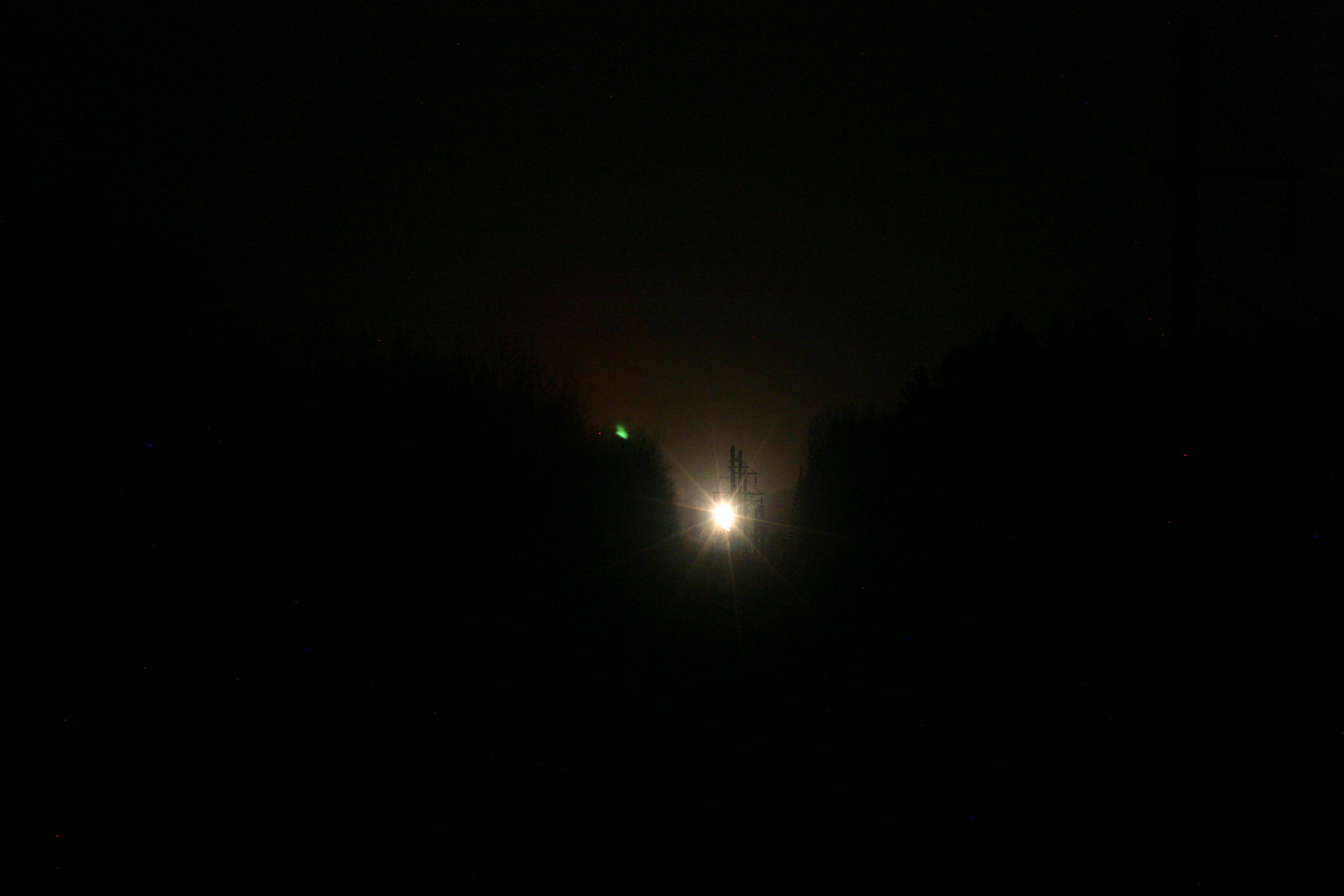
The light appears every night. In a valley between Paulding and Watersmeet in Michigan's Upper Peninsula, observers gather to watch an unexplained glow rise and fall on the distant horizon. The legend says it's the lantern of a railroad brakeman killed on these tracks, his ghost still signaling trains that no longer run. The reality, confirmed by Michigan Tech students in 2010, is car headlights on US-45, five miles away, distorted by atmospheric conditions. The scientific explanation changed nothing. The light still appears. The crowds still gather. Knowing the truth doesn't diminish the experience of watching mysterious glow pulse in the darkness, wondering what else might explain what you're seeing.
The Legend
The Paulding Light entered local folklore in the 1960s, though sightings may predate that. The standard story involves a railroad brakeman killed while signaling a train - his lantern continues swinging, visible from the hillside where observers now park. Variations add details: a logging accident, a stranded engineer, a lost lover searching for someone who never returned. The railroad line existed but was abandoned decades ago; no records confirm the brakeman's death. The story is almost certainly invented to explain the light, rather than documenting its origin. Ghost stories work that way: the phenomenon comes first, the narrative follows.
The Science
In 2010, Michigan Technological University students investigated the Paulding Light for an engineering class. Their conclusion was definitive: the light correlates perfectly with traffic on US-45, a highway visible through the valley from the observation point. When they blocked the highway with a truck, the light disappeared. When traffic resumed, the light returned. Atmospheric conditions - temperature inversions, humidity, the valley's configuration - distort and amplify distant headlights, creating the mysterious appearance. The light is real. The mystery is not. The explanation is completely mundane.
The Persistence
The scientific explanation hasn't stopped visitors. The observation point, marked by a wooden fence and informal parking area, still draws crowds nightly during tourist season. Some visitors accept the headlight explanation and watch anyway, appreciating the atmospheric phenomenon. Others refuse to believe - the light moves in ways that don't match traffic, they insist; the color varies; the brakeman's lantern makes more sense than physics. The Forest Service maintains the pulloff, acknowledging the light's tourist value whatever its cause. Belief persists because it's more interesting than explanation.
The Experience
Watching the Paulding Light requires patience and darkness. The observation point is a roadside pulloff with limited facilities; bring chairs, mosquito repellent, and warmth - Upper Peninsula nights are cold even in summer. The light appears in the distance, a pale glow that brightens and dims, sometimes seeming to move or change color. Knowing it's headlights doesn't quite dispel the eeriness - the isolation, the darkness, the crowd watching something appear and disappear. The experience is communal, meditative, a small pilgrimage to see something that almost everyone agrees is mundane but somehow still matters.
Visiting the Paulding Light
The Paulding Light observation point is located on Robbins Pond Road, roughly 5 miles north of Watersmeet, Michigan, in the Ottawa National Forest. The pulloff is marked with a Forest Service sign. The light is visible year-round but best observed on clear nights; fog and precipitation obscure the view. Arrive before dark to find parking and settle in. Bring flashlights, chairs, and insect protection. The nearest services are in Watersmeet or Land O'Lakes, Wisconsin. The Upper Peninsula offers extensive outdoor recreation - combine the light with visits to Porcupine Mountains, Copper Harbor, or Pictured Rocks. The light viewing itself takes 30 minutes to an hour, depending on how long the mystery holds you.
From the Air
Located at 46.37°N, 89.16°W in the Ottawa National Forest, Michigan's Upper Peninsula. From altitude, the landscape is dense boreal forest broken by lakes and wetlands - classic UP terrain. The observation point is a small clearing beside a forest road; US-45, the highway whose headlights cause the phenomenon, runs through the valley several miles south. Nothing from altitude suggests mystery - just forest, roads, the ordinary infrastructure of rural Michigan. The 'Paulding Light' is invisible from altitude; it requires the observer's ground-level perspective, the right atmospheric conditions, and the willingness to wonder at what might be mundane.