Paulet Affair
Hawaii's state motto -- Ua Mau ke Ea o ka Aina i ka Pono, "The sovereignty of the land is perpetuated in righteousness" -- was not coined by a philosopher or a founding father. It was spoken by King Kamehameha III on July 31, 1843, the day he got his kingdom back from a British naval captain who had taken it without permission from anyone in particular. The Paulet Affair, as the five-month seizure came to be known, is one of those episodes where a single officer's ambition nearly rewrote the map of the Pacific.
A Consul with a Grudge
The trouble began with Richard Charlton, the British consul to the Kingdom of Hawaii since 1825. By the early 1840s, Charlton was embroiled in a land dispute with the Hawaiian government and had convinced himself that British subjects on the islands were being denied their legal rights. In late 1842, he met Captain Lord George Paulet of HMS Carysfort off the coast of Mexico and poured out his grievances. Paulet, serving on the Pacific Station under Rear-Admiral Richard Darton Thomas, requested permission to investigate. What followed went far beyond investigation. Paulet arrived in Honolulu on February 11, 1843, and demanded a private audience with King Kamehameha III. The king was on another island and would need six days to arrive. Paulet's second letter, on February 16, was polite in form but blunt in substance: he wanted an interview, and he wanted it with a "proper and competent interpreter."
Five Months Under the Union Jack
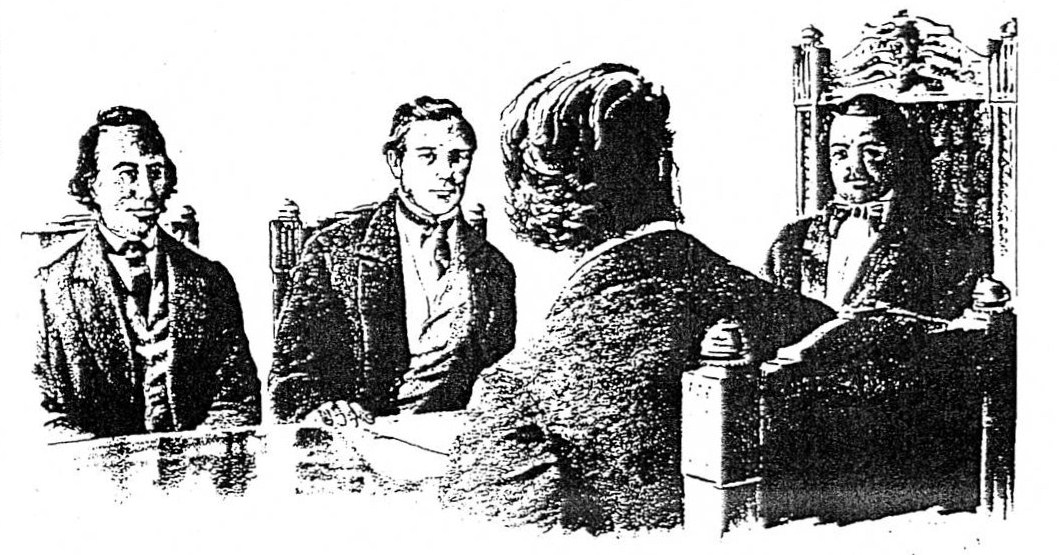
Between February 20 and 23, daily meetings took place between Paulet, acting consul Alexander Simpson, and the king. Kamehameha III agreed to reopen the disputed legal cases but refused to overrule the courts or bypass due process. On February 25, an agreement was signed ceding authority over land matters, subject to diplomatic resolution. Paulet then exceeded any reasonable interpretation of his mandate: he appointed himself and three others to a commission that would serve as the new government and insisted on direct control of all land transactions. The Hawaiian kingdom was effectively under British occupation. Critically, the British government in London had authorized none of this. Paulet was acting on his own initiative, driven by a consul's complaints and his own sense of imperial prerogative. The American warship Boston, anchored in Honolulu harbor, did not interfere.
The Race to London
The Hawaiian response was resourceful and desperate. Minister Gerrit P. Judd secretly boarded the Boston and gave American merchant James F. B. Marshall an emergency commission as "envoy extraordinary," tasking him with reaching London to plead Hawaii's case for independence. Paulet had shut down all shipping, but he also wanted to send Simpson to England to present the British side first. Both men sailed to San Blas, Mexico, on April 12 and then traveled overland to Veracruz. Simpson headed for England. Marshall took ship and train to Boston, arriving by June 2. He spread the story through the American press, met with Secretary of State Daniel Webster on June 4, and obtained letters of introduction for the American ambassador in London, Edward Everett. By June 30, Marshall was in London making his case. Meanwhile, two other Hawaiian envoys -- William Richards and Timothy Haalilo -- were in Paris negotiating treaties and had already received verbal assurances that Hawaiian independence would be respected.
Restoration Day
American warships began arriving in Honolulu in July. Commodore Lawrence Kearny came first, followed by Commodore Thomas ap Catesby Jones on July 22. Jones landed in Hilo and consulted with missionary Titus Coan before proceeding to Honolulu. Rear-Admiral Thomas, Paulet's own superior, had been receiving conflicting reports about his captain's freelance imperialism. On July 26, Thomas sailed into Honolulu harbor on his flagship and requested an interview with Kamehameha III. The king was eager to tell his side. On July 31, Thomas formally ended the occupation. He reserved the right to protect British citizens but acknowledged the sovereignty of the Hawaiian Kingdom. At a public ceremony, the Hawaiian flag was raised again. The site of that ceremony became Thomas Square, a park in downtown Honolulu whose pathways are laid out in the shape of the British Union Jack -- a nod to the admiral who, unlike his captain, chose honor over empire. July 31 became La Hoihoi Ea, Restoration Day, a national holiday celebrating the return of sovereignty.
From the Air
The Paulet Affair centered on Honolulu harbor, located at 21.302N, 157.849W. Thomas Square park, where sovereignty was restored, is in downtown Honolulu near the intersection of South King Street and Ward Avenue. Honolulu International Airport (PHNL) is 4 miles to the west. The harbor and downtown area are clearly visible from any altitude above 1,000 feet on approach from the south.