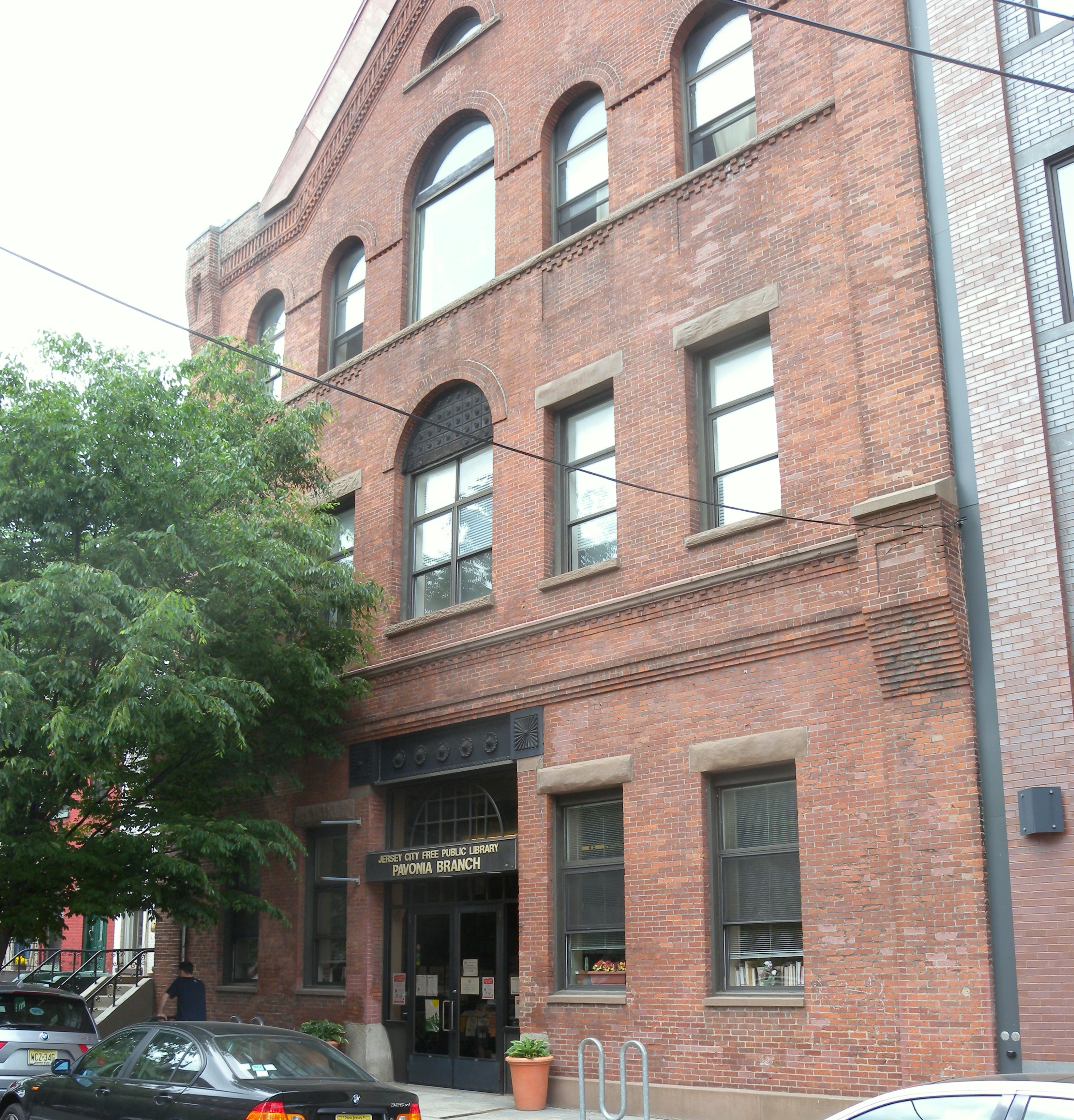
Pavonia, New Netherland
The name Pavonia comes from the Latin word for peacock -- a Latinized form of the surname of Michael Pauw, the Amsterdam burgomaster who bought the land in 1630. It was a name of vanity stamped onto territory that was not his to claim. Pavonia, the first European settlement on the west bank of the Hudson River, encompassed much of what is now Hudson County, New Jersey -- from Hoboken to Bergen Point, from the waterfront that faces Manhattan to the banks of the Hackensack. Its story begins with fur trading posts and a half-barrel of beer, and it ends, in its colonial chapter at least, with one of the most devastating massacres in Dutch American history.
A Peacock's Bargain
Henry Hudson's ship, the Halve Maen, anchored at Weehawken Cove in 1609 while exploring the Upper New York Bay. By 1617, a factorij -- a trading post -- had been established at Communipaw to deal in beaver pelts with the Lenni Lenape, the Algonquian-speaking people who inhabited the region. When the Dutch West India Company began granting patroonships in 1629, Michael Pauw secured a patent for the west bank of the North River. He purchased the land from three Lenape men for 80 fathoms of wampum, 20 fathoms of cloth, 12 kettles, six guns, two blankets, one double kettle, and half a barrel of beer. These transactions, dated July 12 and November 22, 1630, are the earliest known European land conveyances for the area. The concept of land ownership, however, meant something fundamentally different to the parties involved -- a misunderstanding that would have catastrophic consequences.
Footholds on the West Bank
Pauw's agent established a small trading post and ferry slip at Arresick, the tidal island that still bears his anglicized name: Paulus Hook. By 1630, a plantation worked by enslaved Africans was operating there -- one of the earliest instances of slavery in what would become New Jersey. But Pauw failed to settle the required fifty families within four years and was forced to sell his holdings back to the Dutch West India Company. They pressed ahead anyway, building homesteads at Communipaw and Ahasimus. Cornelius Van Vorst, whose descendants would shape the future Jersey City, settled at Ahasimus in 1634. At Hoboken, the leasehold of Aert Van Putten became the site of North America's first brewery. The settlements were small but strategic: a chain of footholds on the west bank, across from New Amsterdam, anchoring Dutch claims to a territory still very much in flux.
The Slaughter of the Innocents
Willem Kieft arrived as Director of New Netherland in 1639 with a mandate to increase profits. His approach to the Lenape was extortion: he demanded tribute payments in exchange for protection from rival groups. The Lenape ignored him. Tensions escalated through a series of misunderstandings and reprisals -- a dispute over stolen pigs on Staten Island, the murder of a Dutch wheelwright by a Weckquaesgeek man whose tribe refused to surrender him. Then, in February 1643, Kieft made the decision that would define Pavonia's legacy. Against the explicit advice of his own council, he ordered soldiers to attack Lenape refugees who had fled to Pavonia and Corlears Hook seeking shelter from raiding Mahicans. The Lenape believed the Dutch were their allies. The attack -- which Native Americans called the Slaughter of the Innocents -- united Algonquian peoples across the region in a way nothing had before. On October 1, 1643, a coalition of tribes burned the homesteads at Pavonia to the ground. The settlement was evacuated, and the conflict known as Kieft's War spread across New Netherland.
The Name That Remains
Although the entire region once bore Pauw's name, Pavonia today is most closely associated with a section of Jersey City near Harsimus Cove, Hamilton Park, and the former site of the Erie Railroad's Hudson waterfront terminal. The Pavonia Ferry once carried passengers across the river; the terminal and rail yards have since been redeveloped as Newport. The PATH station once called Pavonia has been renamed, but the Hudson-Bergen Light Rail still stops at Pavonia-Newport. Pavonia Avenue runs in interrupted sections through the city, and Pavonia Court in Bayonne takes its name from the Pavonia Yacht Club, established in 1859. The name lingers in the landscape like a ghost -- a reminder that before Jersey City, before the PATH tunnels and the waterfront condominiums, there was a peacock's failed patroonship and a betrayal that neither side would forget.
From the Air
Pavonia encompassed much of present-day Hudson County, New Jersey, along the west bank of the Hudson River opposite Lower Manhattan. Coordinates: 40.724N, 74.042W. From altitude, look for the Jersey City waterfront, the Newport development area near the Holland Tunnel entrance, and Paulus Hook -- the tidal peninsula that still bears the anglicized form of Michael Pauw's name. Nearby airports: KEWR (Newark Liberty, 8nm SW), KJFK (JFK, 16nm SE). Best viewed at 3,000-5,000 ft AGL to see the full sweep of the Hudson County waterfront and its relationship to Manhattan.