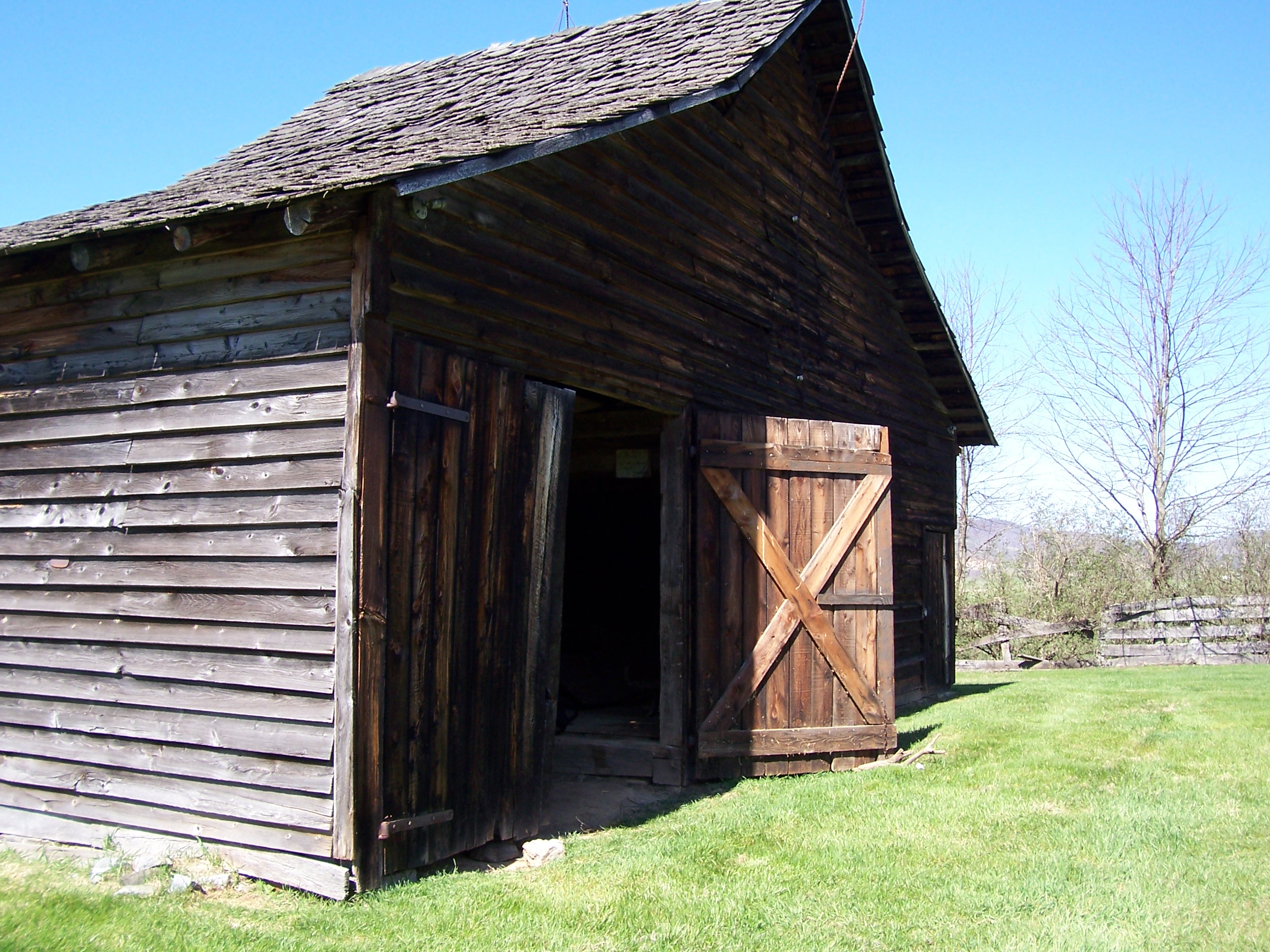
Pearl S. Buck Birthplace
Pearl Comfort Sydenstricker spent exactly three months in the house where she was born before her parents carried her back to China. It was June 26, 1892, and the three-story home in Hillsboro, West Virginia -- hand-built by her mother's Dutch immigrant family decades earlier -- was just a waypoint between missionary postings. Yet this house in the Allegheny highlands would anchor Pearl S. Buck's imagination for the rest of her life. She grew up speaking Chinese before English, set her most famous novel in the wheat fields of Anhwei Province, won both the Pulitzer Prize and the Nobel Prize for Literature, and wrote more than a hundred books. But when she spoke of where she truly belonged, she always came back to Hillsboro. "For me that house was a gateway to America," she wrote. "May it live again, my Mother's house."
Three Hundred Souls from Utrecht
The house's story begins not in Appalachia but in the Netherlands. In 1847, Cornelius Stulting -- whom Pearl Buck would later call "Mynheer" in her books -- left Utrecht with his wife Arnolda, their five married sons and their families, and some three hundred friends and relatives. Religious intolerance had made the Netherlands unbearable; America was the gamble. After arriving in New York, the group scattered. The Stultings pushed into what was then still Virginia, eventually settling in an area called Little Levels near Hillsboro in Pocahontas County. Cornelius ached to build a house that reminded Arnolda of home. He and his sons spent more than two years cutting timber from the land, milling boards, and raising walls. Cornelius never saw it finished -- he took a chill and died before the last room was complete. His son Hermanus and grandson Cornelius John finished the work: a twelve-room house with smooth floors, plastered walls, and papered rooms. A city house at the edge of the wilderness.
Missionaries and a Mulberry Tree
Caroline Stulting, called Carrie, grew up in that house and married Absalom Sydenstricker, one of nine children from a prominent Greenbrier County family whose German ancestor Philip had arrived in America by ship in 1764. Shortly after their marriage, Absalom and Carrie left for China as Presbyterian missionaries. They were pioneers -- sometimes the only white family in their town. They returned to Hillsboro on furloughs roughly every nine years, and it was during one such visit that Pearl was born. Since her childhood unfolded in China, Pearl's rare visits to the Stulting house only deepened her attachment. Her mother's stories of the place had already made it mythic. On the grounds, a Chinese mulberry tree stood near the front of the house -- a seedling carried across the Pacific by Pearl's missionary parents, a living thread between two worlds.
A Hundred Books and Two Prizes
Pearl S. Buck became the first American woman to win both the Pulitzer Prize, in 1932 for The Good Earth, and the Nobel Prize for Literature in 1938. She wrote more than a hundred books, hundreds of short stories, and countless magazine articles. Her work was translated into sixty-nine languages. Yet for all her global reach, Buck remained tethered to the Hillsboro house. She personally involved herself in its preservation and restoration, donating her manuscript collection to the Birthplace Foundation in 1970. The manuscripts -- minus The Good Earth, which was missing at the time -- were later stored at West Virginia Wesleyan College through an arrangement with Senator John D. Rockefeller IV. During a visit to the property, Buck stood beneath a massive sugar maple and said quietly, "I would like to be buried underneath that tree." Her children would ultimately decide otherwise, but the wish reveals how deeply the place had rooted itself in her.
Saving the House
The Stulting family lived in the house until 1922. George P. Edgar then bought it as a winter home. By the early 1960s, it risked falling into ruin. Jim Comstock, a local newspaperman, raised about four thousand dollars through readers of the West Virginia Hillbilly to begin the rescue. He then asked the West Virginia Federation of Women's Clubs to take over. Clubwomen from across the state donated what they could, and the house was purchased and restored. The site was placed on the National Register of Historic Places on June 15, 1970. Today the property spans thirteen acres and includes the birthplace itself, the restored Stulting barn -- brought back to its 1892 state with a federal grant and completed in 1977 -- and the Sydenstricker log house, Pearl's father's childhood home, moved from Greenbrier County and rebuilt on the grounds with grants totaling more than fifty thousand dollars.
Gateway to America
The Pearl S. Buck Birthplace is now a museum offering guided tours through rooms filled with period furnishings, over a hundred historic farm and woodworking tools in the barn, and Sydenstricker-era artifacts in the log house. The memorial garden, started by the Greenbrier District Garden Clubs, restored a fruit orchard with old-fashioned trees and replanted grape vines and flowers where the Stultings had originally placed them. What makes the site extraordinary is less the architecture than the paradox it embodies. Pearl Buck was born here and left within weeks. She spent her formative years on the other side of the world. Yet this house -- built by homesick Dutch immigrants, visited on furloughs measured in years, remembered through a mother's stories -- became the fixed point in a life that spanned continents. It is the place she called her gateway, and it still stands open.
From the Air
Located at 38.14N, 80.21W in Hillsboro, Pocahontas County, West Virginia. The town sits in a broad upland valley known as Little Levels, surrounded by the Allegheny Mountains. The birthplace property is a modest cluster of buildings on 13 acres at the edge of town. Look for the small settlement of Hillsboro along Route 219. Nearest airport: Greenbrier Valley Airport (KLWB) in Lewisburg, approximately 30 nm to the south-southeast. The terrain is mountainous with limited emergency landing options. Best viewed at 2,000-3,000 ft AGL to appreciate the valley setting and surrounding ridgelines.