Peking Man
The locals called the place Chicken Bone Hill. They believed the small fossils littering an old limestone quarry in Zhoukoudian, about 50 kilometres southwest of Beijing, were the remains of chickens stolen by a gang of foxes that had transformed into evil trickster spirits and driven a man insane. In 1918, when Swedish geologist Johan Gunnar Andersson visited the quarry at the suggestion of an American chemistry teacher named John McGregor Gibb, he saw something different. Three years later, his Austrian colleague Otto Zdansky quietly extracted a human tooth from the site and did not tell anyone. That tooth -- and the ones that followed -- would anchor one of the most consequential and contested chapters in the story of human origins.
A Name Before a Face
Zdansky found a second tooth while studying Zhoukoudian material at Uppsala University in Sweden. When he reported the find in 1926, Canadian paleoanthropologist Davidson Black -- working at the Rockefeller Foundation-funded Peking Union Medical College -- recognized the significance immediately. At a meeting in Beijing on 22 October 1926, held during the Swedish crown prince Gustaf VI Adolf's world tour, Andersson presented lantern slides of the teeth. German-American geologist Amadeus William Grabau coined the phrase "Peking Man" in the press coverage that followed. In 1927, Swedish student Anders Birger Bohlin extracted another tooth, and Black named a new genus and species: Sinanthropus pekinensis. French paleoanthropologist Pierre Teilhard de Chardin questioned whether the find was even human. Black's rush to name a new genus may have been a calculated move to secure the $80,000 in Rockefeller funding needed for systematic excavation. It worked. The Cenozoic Research Laboratory was founded in 1929, and an international team converged on Zhoukoudian.
The Skull in the Candlelight
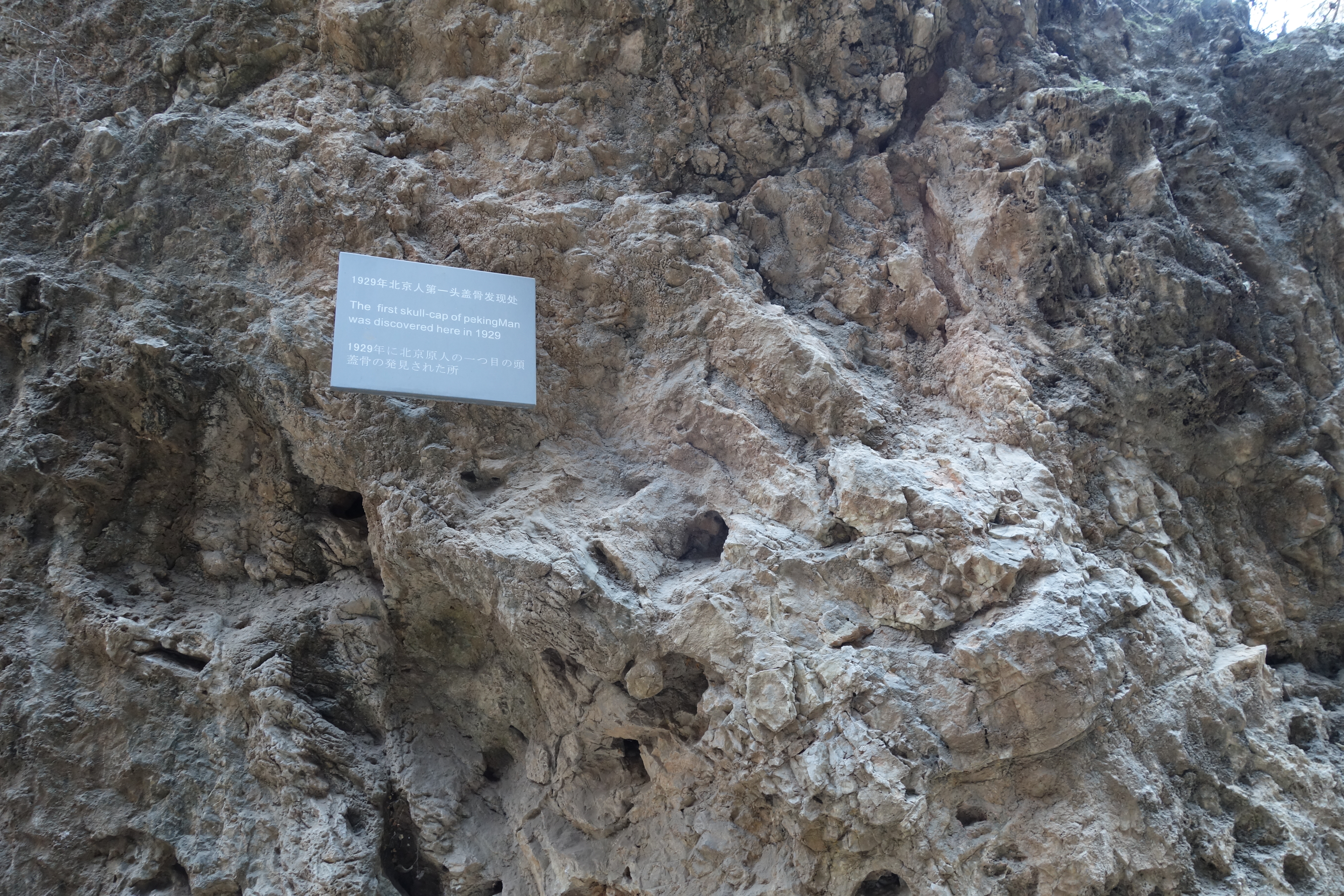
On a frigid December evening in 1929, Chinese paleontologist Pei Wenzhong worked alone in a 40-metre crevasse at Dragon Bone Hill, holding a hammer in one hand and a candle in the other. What he extracted was the first nearly complete skullcap of Homo erectus pekinensis -- a discovery that electrified the scientific world. The skull was long and heavily fortified, with an inflated bar of bone crossing the brow ridge and connecting at the back, a sagittal keel running along the midline, and extremely thickened bone throughout. The face was protrusive, the jaws robust and chinless, the teeth large with distinctive shovel-shaped incisors. Brain volume averaged just over the threshold of modern human variation. By 1932, nearly 100 workers were deployed daily. Five nearly complete skullcaps were recovered, along with fossils from more than 40 individuals, over 100,000 stone tool fragments, and remains of 200 animal species. Peking Man had inhabited the Zhoukoudian caves intermittently from as far back as 800,000 years ago to as recently as 230,000 years ago, spanning several glacial and interglacial periods.
Lost to War
Davidson Black died at his desk one night in 1934, a Peking Man skullcap sitting before him. German Jewish anthropologist Franz Weidenreich replaced him and continued work until the Japanese invasion of China halted excavation in 1937. In 1941, with war engulfing the Pacific, the fossil collection was packed into wooden footlockers and left the Peking Union Medical College on 4 December 1941. The SS President Harrison, intended to collect them at Qinhuangdao, ran aground while trying to reach China in the chaos following Pearl Harbor. The fossils never reached the ship and were never seen again. Decades of searching -- including a 2012 investigation following a credible tip from a U.S. Marine -- have produced nothing. But Weidenreich had been meticulous. Every specimen had been dated, measured, X-rayed, drawn, photographed, and cast in plaster. As Teilhard observed: "The loss is more a matter of sentiment than a true tragedy for science." Four of the original teeth remain at Uppsala University. Everything else exists only as casts and records.
Ancestor or Offshoot
After the Chinese Communist Revolution, Peking Man became more than a scientific subject. The government used the fossils to introduce Marxism and science to the general populace, and early models of Peking Man society were compared to communist ideals of primitive communism. Chinese scholars championed polygenism -- the idea that Peking Man was a direct ancestor of Chinese people -- while Western science increasingly converged on the Out of Africa theory, which cast Peking Man as an evolutionary dead end. The debate produced a lasting schism. Today, the Out of Africa model is the consensus, but the question of whether Peking Man interbred with modern human ancestors remains open. East Asian Homo erectus populations are now generally characterized as relict groups with limited interaction with Western Homo erectus or later Homo species. Peking Man lived in a cool, partially forested steppe environment alongside deer, rhinos, elephants, bears, wolves, and big cats. Whether this population could hunt, make clothes, and control fire -- or whether they were primarily scavengers killed by giant hyenas and dragged into the cave -- is still fiercely debated. What is certain is that something lived in those limestone hills for over half a million years, made tools, survived ice ages, and left behind just enough evidence to reshape humanity's understanding of itself.
From the Air
Located at 39.73N, 115.92E near the Zhoukoudian Peking Man Site in Fangshan District, about 50 km southwest of central Beijing. The cave system is set in limestone hills visible as lighter-colored terrain amid the forested landscape. Nearest major airport is Beijing Daxing International Airport (ZBAD). The UNESCO World Heritage Site museum complex is the primary landmark. Recommended viewing at 2,000-4,000 feet AGL.