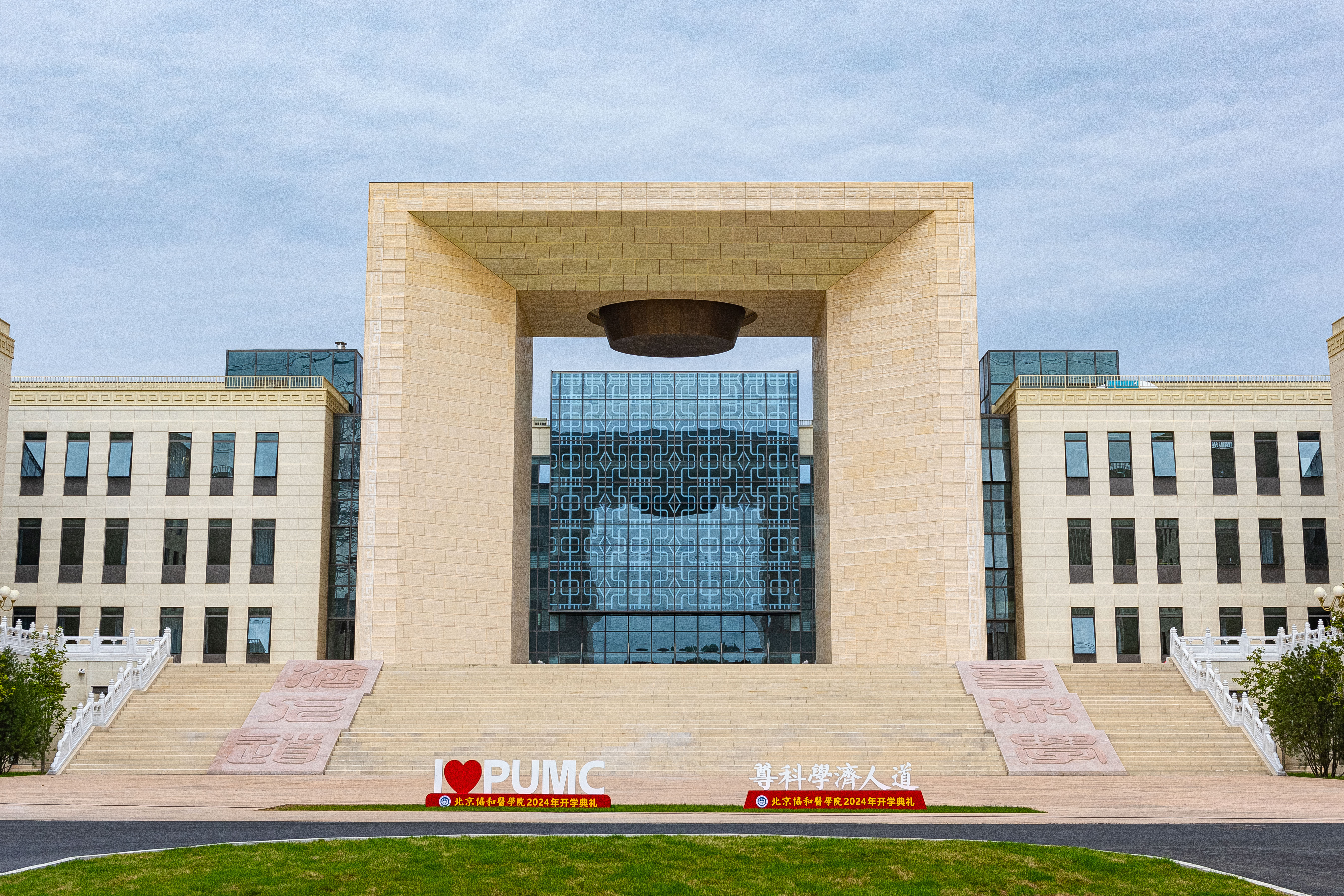
Peking Union Medical College
During the Cultural Revolution, Red Guards hung a new sign on one of Beijing's most distinguished medical institutions: "Anti-imperialist Hospital." The name did not last, but the impulse behind it -- to reject the school's foreign origins -- reflected a tension that has run through Peking Union Medical College since its founding. Here was a Chinese institution modeled on an American one, funded by an American fortune, and yet consistently ranked as the finest medical school in the country. The building survives. The tension endures.
Six Missions, One College
The college traces its origins to 1906, when six Protestant missionary organizations pooled their efforts to create the Union Medical College. The American Board of Commissioners for Foreign Missions, the Presbyterians, the London Missionary Society, the Methodists, the Society for the Propagation of the Gospel, and the Medical Missionary Association of London cooperated with the Chinese government to establish and maintain the school. It was one expression of a broader Western missionary effort that sought to transform China through education and medicine as much as through evangelism. But the missionary era would prove short-lived.
The Rockefeller Prescription
In 1913, the newly established Rockefeller Foundation turned its attention to medical education in China. A commission that included William Welch, the first dean of the Johns Hopkins Medical School, and Simon Flexner traveled to assess conditions on the ground. Dr. Wu Lien-teh, a Chinese physician who had gained international recognition for combating plague in Manchuria, lobbied strongly for a new medical college in Peking. The Foundation listened. In 1915, the China Medical Board assumed full financial support of the college and set about remaking it in the image of Johns Hopkins, following the recommendations of the influential Flexner Report that had already revolutionized medical education in North America. The PUMC was formally dedicated in 1921 as China's first institution to offer an eight-year medical education program.
Survival Through Revolution
The college endured the upheavals of the twentieth century with remarkable persistence. In 1951, the government of the People's Republic nationalized it. Maoist populists attacked the school as "the greatest bulwark for American cultural aggression," and many faculty members were forced out. In 1956, it came under the Ministry of Health. Then came the Cultural Revolution and the humiliation of the name change to "Anti-imperialist Hospital." Through it all, the institution survived -- in part because China needed the medical expertise it produced. John Black Grant, a founding faculty member who served as professor of public health from 1921 to 1938, had established a model of community-oriented medicine that proved impossible to replicate without the school that trained practitioners to deliver it.
China's Medical Apex
Today, Peking Union Medical College operates 21 research institutes, six affiliated hospitals, ten colleges, and 105 off-campus research facilities. Its flagship, Peking Union Medical College Hospital, is consistently ranked as the top hospital in China. The Fuwai Hospital is the largest cardiovascular disease specialist hospital in the world. Since 2006, the school has operated under a joint management system with Tsinghua University, and graduates receive degrees from both institutions. It is ranked among the top 200 universities globally and houses four state key laboratories and six WHO collaborating centers. The Rockefeller connection has not been forgotten: the school celebrated its 90th anniversary with representatives of the Rockefeller family and the president of Johns Hopkins University in attendance -- an acknowledgment that this thoroughly Chinese institution began as a thoroughly American ambition.
From the Air
Located at 39.91N, 116.41E in Beijing's Dongcheng District, near Wangfujing and east of the Forbidden City. The campus features a blend of traditional Chinese architectural elements and early 20th-century Western institutional design. Nearby airports: Beijing Capital International (ZBAA) 25 km NE, Beijing Daxing International (ZBAD) 46 km S. Best viewed at 3,000-5,000 ft.