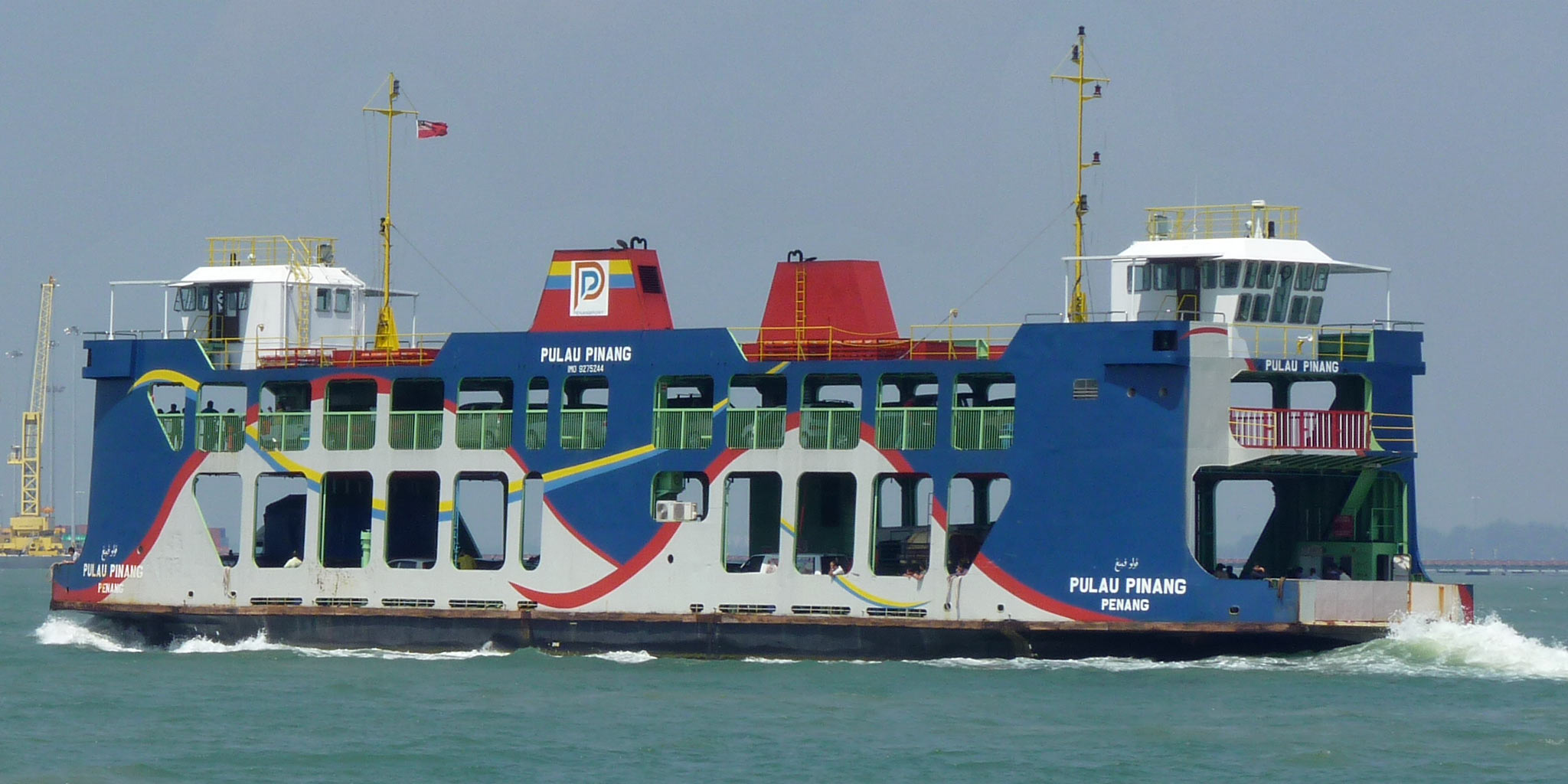
Penang Ferry Service
For 126 years, no ferry service in Penang had ever stopped running. Then, in 2020, it did. The suspension -- the first since Quah Beng Kee and his brothers launched their steam-powered boats across the Penang Strait in 1894 -- shocked a state that had come to treat the crossing as something closer to a birthright than a commute. Malaysia's oldest ferry service had outlasted the Japanese occupation, the end of colonial rule, and the opening of the Penang Bridge. It had not, however, outlasted deferred maintenance and decades of financial neglect. What happened next would determine whether the strait's most iconic transit link was a relic or a lifeline.
The Brothers Who Built a Crossing
Quah Beng Kee launched the ferry service in 1894 alongside his brothers, shuttling passengers between George Town on Penang Island and the mainland settlement of Seberang Perai. By 1897, he had bought out his siblings' shares and reorganized the business under the Guan Lee Hin Steamship Company, which later became the Eastern Shipping Company Limited. The routes expanded well beyond the strait, reaching other parts of British Malaya and as far as Sumatra, Siam, and Burma. In 1924, the Penang Harbour Board took over cross-strait operations, and the following year introduced vessels capable of carrying automobiles -- a change that transformed the ferry from passenger service to essential infrastructure. For the next six decades, until the Penang Bridge opened in 1985, these ferries were the only way to drive between George Town and the mainland.
Wartime Seizure and Postwar Reinvention
The Second World War interrupted everything. The Imperial Japanese Navy seized at least one ferry vessel during the campaign to conquer the Dutch East Indies, pressing it into military service far from the Penang Strait. After the war, the aging fleet needed more than patching. In 1953, the harbour board brought in London-based consulting engineers Bruce White, Wolfe Barry & Partners, whose study recommended a complete overhaul: new double-ended ferries with separate passenger and vehicle decks, plus new terminals with double berths to increase frequency. Contracts went out in 1955, with Hong Kong's Cheoy Lee Shipyard building four vessels -- Pulau Aman, Pulau Langkawi, Pulau Tioman, and Pulau Pangkor -- that entered service in 1959. By 1939, before the war, the fleet had already been recording ridership of 1.856 million passengers and 113,000 vehicles annually. The postwar rebuilding ensured the service could grow to meet the demands of a modernizing Malaya.
A Bridge and a Long Decline
When the Penang Bridge opened in 1985, the ferry's monopoly on cross-strait transport ended overnight. Ridership held on -- Penang's commuters valued the crossing for its speed, its cost, and its view of the strait -- but the economics shifted permanently. The Penang Port Commission, which had controlled the service since 1956, handed it to the government-linked company Penang Port Sdn Bhd in 1994. By the 2010s, PPSB was reporting annual losses in the tens of millions of ringgit, with the ferry service alone requiring RM22 million a year to operate. In 2017, Prasarana Malaysia, the national transit operator, took over and rebranded the service as Rapid Ferry. But persistent maintenance problems and an increasingly elderly fleet made the situation worse, not better. In 2020, for the first time in 126 years, the ferries stopped.
Catamarans on the Strait
The comeback was neither instant nor painless. PPSB reabsorbed the service on 1 January 2021, deploying small passenger-only speedboats as a stopgap while it planned a longer-term solution. The last vessel of the old fleet, Pulau Angsa, lingered on carrying motorcyclists and cyclists before being decommissioned and handed to the Penang state government. In 2023, four new catamarans entered service, running between the Raja Tun Uda terminal on the island and the Sultan Abdul Halim terminal on the mainland. Unlike their predecessors, these boats were built specifically for passengers, motorcycles, and bicycles -- not cars. By 2024, the catamarans had recorded 2.1 million passengers, a figure that echoed the ridership numbers of the prewar era. The yellow-hulled automobile ferries were gone, but the crossing itself had survived, reinvented for a city that still needs its strait.
From the Air
Located at 5.4138N, 100.3430E in the Penang Strait, connecting George Town on the northeastern coast of Penang Island with Butterworth on the mainland. The Raja Tun Uda Ferry Terminal is visible on the George Town waterfront, and the Penang Bridge (13.5 km long) stretches across the southern part of the strait. Nearest airport is Penang International Airport (WMKP/PEN), approximately 14 km south of the terminal. The Penang Strait is roughly 3 km wide at the crossing point, and ferry traffic is visible from moderate altitude.