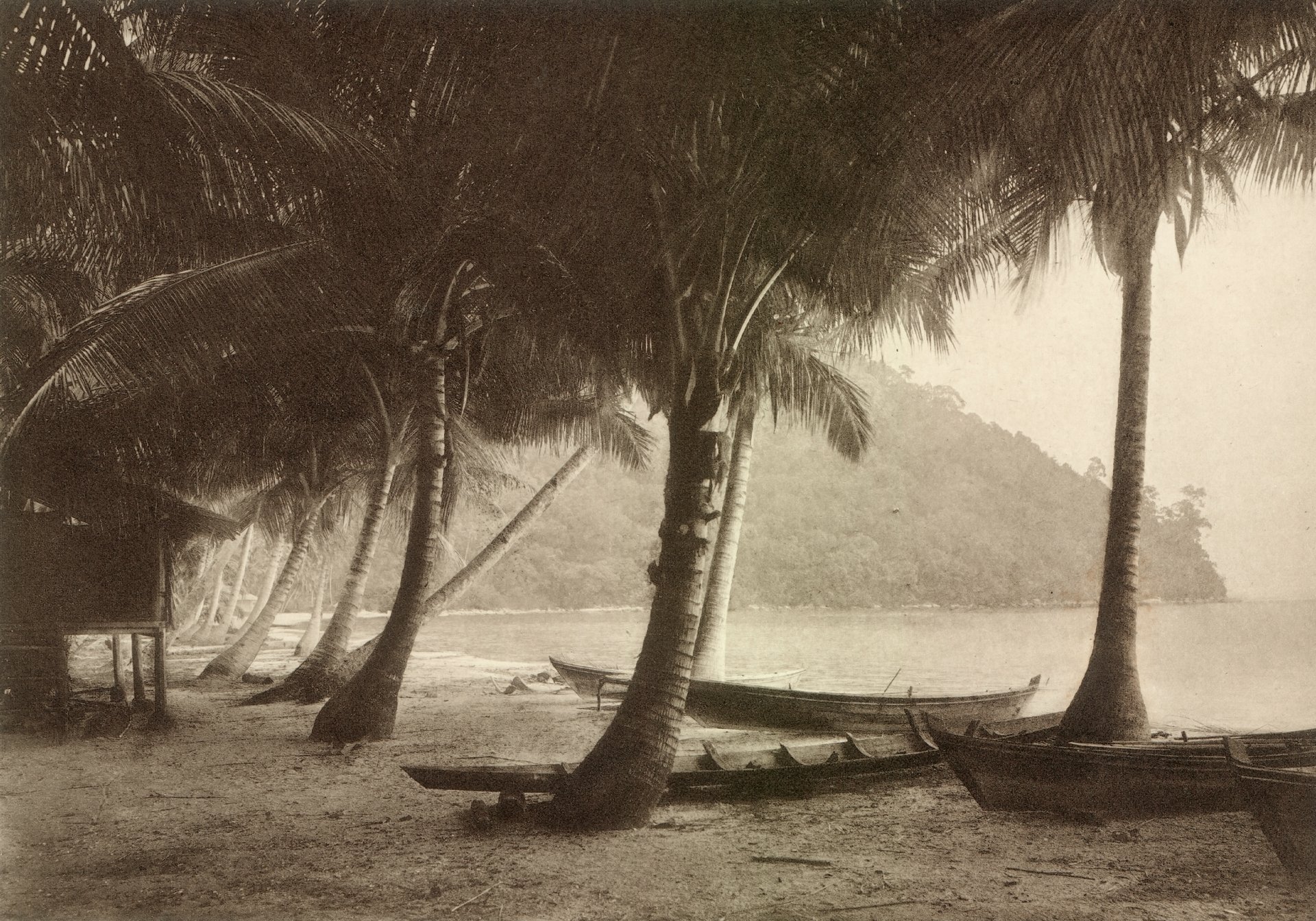
Penang National Park
Most national parks earn their status through sheer scale. Penang's earned it through density. At just 2,563 hectares of land and sea (about 1,182 hectares of land and 1,381 hectares of surrounding marine areas), this is the world's smallest national park, yet it contains five distinct habitat types not found together in any other major Malaysian nature reserve. Dipterocarp forests climb steep coastal slopes, mangroves colonize sheltered inlets, sandy beaches give way to open sea, and tucked between the headlands sits a seasonal meromictic lake -- a body of water whose layers never fully mix, creating a strange, oxygen-starved underworld where almost nothing survives except Faunus ater snails.
From Forest Reserve to Legal First
Before 2003, this stretch of northwestern Penang Island was the Pantai Acheh Forest Reserve, a protected area without the legal teeth that came with national park designation. That changed in April 2003 when it became the first protected area legally gazetted under Malaysia's National Park Act of 1980. The distinction matters: national park status brought federal enforcement authority and a mandate to preserve not just flora and fauna but also geological, archaeological, and historical features. For a country whose environmental protections have often struggled against development pressure, Penang National Park represented a statement that small places could be worth defending with the full weight of the law.
A Thousand Species on a Narrow Coast
Over a thousand plant species have been recorded within the park's boundaries, an extraordinary concentration for such a compact area. The dominant families -- Dipterocarpaceae, Leguminosae, Apocynaceae -- form the canopy of the secondary forest that covers most of the park. On the steep slopes around Muka Head, stands of seraya trees cling to the hillsides, their buttressed roots gripping thin coastal soil. Below the canopy, wild orchids compete for filtered light alongside tongkat ali, gaharu, and jelutong. The coastal fringe shifts character entirely: casuarina and sea almond trees give way to screw pines, while mangrove forests fill the estuaries where freshwater streams meet the Strait of Malacca.
Turtles, Eagles, and a Lake That Suffocates
Pantai Kerachut beach serves as a nesting site for two species of sea turtle on alternating schedules: green turtles from April to August, olive ridley sea turtles from September to February. Above the beaches, white-bellied sea eagles and brahminy kites patrol the thermals, part of the park's 46 recorded bird species. Dusky leaf monkeys move through the canopy in quiet troops, while long-tailed macaques -- less subtle -- dominate Monkey Beach with the brazen confidence of animals that have learned tourists carry food. The meromictic lake at Pantai Kerachut is the park's strangest feature. Because its layers of salt and fresh water resist mixing, the deeper water stays permanently oxygen-deprived. Life in the lower reaches is essentially impossible, making the lake a kind of natural dead zone surrounded by biological abundance.
Nine Beaches and a Headland
The park's coastline unspools across nine named beaches, from Teluk Bahang at the entrance to Pantai Mas at the far end. Monkey Beach draws the crowds, but Pantai Kerachut -- with its turtle hatchery and meromictic lake -- rewards the longer hike. The trail system connects these beaches through forest paths that climb over headlands and drop to sea level, offering views across the Strait of Malacca from Muka Head. Dolphins are spotted offshore, smooth-coated otters work the estuaries, and monitor lizards sun themselves on the rocks between tides. For a park you can walk across in a few hours, the variety of what you encounter along the way is remarkably dense.
From the Air
Located at 5.4607°N, 100.2039°E at the northwestern tip of Penang Island. The park occupies a distinctive forested headland jutting into the Strait of Malacca, clearly visible from altitude as a green promontory contrasting with the more developed southern portions of the island. Best viewed at 2,000-4,000 ft. Penang International Airport (WMKP) is approximately 25 km to the southeast. The park's coastline, including Monkey Beach and Muka Head, provides strong visual reference points from the air.